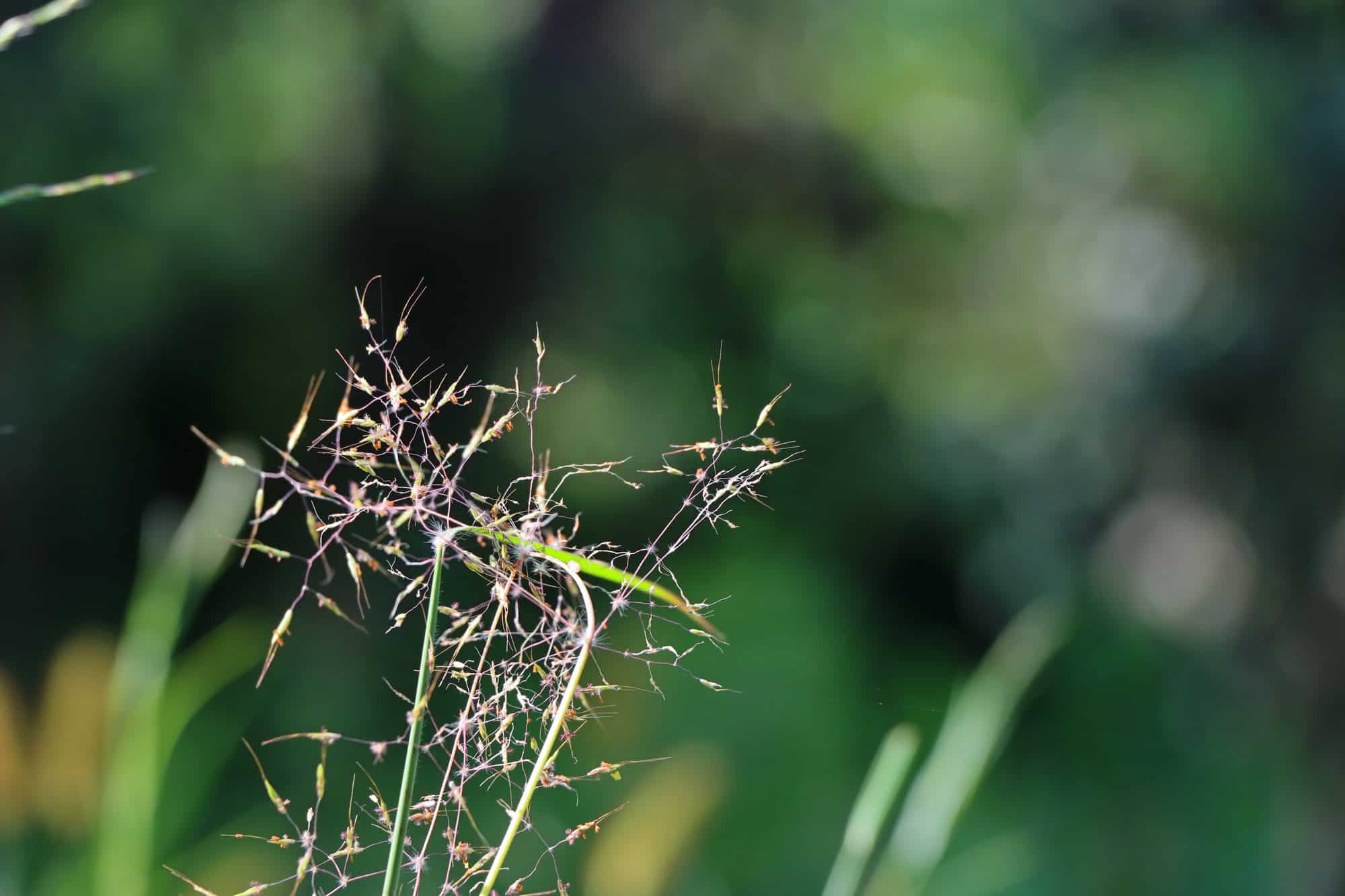
You mow the lawn, it looks neat, and within a day a haze of pale, wispy stalks has risen back above the surface as if you never cut it. The mower seems to flatten them and miss them every time. Those stalks are not a weed and they are not a disease. They are grass flower and seed heads, the lawn shifting from growing leaves to making seed, and they appear on almost every lawn in early summer. Understanding why they show up tells you exactly how to deal with them, and in most cases the answer is a sharper blade and slightly more frequent mowing rather than anything drastic.
What the Wispy Stalks Actually Are
Grass spends most of the year in vegetative growth, producing the flat leaf blades that make up a green sward. At a certain point each plant switches to reproductive growth and pushes up a thin, tough flowering stem called a culm, topped with the seed head, a branched cluster of tiny flowers that ripens into grass seed. Those culms are the wispy stalks you see. They are far more wiry and fibrous than a leaf blade, which is the whole reason your mower struggles with them: where a soft leaf is sliced cleanly, a springy seed stalk bends flat under the roller and the deck as the mower passes over, then stands straight back up the moment the machine has gone by, untouched. A stalk can rise 5cm to 10cm (2 to 4 inches) above the cut surface within a day, which is exactly why a lawn that looked sharp in the evening can look shaggy by the next afternoon. Run your hand over a freshly mown lawn during this period and you can feel the stiff stalks catching against your palm while the leaf around them feels soft.
The seed head at the top varies by grass type. Fine fescues and bents carry delicate, almost feathery heads, perennial ryegrass throws a flatter, ladder-like spike, and the most persistent offender, annual meadow grass, produces a small whitish triangular head on a short stalk. Once you start looking you will notice the lawn is studded with them, which is why a cut lawn can look hazy and unfinished within hours.
Why Grass Goes to Seed in Early Summer
The trigger is mostly the calendar. Grasses time their flowering by day length and temperature, and for most cool-season lawn grasses the cue to throw up seed heads arrives in late spring and early summer as the days lengthen and the soil warms. It is a natural, annual event built into the plant, not a sign that you have done anything wrong, and a burst of seeding through May, June and July is normal even on a well-kept lawn. The plant is simply doing what every grass is programmed to do, which is to set seed and secure the next generation while conditions are good.
Stress sharpens the response. When a grass plant comes under pressure from drought, heat or poor nutrition, it often rushes into seeding as a survival strategy, pouring its energy into reproduction on the assumption that its own survival is uncertain. That is why a hungry or drought-stressed lawn can throw up a thicker crop of seed heads than a healthy one, and why the wispy haze is sometimes a quiet signal that the lawn needs feeding or watering. The standout culprit is annual meadow grass, known to botanists as Poa annua. Unlike most lawn grasses it flowers almost year-round, and turf specialists note that it can produce viable seed even under very close, frequent mowing, setting heads at a height of just a few millimetres. A single plant can shed hundreds of seeds into the lawn in a season, building a seed bank in the soil that germinates for years, which is how a patch of annual meadow grass quietly spreads across a lawn.
How to Deal With Seed Heads
The first and most effective step is to sharpen the mower blade. A blunt blade is the single biggest reason seed stalks survive cutting, because it lacks the edge to sever a tough, springy culm and simply pushes it flat instead. A sharp blade slices through the stalks as cleanly as it cuts the leaf. Sharpening at home with a file or a £10 to £15 (about $13 to $19) sharpening kit, or having a blade professionally sharpened for a similar cost, transforms how a mower handles seed heads. Second, mow a little more often during the flush. Cutting every four to five days for the two or three weeks that seeding peaks keeps removing the stalks before they harden and ripen, and a stalk cut off young never gets the chance to shed seed.
A few extra tricks help on a stubborn flush. Brushing or lightly raking the lawn with a spring-tine rake just before mowing lifts the bent-over stalks upright so the blade catches them rather than rolling over them. Dropping the cutting height by a single notch for one cut, rather than scalping, can also take more of the stalks, after which you return to your normal summer height of around 4cm to 5cm (1.5 to 2 inches). Most important for the long term, collect the clippings rather than leaving them while annual meadow grass is seeding, because mulching the cuttings back into the lawn simply sows the next generation of Poa annua seed straight into your turf. Removing the clippings during the seeding window is the most effective thing you can do to stop annual meadow grass building up. Finally, a balanced feed keeps the rest of the lawn in leafy, vegetative growth and reduces the stress that pushes grass into heavy seeding, so a fed, watered lawn generally seeds less than a neglected one.
When Seed Heads Signal a Bigger Problem
For the most part, seed heads are a brief cosmetic nuisance that passes in a few weeks as the flowering period ends, and the simplest response is patience plus a sharp blade. They are worth a second look, though, when they keep coming. A lawn that is dominated by the small white heads of annual meadow grass, seeding heavily even when mown short and often, is telling you that Poa annua has taken hold, and the long-term fix is to thicken the lawn with desirable grasses that out-compete it: overseed in autumn with a hard-wearing perennial ryegrass and fescue mix, feed and water consistently so the permanent grasses stay dense, and keep collecting clippings through each seeding flush to starve the seed bank. A sudden, heavy flush of seeding across the whole lawn in the middle of a hot, dry spell is also worth reading as a stress signal, a sign that the grass feels under threat and is reproducing in response, which is your cue to check whether the lawn needs a deep watering or a summer feed.
The mistakes to avoid are few but costly. Do not scalp the lawn in frustration trying to remove every stalk at once, because cutting too hard removes leaf the plant needs, stresses it further and can trigger even more seeding while leaving the turf thin and open to weeds. Do not keep mowing with a blunt blade and expect a different result, since the stalks will outlast every pass. And do not leave the clippings down during an annual meadow grass flush, or you guarantee the same problem, only worse, next year. Treat the wispy stalks of early summer as a normal seasonal event, meet them with a sharp blade and a slightly tighter mowing routine, and remove the clippings while the worst offenders are seeding, and the lawn settles back to a clean, even green within a few weeks. For more on getting a clean cut, see our guide to sharpening mower blades at home.