- A light scatter of leaves does little harm, but a wet mat left sitting for more than a week or two blocks the light from the grass and traps damp against it, and the blades underneath start to yellow and thin.
- The job is not to chase every leaf the moment it lands. It is to stop a solid layer forming on the lawn, which a rake, a mower or a leaf blower will clear in minutes.
- The leaves are worth keeping. Piled into a wire cage or a bin bag they rot down into leaf mould, a free soil improver and an autumn top dressing you would otherwise pay for.
The leaves are not the problem. The mat they form is.
You walk out in October and the lawn has disappeared under a layer of brown and gold. One camp online tells you to leave every leaf where it falls, for the worms and the wildlife. Another warns that a single week of cover will kill the grass outright. Both overshoot. What follows is what a layer of fallen leaves really does to a lawn, and how little the grass underneath needs from you to come through autumn unharmed.
Where the leave the leaves advice comes from
The idea that you should let leaves lie is sound in the right spot. In borders and under hedges, a layer of leaf litter shelters overwintering insects, feeds the soil as it rots and saves you a job. The trouble starts when the same rule gets stretched across the lawn. A flower bed carries a thick blanket of leaves without complaint. A lawn will not, and the reason is simple: grass is a living plant that keeps growing through much of the autumn, and a bare border is not.
Grass carries on growing while the soil stays above 7C (45F), which in cooler northern climates runs well into late autumn. A plant that is still growing is still feeding itself through its leaves, and that food is made from light. Cover the blades and you cut off the supply. This is the gap the slogan misses. Advice written for soil and shrubs gets applied to a crop of grass that is still working, and the grass pays for it.
What actually happens to grass under a wet layer of leaves
Lay a damp mat of leaves over living turf and three things begin at once.
First, the light goes. The blades underneath cannot make food, the green drains out of them, and within a week or two they fade to pale yellow and then to straw. The Royal Horticultural Society puts it plainly, noting that fallen leaves left in place “smother the grass.” A lawn robbed of light for long enough thins out, and thin autumn turf is slow to knit back together before winter.
Second, the damp sets in. A leaf mat holds water like a flat sponge and stops air moving across the surface, so the grass sits cold, dark and permanently wet. Still, humid air trapped at soil level is exactly what fungal lawn diseases want. Fusarium patch, often called snow mould, shows as yellow or tan circles that can merge into larger dead areas, and it takes hold fastest on soft, damp, airless turf. The RHS flags that yellow or brown patches in wet autumn weather are frequently fusarium.
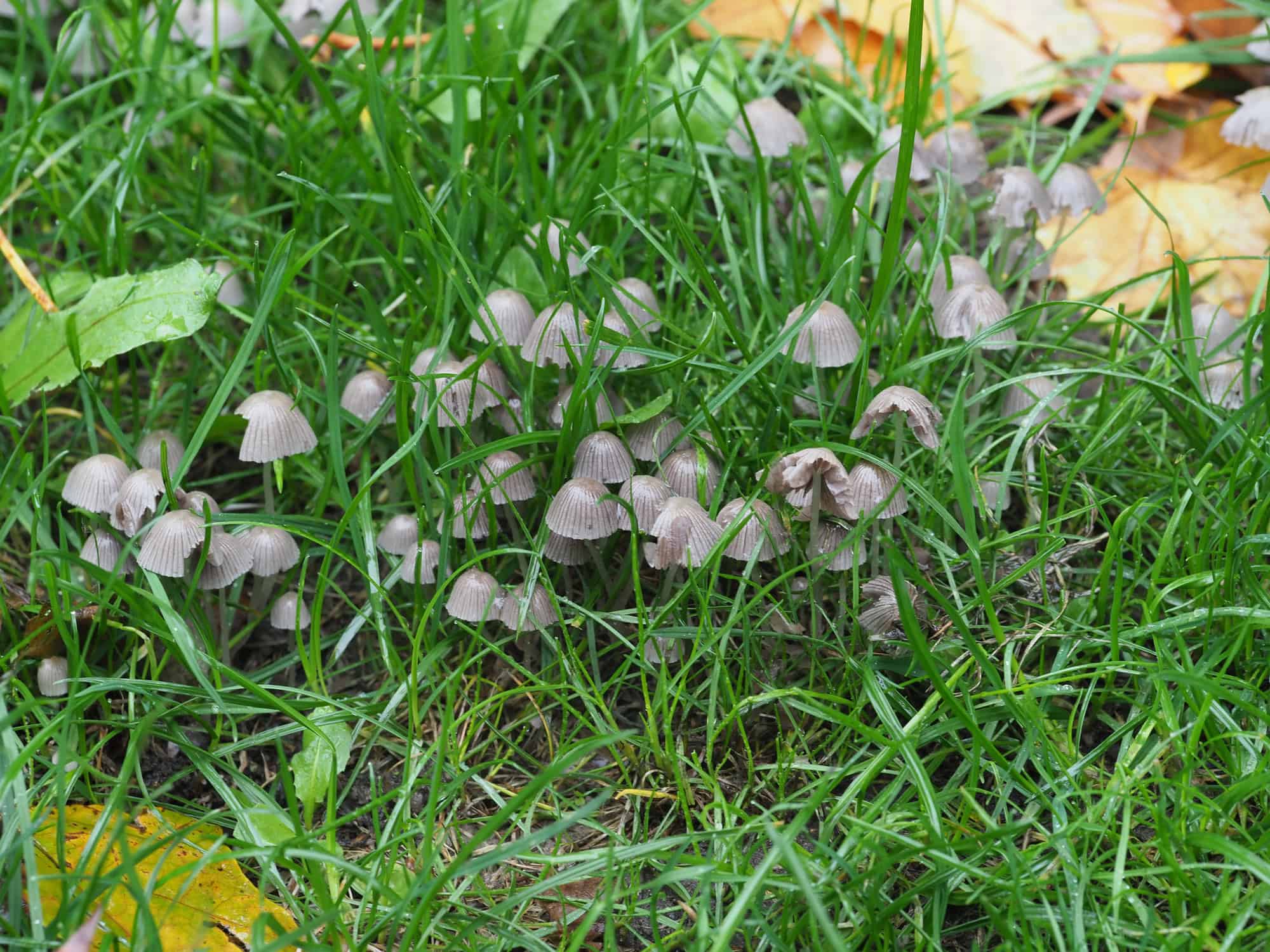
Third, the moss and the worms move in. Shade and standing damp are the precise conditions moss colonises, so a lawn kept under leaves through autumn often emerges in spring greener with moss than with grass. Earthworms, meanwhile, are drawn up by the rotting leaf matter, and their casts, the small mounds of fine soil they leave on the surface, smear flat under the next mow and turn into ready-made seedbeds for weeds.
A thin, dry dusting of leaves you can walk across and barely notice does none of this. The damage comes only when leaves pack into a continuous wet layer, and in a still, soggy autumn that can take just a few days after a heavy fall.
What to do instead, and how little it takes
You do not need to be out there at dawn with a rake every day. The target is modest: keep a solid layer from sitting on the grass for more than a week. Three tools cover almost every lawn.
A spring-tine lawn rake is the cheapest and the most useful. The springy wire tines lift leaves off the grass without tearing at the roots the way a stiff garden rake can. A decent one runs about £8 to £15 ($10 to $20) at Screwfix, B&Q or Home Depot, and on a small lawn it is all you will ever need.
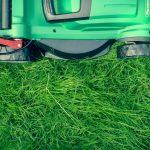
A rotary mower with the collection box fitted is faster on anything larger. Run it over dry leaves and it lifts and shreds them along with the grass in a single pass. The shredding counts for something later. Set the cut a notch higher than your summer height, at least 5cm (2in), and mow only in mild, fairly dry weather, never over frozen or waterlogged ground.
A leaf blower or garden vacuum earns its keep on a big lawn with a lot of trees. The RHS advises that a leaf blower makes the job easier on large lawns, and that battery models “are quieter and cleaner than petrol ones.” A budget cordless blower-vac costs around £40 to £90 ($50 to $120) at Argos, Wickes or Lowe’s, and a vacuum has the edge over a blower on a lawn, as it collects and shreds in one go rather than just moving the pile around.
One firm rule: leave the lawn alone when it is frozen or sodden. Dragging a rake over frost-stiffened grass snaps the blades, and walking a waterlogged lawn to clear leaves compacts the soil and undoes the air spaces the roots rely on. Wait for a dry, mild window and the whole job takes far less effort.
Turn the leaves into something, do not bag them for the bin
The leaves you clear are not rubbish. Left to rot on their own they break down into leaf mould, a dark, crumbly material that works as a soil improver, a mulch and an autumn top dressing for the very lawn they came off. The RHS gives two easy methods.
The bin-bag method suits a small garden. Fill a bin liner with leaves, moisten them if they are dry, pierce a few holes in the bag, tie the top loosely and stack the bags out of sight. The wire-cage method handles larger volumes: bend a length of chicken wire into a square or round cage held up with stakes or canes in a sheltered corner, make the heap as big as you can and wet it if it dries out. Chicken wire for a cage costs about £10 to £20 ($12 to $25), and a roll of heavy-duty or compostable sacks about £5 to £8 ($6 to $10).
Most leaves take around two years to rot into usable leaf mould. You can speed it up: mowing the leaves with a rotary mower first shreds them and throws in a few grass clippings for extra nitrogen, both of which hasten the rot. Oak, beech and hornbeam leaves break down best with no help at all. Thick, leathery leaves such as sycamore, walnut and horse chestnut rot faster if you shred them first. Pine needles are acidic and slow, so keep them in a separate pile for acid-loving plants.
Once it has broken down, well-rotted leaf mould over two years old works as a seed compost, while younger or rougher material makes a good mulch, spread at least 5cm (2in) thick from late autumn through to late winter. Dug into a bed it improves the soil’s structure, and brushed thinly across the lawn it doubles as an autumn top dressing. The leaves that threatened the grass in October end up feeding it the year after.
Where leaving them really is fine
Give yourself permission to do less where it does no harm. Under trees and shrubs, across borders and along the bottom of a hedge, the leaves can stay put. They will shelter wildlife through winter, feed the soil as they rot and save you the effort, exactly as the gardening slogan promises. It is only the lawn, the one surface that is both alive and low to the ground, that needs them off. Rake the leaves off the grass and straight onto the beds and you have followed both pieces of advice at once: the lawn keeps its light, and the borders get their blanket.