- Wet grass bends away from the blade and tears instead of cutting cleanly, leaving a ragged, pale surface that loses water fast and gives lawn disease an easy way in.
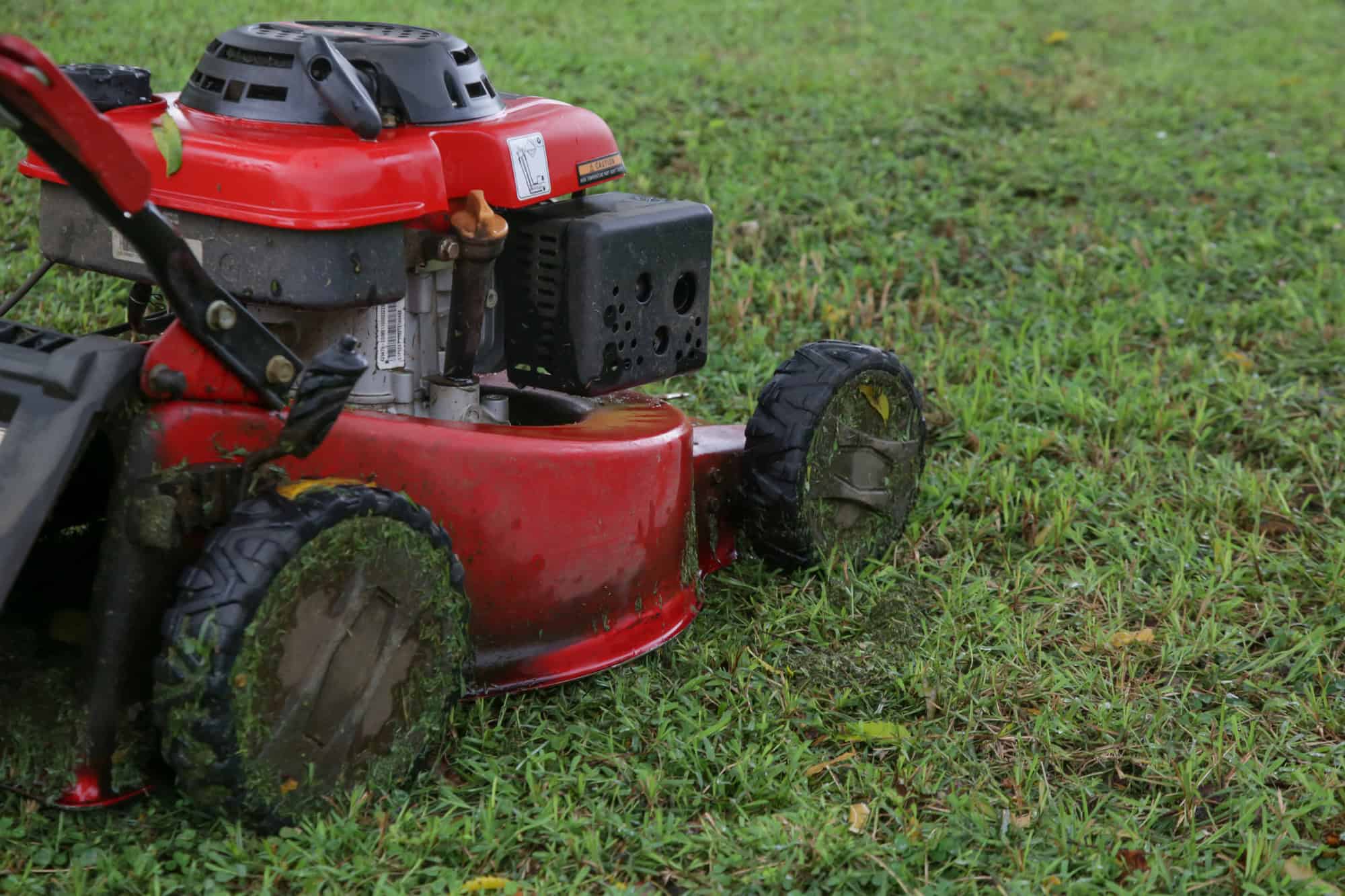
- Mower wheels sink into soft, rain-soaked ground and drag grass out by its shallow autumn roots, while clumps of wet clippings pack the deck and stall the engine.
- Raising the cut to 40mm (1.5in), waiting for the lawn to dry later in the day and keeping the blade sharp protect the turf far more than forcing a mow onto the usual day.
The Lawn Is Not Being Difficult. It Is Telling You to Wait.
The grass has not been cut for ten days, the forecast is more rain, and the only dry window is now, on a lawn that is still soaked from last night. Plenty of people push the mower out anyway and take the uneven, clumpy finish as the price of a tidy garden. The finish is the least of it. Cutting a wet lawn in autumn works against the grass in three separate ways at once, and the one you can see is the one that counts for least.
The belief that a lawn must be mowed on schedule, wet or dry, comes from summer habit, when the grass grows fast and a missed week shows. Autumn is a different season with different rules. Growth slows, the ground holds water for days, and the plant is moving its energy down into the roots rather than up into new leaf. A mow forced onto wet, soft turf in October takes more out of the lawn than it puts back in tidiness.
What Actually Happens to Each Blade of Grass
A mower blade does not slice through grass the way a knife slices bread. A rotary mower works by spinning fast enough to create a small updraught that stands each leaf upright for a fraction of a second, then shears the top off. Dry grass stands up on its own and meets the blade cleanly. Wet grass is heavy with water and lies flat, bent away from the blade. Instead of a clean shear, the leaf gets battered and torn, and the tip is left frayed rather than sliced.
That frayed tip is where the trouble starts. A clean cut closes over quickly and loses little moisture. A torn, shredded end has far more exposed surface, so the plant leaks water and the whole lawn takes on a whitish or straw-coloured haze a day or two after mowing, as thousands of damaged tips dry out and bleach. Those open wounds are also the easiest route in for the fungal spores that sit in the thatch and soil. The RHS points out that damp, humid conditions are exactly when turf disease takes hold, and a lawn full of torn, wet grass tips in mild autumn weather is close to an invitation. Red-tinged or brown patches that spread over the following fortnight often trace straight back to one wet cut.
A blunt blade makes all of this worse. A blade that has not been sharpened all year tears even dry grass, and on wet grass it mangles it. If the mower has to come out at all this autumn, a sharp blade is the single cheapest protection. A sharpening file or stone costs about £5 to £10 ($7 to $13) from Screwfix, B&Q or Amazon, and a balanced replacement rotary blade runs £10 to £20 ($13 to $26). Clean, sharp steel cuts; worn steel tears, and water turns tearing into real damage.
What the Mower Does to the Soil Underneath
Above the surface the grass is torn. Below it the soil takes a quieter beating. Wet ground is soft, and a mower plus the person pushing it is a concentrated load on four small wheels. On saturated turf those wheels sink, squeeze the air out of the soil and press the crumb structure into a dense, airless layer. Grass roots need oxygen in the gaps between soil particles. Squash those gaps shut and the roots that survive sit shallow, which leaves the lawn weaker, thirstier in next summer’s dry spells and far more open to moss and weeds. This is compaction, and a single pass over a boggy lawn can start it.
Worse than pressing the roots down is pulling them out. Autumn roots are shorter than summer roots, and in soft ground they have a weak grip. When a wheel slips or the mower is dragged round a turn, the grass can lift out of the ground in small tufts rather than staying put. Which? is blunt about the mechanism: softened ground makes roots much more likely to be torn from the soil. The bare scuffs that result then stay bare, as there is little growing season left to fill them before winter.
Then there is the mower itself. Wet clippings do not fly off the blade and into the box. They stick together and to the underside of the deck, building a wet green mat that blocks the airflow the mower relies on to lift and cut. The cut gets ragged, clumps drop onto the lawn and smother the grass beneath them, and the extra load drags the engine down until it stalls. On a corded electric mower, a soaked lawn adds a real safety hazard, as water and mains electricity are a combination worth avoiding altogether. Standing on a slippery slope behind a heavy machine is its own risk whatever the power source.
What to Do Instead of Forcing the Mow
The first move costs nothing: wait. A lawn that is soaked at nine in the morning is often dry enough by early afternoon after a few hours of wind or weak autumn sun. If the whole day stays wet, leave it. The grass is barely growing, so a lawn that goes an extra week between cuts in October loses nothing. Letting it wait is not neglect. It is the right call.
When you do cut, raise the blade. Through spring and autumn the RHS recommends a height of up to 40mm (1.5in), well above the 25mm (1in) of high summer. Longer grass has more leaf to photosynthesise through the short, dim days, carries frost better and shades out weed seedlings. Keep to the one-third rule as well: never take off more than a third of the leaf height in one pass. A lawn that has grown long between wet spells should be brought down over two or three cuts spaced days apart, not scalped back in one go.
If you really must mow while the grass is still damp, slow right down, take a narrower strip than usual and tip the deck to clear the packed clippings every few minutes. A quick brush over the lawn first with a stiff broom or a flexible spring-tine rake, about £8 to £15 ($10 to $20) at Wickes, Home Depot or Lowe’s, knocks the surface water and dew off the leaf and makes a real difference to how cleanly it cuts. Brushing the morning dew off also lifts the humidity at grass level that fungal disease feeds on.
As the weeks cool, cut less and less, then stop. Once growth has all but halted and the ground is regularly wet or frosted, the lawn is better left alone until a mild, dry spell brings a little regrowth worth topping. Never cut frosty grass at all: the frozen blades shatter rather than bend, and the mower leaves long-lasting brown prints across the lawn where it has passed. The same goes for walking on a frosted or waterlogged lawn, as footprints on brittle grass can mark the turf for weeks. The lawn that comes through winter thick and green next spring is usually the one that was left alone through the wettest, coldest weeks, not the one that was mown on schedule whatever the weather.