
Every time you bag up your grass clippings and wheel them to the compost heap, you are throwing away the cheapest lawn feed you will ever own. Leaving finely chopped clippings on the lawn, a practice turf scientists call grasscycling, returns a steady supply of nitrogen and moisture to the soil and can cut your fertiliser use dramatically. The long-standing fear that it causes thatch is simply wrong, and in the heat of summer the clippings do something especially useful: they help the lawn hold on to water. Here is what mulching your clippings actually does, and when it is the right choice.
What a Mulching Mower Actually Does
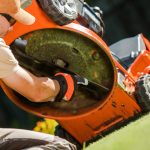
A mulching mower is built to do the opposite of a collecting mower. Instead of throwing the cut grass into a bag, it holds the clippings circulating under a closed deck and cuts them several times over, chopping them into tiny fragments before they drop down into the base of the sward. Most modern rotary mowers, petrol and cordless alike, either come with a mulching setting or accept a mulching plug, a simple blanking insert that blocks the discharge chute and forces the grass to recirculate. If your mower did not come with one, a mulching plug or blade kit costs around £15 to £30 (about $20 to $40) at garden machinery dealers, Amazon or Screwfix, and turns an ordinary mower into a mulching one. The fragments it produces are small enough to fall between the standing blades and sit on the soil surface out of sight, rather than lying on top of the lawn as visible clumps.
Those fragments disappear fast. Fresh grass clippings are roughly 80 to 85 percent water, so they shrink dramatically as they dry, and soil organisms and earthworms break the rest down within a few days of mowing. On a lawn that is cut regularly, the clippings are gone almost before you notice them, leaving no debris on the surface and feeding the soil as they rot. Robot mowers take this to its logical end: because they cut a tiny amount almost every day, the clippings they produce are minuscule and vanish instantly, which is why every robot mower is a mulching mower by design and never collects a thing.
Why Returning Clippings Feeds the Lawn
The reason grasscycling works is that grass leaf is rich in the nutrients the lawn needs. Turf clippings typically contain 6 to 7 percent nitrogen, 0.5 to 1 percent phosphorus and 2 to 4 percent potassium by dry weight, which is close to the make-up of a bagged lawn fertiliser. When you remove the clippings you carry all of that off the lawn; when you return them, the nutrients break down and feed the grass that grew them. The numbers from university research are striking. Extension turf scientists report that returning clippings supplies up to a quarter of a lawn’s total annual nitrogen needs, and work at Penn State found that over a three-year period clippings returned 46 to 59 percent of the nitrogen that had been applied as fertiliser. Research at the University of Minnesota concluded that recycling clippings can reduce a lawn’s nitrogen fertiliser requirement by as much as 75 percent or more.
Put into pounds and dollars, the saving is real. If a typical lawn feed costs around £15 to £20 (about $19 to $25) per application and you would normally feed three or four times a year, returning your clippings can knock out two or three of those feeds entirely, paying for a mulching plug many times over in a single season. The benefits go beyond feeding, too. Studies show that soil moisture sits around 4 percent higher on average where clippings are returned, because the decomposing layer shades the soil surface and slows evaporation, and water infiltration into the soil improves by around 12 percent compared with lawns where clippings are removed. In a dry summer that extra moisture retention is particularly valuable, helping the lawn ride out heat with less watering. Returning clippings also feeds the soil life and raises the amount of carbon the turf locks into the ground, building a healthier, more resilient soil over time. None of this requires any extra work; it requires doing less, by simply leaving the bag off.
When Mulching Works and When to Bag Instead
Mulching works best when you follow two simple rules. The first is to mow regularly enough that you never remove more than one-third of the leaf length in a single cut. Short, frequent clippings are small, dry quickly and vanish into the sward, whereas the long clippings from an overgrown lawn are bulky, wet and clump on the surface. The second is to mow when the grass is dry. Dry clippings scatter and settle; wet clippings stick together into clumps that can sit on top of the lawn and smother the grass beneath, yellowing it within days. Mow in the afternoon once any dew has burned off, keep to a steady weekly or twice-weekly routine through the growing season, and mulching looks after itself.
There are times when collecting is the better choice, and recognising them keeps a lawn healthy. Bag the clippings when the grass has grown too long, after a holiday or a wet spell, because the volume will clump however dry it is, and you can always mow again two or three days later and mulch the second, shorter cut. Collect the clippings while annual meadow grass is seeding heavily, so you remove the seed rather than sowing it back into the turf. And bag the clippings if the lawn has an active fungal disease such as red thread, because the cuttings can carry the infection and spread it to clean areas until the lawn recovers. Outside these situations, mulching is the default that suits most lawns most of the time.
There is a wider benefit in not bagging at all. Grass clippings are one of the largest single contributors to garden green waste, heavy with water and quick to turn slimy and sour in a bin or a tightly packed heap. A lawn the size of an average garden can generate several hundred kilograms of clippings across a season, all of which has to be bagged, lifted, stored and either composted or hauled away. Grasscycling removes that chore entirely. The clippings never leave the lawn, so there is nothing to collect, nothing to carry and nothing to dispose of, which on a hot summer day when the grass is growing at its fastest is no small saving in time, effort and council green-waste charges.
Common Myths and Mistakes
The myth that refuses to die is that leaving clippings causes thatch, the spongy brown layer of dead material that can build up between the green grass and the soil. Research has settled this repeatedly: thatch is made of the tough, slow-to-rot stems, crowns and roots of the grass, which are high in a fibrous material called lignin, not of leaf clippings. Grass leaf is soft and mostly water and breaks down far too quickly to accumulate. Lawns that are mulched do not develop more thatch than lawns that are collected, so the fear that keeps people bagging their grass is groundless and costs them both the free fertiliser and the work of disposal. The practical mistakes are the avoidable ones: mulching long, wet grass so it clumps and smothers the lawn, letting the lawn grow too far between cuts so every mow removes a heavy load of clippings, and bagging religiously out of habit when the lawn would be better fed by the grass it just grew. Mow little and often, mow dry, leave the bag off for most of the season, and your clippings will quietly feed and water the lawn for free. For more on summer care, see our guide to mowing height in hot weather.