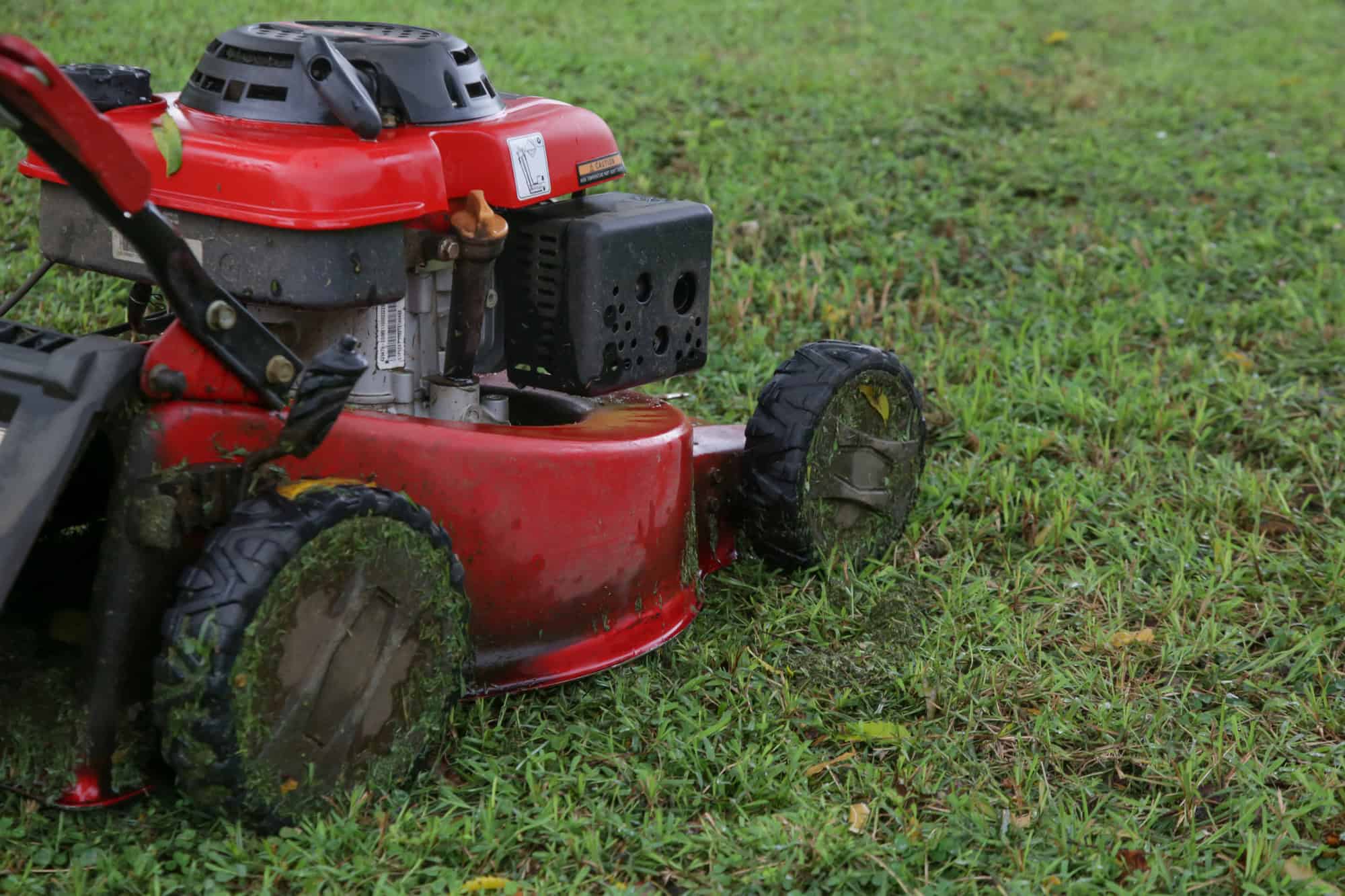
Spring rain followed by a sudden warm spell is one of the most common situations every gardener has to deal with in May. The grass shoots up four or five centimetres in a few days, you look out of the window between showers, and you think you have a one-hour window to get the mower out. The problem is that mowing damp or wet grass is one of the quickest ways to set your lawn back for weeks. It also damages the mower, and in three or four mows can take a season off the life of the blades and the deck.
The temptation is understandable. May rain tends to come in bursts, the grass grows visibly between mows, and by the time the lawn has dried fully you are looking at grass that is 8 or 9cm (3.5 inches) tall when it should be 4cm (1.5 inches). But mowing wet grass causes a chain of small problems that add up to a brown, patchy lawn by midsummer. Here is exactly what goes wrong, and the few situations where mowing damp grass is actually fine.
The Four Things That Go Wrong When You Mow Wet Grass
The first is the cut itself. A wet grass blade is heavy, limp, and lays sideways rather than standing up straight. The mower blade hits it from a glancing angle and tears the leaf rather than slicing it. You end up with a cut that looks more like a frayed rope end than a clean snip. Those torn tips brown within 48 hours and the whole lawn takes on a dull, greyish cast for a week or more.
The second is the clippings. Wet clippings stick together in heavy, gluey clumps that fall back onto the lawn in piles. Those piles can be 2 to 3cm (1 inch) thick and they sit on top of healthy grass like a wet flannel. Within 24 hours the grass underneath is yellow. Within 72 hours it is dead, and you have to rake out the clumps and reseed. The clumping is even worse on mulching mowers because the wet clippings glue themselves to the underside of the deck and stop circulating at all.
The third is fungal disease. Cutting grass creates a fresh wound on every blade. In dry conditions, that wound dries over within hours. In wet conditions, the wound stays open, the air around it stays humid, and fungal spores have a perfect breeding environment. Red thread, brown patch, dollar spot and leaf spot all spread faster after wet mowing. Worse, the mower wheels and underside of the deck carry spores from one part of the lawn to another, so if you have a patch of fungal disease in one corner you can spread it across the whole garden in a single mow.
The fourth is the soil. Wet ground is soft. A petrol mower can weigh 25 to 40kg (55 to 88 pounds), and the wheels concentrate that weight on a small contact patch. On wet soil, the wheels compress the ground and leave ruts. Repeated wet mowing creates tramlines along your usual route, and those tramlines compact the soil enough that grass roots cannot breathe. The compacted areas yellow first in a hot spell because the roots cannot find water or air.
What Happens to the Mower
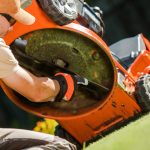
The damage is not just to the lawn. Wet grass packs into the underside of the mower deck and dries into a hard, fibrous crust that is very difficult to remove. That crust changes the airflow under the deck. A rotary mower depends on air being pulled upwards through the deck to lift the grass for the cut. With a crusted deck, the airflow drops by 30 to 40 per cent and the cut quality collapses.
Wet clippings also dull the blade much faster. A blade that would normally cut for 25 hours before needing a sharpen will be blunt after 10 hours of wet mowing. Battery mowers suffer most because the wet grass loads the motor, runtime drops by a third or more, and the motor runs hot. On petrol mowers, the engine works harder and uses more fuel. On corded electric models, you can trip the residual current device and have to reset the breaker.
The discharge chute clogs constantly. The bag fills with what feels like concrete in twenty minutes. The deck rusts from the inside. On models with a metal deck like the Honda HRX or the Hayter Spirit, repeated wet mowing reduces deck life from twenty years to about eight or ten.
How to Tell If the Grass Is Dry Enough
The traditional test is the foot test. Walk across the lawn in trainers, then sit down and check the soles. If they are wet enough that you can see distinct water marks, the lawn is too wet to mow. If they are dry or only slightly damp, you are clear. This test works better than it sounds because it captures both visible wetness on the grass surface and moisture in the soil.
The second check is the morning dew. Walk out at any time after the dew should have lifted, usually mid morning in May. If the dew has not gone, the air is too humid, the grass is still wet at the base, and you should wait. Dew burns off when the sun has been on the lawn for an hour or so. In overcast May weather it can stay until lunchtime.
The third check is the grass itself. Bend down and rub a few blades between your fingers. If they squeak or feel slick, they are still wet. Dry grass has a slight catch to it when you rub it. This is the test most professional groundskeepers actually use, because it tells you about the blade surface where the cut is going to happen.
Generally, you need at least four hours of dry weather after the last rain or dew burn-off before the lawn is ready. A heavy rain may need 24 hours. Heavy rain followed by overcast cool weather can need 48 hours or more. In those situations you are going to have to wait, and the grass is going to look long.
The Rare Situations Where Damp Mowing Is Acceptable
Wet is different from damp, and a lightly damp lawn in midsummer when the grass is short and growing fast can be mowed without serious damage. The threshold is the lift test. If you can stand on the lawn without leaving a visible footprint after fifteen seconds, the ground is firm enough. If you leave a clear print, wait.
If you absolutely must mow damp grass because rain is forecast for the next four days and the lawn is already long, do three things. First, raise the cutting height by 10 to 15mm (half an inch). You are going to cut less off, but you are going to leave the lawn in a state it can recover from. Second, slow down. Walk at roughly half your normal mowing pace so the blade has time to cut each pass cleanly. Third, side-discharge the clippings rather than bagging or mulching. Wet clippings on a mulching mower are a disaster.
If you have a battery mower, charge a spare battery first because runtime will drop sharply. The Ego LM2102E or Stihl RMA 339 both handle damp conditions better than most because of their high blade tip speed. Cylinder mowers, like the Allett Liberty 43 (around £900/$1,150), are generally a poor choice in damp conditions because the rear roller picks up wet clippings and smears them.
How to Recover If You Have Already Done It
If you mowed wet grass and now have clumps lying across the lawn, get them off as soon as the surface dries, even if it is only enough to walk across. A spring tine rake or a leaf blower will pick up most clumps. Leaving them down for 48 hours is when the yellowing starts. If you find yellow patches a few days later, scarify lightly with a hand rake to open the surface and let the grass underneath breathe.
Clean the mower the same day. Disconnect the battery or spark plug, tip the mower carefully, and scrape the deck with a wooden stick or plastic scraper. A pressure washer at a low setting works well on metal decks. Dry thoroughly before storing or the deck will rust. Sharpen the blade or check it the next time you have the mower out. If you mow wet grass repeatedly, expect to sharpen twice as often as you normally would.
The best long-term answer is to plan for it. May rain is normal. Mow on the dry side of the cycle even if it means cutting at the awkward end of the week. A lawn cut twice a week in dry conditions at 4cm (1.5 inches) handles spring growth without ever needing to be cut wet, and that single habit will do more for your lawn appearance than almost anything else.