
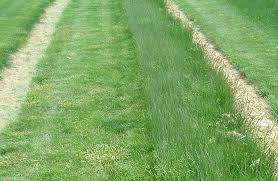
Two lawns sit side by side in the same dry July. One browns off in a week. The other stays green for a month without a drop of extra water. The difference is almost entirely underground, in how deep the roots reach. The green half of the story you can see; the half that decides survival you cannot. Grass with roots 15 to 20cm (6 to 8 inches) down taps moisture that shallow-rooted grass never reaches, and the depth of that root system is something you build through how you water, mow and feed long before the hot weather arrives.
Why Deep Roots Win a Drought
Soil dries from the top down. After a few rain-free days the top 3 to 5cm bakes hard and gives up its moisture to the air, while soil 15cm down still holds water long after the surface has turned to dust. A lawn whose roots sit only in that top few centimetres has nothing left to draw on once the surface dries, so it wilts and browns fast. A lawn with roots reaching 15 to 20cm carries on drinking from the damp layer below and stays green far longer. Turf research shows a strong, direct link between rooting depth and survival under drought: the deeper the roots, the longer the grass lasts.
Grass species differ hugely here. Tall fescue and the warm-season grasses like bermuda drive roots 30cm or more into good soil and shrug off dry spells that flatten other lawns. Perennial ryegrass and meadow-grass root more shallowly and brown sooner. This is where the root-to-shoot ratio comes in, the balance between the leaf a plant carries above ground and the root mass below. A plant kept in balance, with enough leaf to feed a large root system, holds far more drought reserve than one pushed into soft top growth with a thin root base. Everything you do to the lawn tips that balance one way or the other.
\nWhat Shallow Watering and Short Mowing Do to Roots
A light daily sprinkle feels caring and does real harm. Watering little and often wets only the top 2 to 3cm of soil, so roots have no reason to grow deeper and stay clustered near the surface where the water lands. The lawn then depends on you turning up every single day, and the first day you miss, or the first day the heat outruns the sprinkler, it wilts. You have trained the grass to be fragile. Deep, infrequent watering does the reverse: it lets the surface dry between soakings, which draws roots downward to chase the moisture and builds the deep system that carries the lawn through a dry month.
Mowing height controls roots just as strongly. Grass builds its roots on the sugars it makes in the leaf blade, so a taller lawn with more leaf area powers a bigger, deeper root system, while a lawn scalped short has too little leaf to fuel deep roots and keeps them shallow. Cut a lawn hard in summer and you thin the roots at the very moment you need them most. As a working rule, root depth tracks mowing height: raise the cut and the roots follow it down over the following weeks. Cutting too much off at once forces the plant to burn root reserves regrowing leaf, which shrinks the root system further.
How to Build Deeper Roots
Start with watering. Give the lawn a single deep soak of about 2.5cm (1 inch) once or twice a week rather than a daily splash, and measure it by standing empty tins on the grass until they hold an inch. On hard or compacted ground, split the soak into two or three shorter bursts with a soak-in gap between them, the cycle and soak method, so the water sinks in instead of running off. Raise the mower to 4 to 5cm (about 1.5 to 2 inches) through summer and keep the blade sharp, taking no more than a third of the height at any one cut. These two habits alone deepen roots over a few weeks.
Deal with the soil next. Compacted ground blocks roots as surely as a concrete slab, so if a screwdriver struggles to push into the lawn, aerate it in autumn with a hollow-tine aerator or a garden fork driven 10cm deep every 15cm to open channels for roots and water. Feed for roots, not leaf: a summer feed high in potassium (K), such as a sulphate of potash product around £12/$15 per kilogram, strengthens cell walls and root growth without forcing the soft top growth that a high-nitrogen feed drives. And if you are seeding bare patches or starting fresh, choose a deep-rooting drought grass. A tall fescue blend, around £12/$15 per kilogram covering roughly 35 square metres from Amazon, B&Q or a garden centre, roots far deeper than a standard ryegrass mix and holds green through heat that browns everything around it.
You can check your own root depth in two minutes with a spade. Push it into the lawn, lever up a wedge of turf about 15cm deep, and look at the side of the soil block. On a shallow-rooted lawn the white roots stop within the top 3 to 5cm and the soil below is bare. On a deep-rooted lawn you will see roots threading down 10cm and further into the profile. Doing this in a couple of spots, one in a part that browns first and one in a part that stays green, shows you exactly where your watering and mowing have built roots and where they have not.
If the test shows shallow roots across the whole lawn, the fix is a change of habits over the next few weeks rather than a single treatment. If it shows shallow roots only in patches, those areas usually sit over compacted ground or buried rubble, and autumn aeration followed by overseeding does more for them than extra water ever will. Where a lawn browns badly year after year despite good watering, the grass itself is often the limit, and slowly shifting the sward toward deeper-rooting species is the long game.
Overseeding makes that shift without starting again. Each autumn, scarify lightly, then sow a deep-rooting tall fescue blend across the existing lawn at about 25g per square metre. Over two or three seasons the deeper-rooted plants take a growing share of the turf, and the lawn’s drought tolerance climbs year on year as the average root depth increases beneath your feet.
The Payoff and the Timescale
Be honest about timing. You cannot grow a deep root system in the middle of a heatwave; roots deepen over weeks of the right watering and mowing, so the work you do in spring and early summer, and again in autumn, is what pays out when the dry weeks land. A lawn with deep roots and a good root-to-shoot balance can go three to four weeks without water, sliding into brown dormancy to protect the crown, then greening back within days once rain returns. A shallow-rooted lawn given the same dry spell often loses whole patches to death rather than dormancy, and those gaps need reseeding.
The practical takeaway is that drought survival is decided by habits, not by luck or by how much you water once the sun is already beating down. Water deep and rarely, mow high and sharp, keep the soil open, feed for roots and pick the right grass, and you build a root system that does the hard work for you when the weather turns. The green you want in August is grown from the roots you encourage in May and June.