If you only ever buy one type of lawn feed for the summer, make it a slow-release one. The difference between slow-release and quick-release fertiliser is not marketing, it is chemistry, and in hot weather that chemistry decides whether your lawn greens up steadily for weeks or flares green for a fortnight and then scorches. A quick-release feed dumps all its nitrogen at once, which in summer heat risks burning the grass and forcing soft growth that wilts in a drought. A slow-release feed meters the same nitrogen out gradually, feeding the lawn at a pace it can actually use. Here is what each one does, why the coating on a slow-release granule changes everything, and how to choose and apply the right feed so your lawn stays green without the scorch.
What quick-release feed does, and why summer punishes it
A quick-release fertiliser is built around a soluble form of nitrogen, usually a straight ammonium or urea compound, that dissolves the moment it meets water. The nitrogen becomes available to the grass almost immediately, which is why a quick feed shows results in three to seven days, with the lawn deepening in colour and surging into growth. That speed is useful in spring, when you want to wake a tired lawn up fast, and it is cheap per bag. But the same speed is what makes it risky in summer.
Two problems show up in the heat. The first is scorch. Soluble nitrogen salts draw moisture out of grass roots and leaf bases by osmosis, the same way a salty road kills verge plants. Apply a quick-release feed to a dry lawn in hot weather, or spread it unevenly, and you get yellow and brown scorch streaks within days where the dose was too concentrated. The second problem is that all that instant nitrogen forces a flush of soft, sappy leaf growth exactly when the plant should be conserving energy and water. That soft growth wilts faster in drought, needs cutting more often, and is more prone to disease. A quick feed also does not last. Much of its nitrogen is used or washed out within days to a few weeks, so the colour fades and you are tempted to feed again, repeating the risk.
How a slow-release granule meters the nitrogen out
A slow-release feed solves both problems by controlling how fast the nitrogen becomes available. There are two main ways manufacturers do this. The first is coating. Each granule of urea is wrapped in a thin shell of sulphur or polymer, sold as sulphur-coated urea or polymer-coated urea. Water seeps through the coating slowly and dissolves the nitrogen inside bit by bit, so a single application drip-feeds the grass over six to twelve weeks instead of all at once. The second route is organic nitrogen, where the nutrient is locked in natural materials that soil bacteria have to break down before the grass can use it, which naturally spreads the release over time.
Because the nitrogen is never present in a high concentration at the root surface, the scorch risk drops dramatically, which is the single biggest reason slow-release feeds suit summer. The grass greens up more gently and holds that colour for weeks, growth stays steady rather than racing, and far less nitrogen is lost to leaching through the soil or washed away by rain. There is one quirk worth knowing about coated feeds. The release of coated urea is driven mainly by temperature rather than soil moisture or bacterial activity, so it speeds up in the heat. A product rated to last ten weeks in mild conditions might be used up in six during a hot spell, which is normal and not a fault. It simply means you check the colour and feed again when it truly starts to fade, rather than by the calendar.
Which feed to buy and how to read the bag
For summer, look for a feed described as slow-release, controlled-release or organic, with a moderate nitrogen figure rather than a sky-high one. Every bag carries an NPK ratio, the three numbers for nitrogen (N), phosphorus (P) and potassium (K). A balanced summer feed sits around 9-2-6 or similar, with enough nitrogen for colour and a useful slug of potassium, which hardens the grass against drought and disease. A widely sold example is Scotts Lawn Builder slow-release lawn food, around £15 to £20 (about $19 to $25) for an 8kg bag covering roughly 400 square metres. For an organic option that also tackles moss and never scorches, Viano MO Bacter granular feed costs around £24 to £30 (about $30 to $38) for a 10kg bag treating about 200 square metres. Avoid anything labelled high-nitrogen or fast-greening for summer use, and save those for spring.
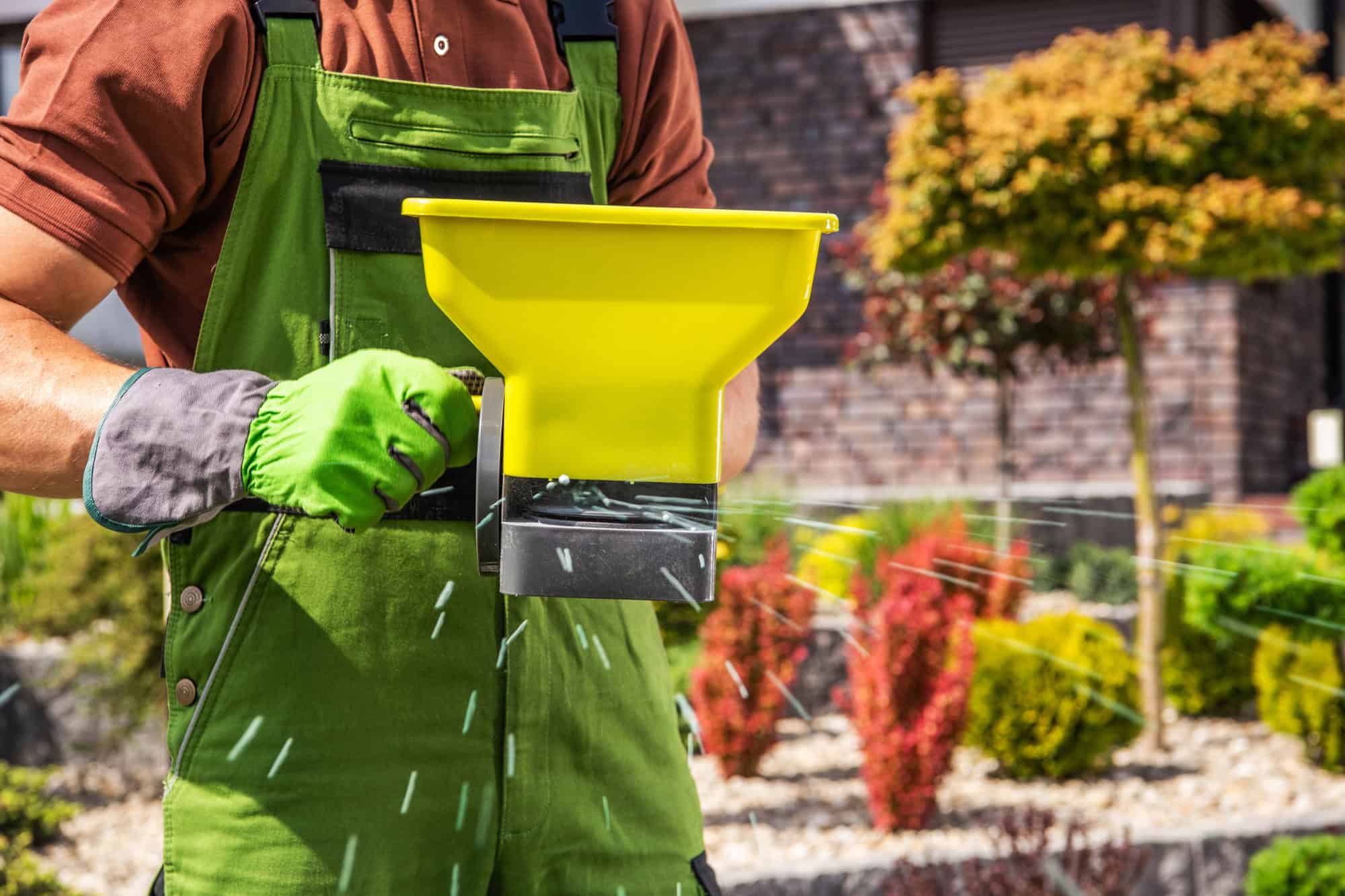
Application is where good feeds still go wrong, because uneven spreading causes the very scorch and streaking you bought a slow-release product to avoid. Use the rate printed on the bag, typically 25 to 35g per square metre, and spread it with a calibrated drop or broadcast spreader rather than by hand, which is impossible to do evenly. For a typical 50 square metre lawn that means around 1.25 to 1.75kg per application. Walk at a steady pace, then make a second pass at right angles to the first at half the rate, which evens out any gaps far better than a single heavier run. Feed when the soil is moist, ideally with rain forecast within a day or two, or water the granules in yourself with the equivalent of about 5mm of rain so the coating starts to work and no granules sit dry against the leaf. Never feed a parched, heat-stressed lawn in the middle of a drought, slow-release or not, because grass that is not actively growing cannot use the nutrients and the salts simply sit there. Wait for cooler, damper weather, choose a slow-release feed, spread it evenly, and you get weeks of steady colour with none of the scorch that catches out the quick-feed shortcut.
It also helps to read the small print on the bag rather than just the headline claim. A figure such as “contains 60 percent slow-release nitrogen” tells you most, but not all, of the nitrogen is coated or organic, while the rest is quick-acting to give an early colour response. That blend is fine for summer as long as the overall nitrogen figure is moderate. What you want to avoid is a product where the whole nitrogen content is fast-acting and the headline promises a rapid green-up in days, because that is a spring formulation wearing summer packaging. If the bag lists the coating type, such as polymer-coated or sulphur-coated urea, or names an organic source like dried poultry manure or seaweed, you can trust it to release gradually. Store any leftover feed somewhere cool and bone dry with the bag sealed, because granules that absorb moisture in the shed clump together, break their coatings and lose their slow-release behaviour before you ever spread them.
One last point that catches people out is watering after feeding. A slow-release granule needs a small amount of water to start the release process and to wash any stray granules off the leaf, but it does not want a soaking that floods the nutrients straight past the roots. Around 5mm of rain or an equivalent light watering is ideal within a day or two of spreading. If a heavy downpour is forecast, hold off feeding until after it passes, because a deluge on freshly spread feed wastes much of it to run-off and leaching, which costs you money and can carry nutrients into drains and watercourses where they do harm.
The bottom line for a summer lawn
Quick-release and slow-release feeds are tools for different jobs. The quick feed is a spring sprinter, cheap and fast, ideal when you want a fast green-up and the cool, moist conditions make scorch unlikely. The slow-release feed is the summer marathon runner, releasing its nitrogen at a pace the grass can match, protecting against burn, and lasting long enough that you are not constantly reaching for the spreader. If you understand that the only real difference is the speed at which the nitrogen arrives, the choice through the warm months makes itself. Feed slowly, feed evenly, lean on potassium for drought hardiness, and your lawn carries a steady, even green through the toughest weeks of the year while your neighbour’s quick-fed stripes fade and scorch.