
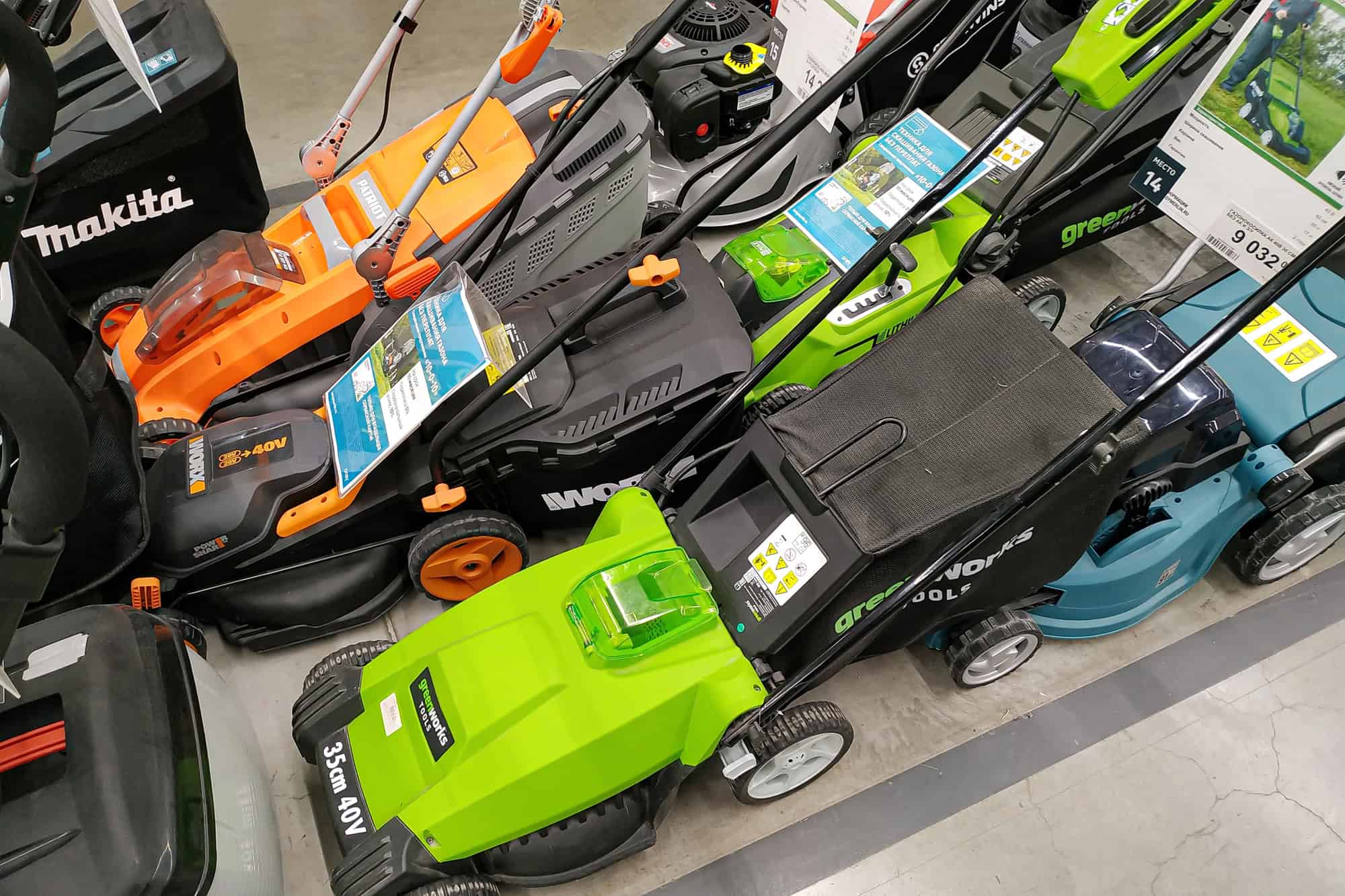
A cordless mower battery is the most expensive part of the machine, often a third or more of what you paid, and summer heat is quietly the biggest threat to how long it lasts. The practical takeaway is simple: never leave the battery sitting in a hot shed, greenhouse, car or in direct sun, never store it fully charged through a hot spell, and let it cool before you charge it. Lithium-ion cells degrade far faster when they are hot, and the difference between careful and careless treatment is a battery that lasts five years or more against one that fades inside two.
The reason comes down to chemistry. A lithium-ion battery holds energy through a chemical reaction that is sensitive to temperature. Heat accelerates the unwanted side reactions inside each cell, permanently consuming a little of the material that stores charge every time the battery gets hot. You do not see it happen, but each summer spent baking on a sunny shelf shaves capacity off the pack, so the runtime slowly shrinks until the mower no longer finishes the lawn on one charge.
The Temperatures That Damage a Battery
Manufacturers and battery specialists broadly agree on the safe ranges. Store lithium-ion batteries somewhere between about 4 and 25 degrees C (40 to 77 degrees F). A garden shed in a heatwave can easily pass 40 degrees C inside, and a battery left in a parked car or a greenhouse can climb far higher, which is squarely in the range that causes lasting harm. Charging has its own window: aim to charge only when the battery is between roughly 10 and 40 degrees C (50 to 104 degrees F). A battery that is hot straight off the lawn should be left in the shade for 20 to 30 minutes before it goes on the charger, because charging a hot cell stresses it further.
During mowing itself, modern packs include a battery management system that protects the cells by cutting power when internal temperatures climb past about 50 degrees C. If your mower seems to lose power or shut off on a hot afternoon in long grass, that is often the protection working rather than a fault. A useful habit is to touch the battery casing during a long session: if it is too hot to hold comfortably, around 55 degrees C, stop and let it cool, because pushing on only ages it faster. Mowing in the cooler morning, and giving the pack a rest between large lawns, keeps temperatures down.
The charger generates heat too, so where you charge counts. A charger sitting on a workbench in a sun baked shed, or stacked against a wall with no airflow, traps warmth around the battery during the very hours it is most stressed. Charge indoors in a cool, dry room, leave space around the charger so air can move, and unplug the battery once it reaches full rather than leaving it on the charger for days. Many quality chargers stop drawing current when the pack is full, but a cheap or aging one may keep trickling, which holds the cells at 100 percent and warm, the two conditions that together do the most harm. If the charger itself becomes hot enough that you would not want to hold it, that is a sign it needs better ventilation.
How to Store It Through Summer and Winter
The charge level you store a battery at affects its lifespan as much as temperature. Lithium-ion cells are happiest sitting between 20 and 80 percent charge. Storing a battery fully charged at 100 percent puts the cells under constant chemical stress that permanently reduces capacity, and this is made worse by heat, so a fully charged pack left in a hot shed is the worst case of all. If you are not going to use the mower for 30 days or more, charge or discharge the battery to roughly 40 percent before putting it away, and keep it somewhere cool and dry such as an indoor cupboard rather than the shed.
The same logic carries into winter. Cold does not damage a lithium battery the way heat does, but a battery left flat and freezing can be harmed, so store it part charged and indoors over winter too, then top it up before the first cut of spring. Check a stored battery every month or two and give it a short charge if it has drifted low, because letting a lithium cell sit completely empty for a long time can leave it unable to recover. The single rule that covers most of this is to store the pack cool, dry and around half charged, never hot and never empty or brimming.
Getting the Most From Each Charge and Each Pack
A few habits stretch both the runtime of a single charge and the working life of the battery. Keep the mower blade sharp, because a blunt blade tears grass and forces the motor to draw more current, draining the battery faster and heating it more. Raise the cutting height and mow more often rather than removing a lot of growth at once, since cutting long or wet grass is the hardest work a cordless mower does and the quickest way to flatten a pack. Match the battery to the lawn when you buy: a 4.0 amp hour pack suits a small to medium lawn, while larger gardens want 5.0 amp hours or more, or a second battery to swap in. A spare 56 volt 4.0 amp hour battery, for example, costs around 120 pounds / 145 US dollars, so protecting the one you have is well worth the small effort.
It helps to have realistic expectations of runtime, because disappointment usually comes from a mismatch rather than a faulty pack. As a rough guide, a 56 volt 4.0 amp hour battery on a typical 18 to 21 inch (46 to 53cm) mower gives somewhere around 30 to 45 minutes of cutting in dry, average length grass, which covers a small to medium lawn comfortably. That figure falls sharply in long, wet or thick grass, where the motor works harder, and it also dips as the battery ages and on very hot or cold days. If you regularly run out before finishing, the answer is usually a higher capacity battery or a second pack to swap in, not constant fast charging of one tired battery, which only heats it and shortens its life further. Letting a warm pack cool while a spare does the work is gentler on both.
When a battery does finally reach the end of its life, and you will know because runtime drops sharply and it no longer holds a charge between uses, do not put it in the household bin. Lithium-ion cells are a fire risk in waste trucks and landfill, and they contain materials worth recovering. Take old packs to a recycling point, many tool retailers and household waste sites accept them free of charge, and check whether your battery is still under warranty first, as many quality packs carry a three to five year guarantee that may cover a premature failure. Keeping your proof of purchase and the original box makes any warranty claim far smoother.
Cared for properly, a good lithium-ion mower battery should give five years of service and often longer, with some lasting up to a decade. Treated carelessly, left fully charged on a hot shelf and charged straight after a hard cut, the same pack can be noticeably weaker within two summers. Keep it cool, store it part charged, let it rest before charging on hot days, and keep the blade sharp, and the most costly part of your mower will quietly outlast the rest of the machine. For more on choosing battery capacity and comparing cordless models, see the mower guides on lawnandmowers.com.