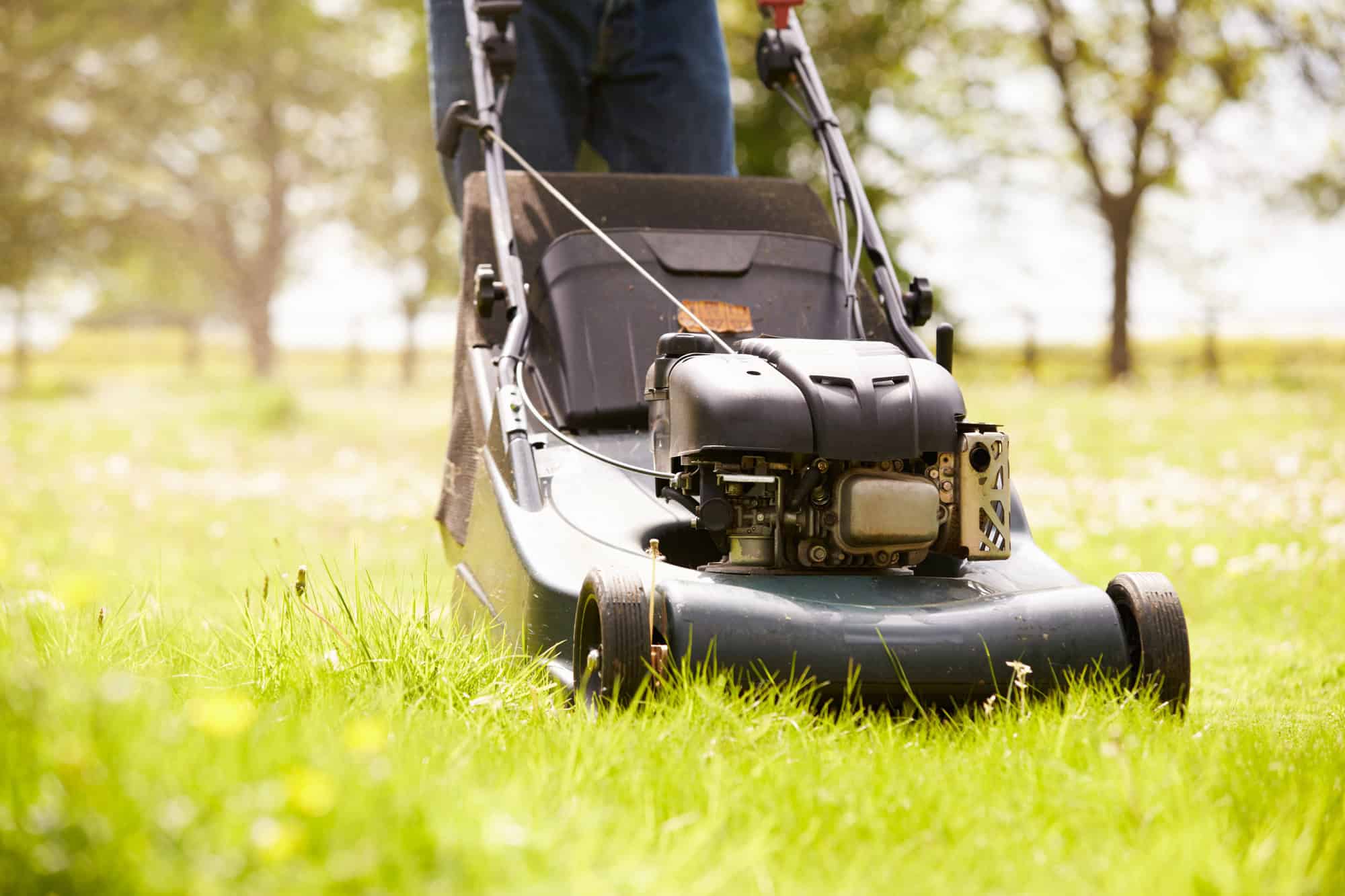
The spring loaded bar you hold against the handle of a walk behind mower is the single most important safety part on the machine. Let it go and the blade stops, on most mowers within three seconds. That bar has a name, the dead man’s handle, and a job worth understanding before you ever tape it down to spare your fingers the effort of holding it.
It is not a comfort grip or an on switch. It is the one thing standing between a spinning blade and whatever your hands and feet do when you slip, trip or reach under the deck. Knowing which type your mower carries, and how to keep it working, is the foundation of using the machine safely.
What the Dead Man’s Handle Actually Does
The proper name is the operator presence control, or OPC. The bar, known as the bail, is spring biased, so it only stays engaged while your hand holds it against the handlebar. The instant you release it, a brake engages and stops the blade. This is not optional kit. Walk behind rotary mowers have been required to bring the blade to a halt within three seconds of release from 1982 onward under consumer safety rules, and comparable machinery standards apply to mowers sold across other markets.
On most petrol walk behind mowers, releasing the bar does two jobs at once. It grounds the ignition so the engine cuts out, and a brake band clamps the engine flywheel, dragging the flywheel and the blade bolted directly below it to a stop together. On a cordless or corded electric mower, letting go of the bar cuts power to the motor and an electric or mechanical brake pulls the blade up short. Either way, the moving parts stop fast enough that a hand cannot reach them in the gap.
Three seconds sounds generous until you think about what a mower blade is doing. The blade on a 46 cm (18 inch) deck turns near 3,000 rpm, which puts the blade tip travelling at well over 150 mph. A cut from a tip at that speed does not scratch, it amputates. The three second limit was set around the worst case, the time it takes a person to slip and put a hand or foot toward the deck, and it exists so that the blade is already slowing hard before contact is possible. Older mowers built before the rule could coast for six or seven seconds after the engine died, long enough for the injuries that prompted the standard.
Blade Brake Clutch Versus Flywheel Brake
Two systems deliver that three second stop, and they feel very different in the hand. The one you meet most often, and the cheaper of the two, is the flywheel brake, sometimes called an engine kill system. Release the bar and the engine and blade stop together. To carry on you pull the starter cord again. Every time you empty the grass box, move a garden toy or pause to clear a stick, you stop the engine and restart it.
The alternative is a blade brake clutch, or BBC. It splits the controls in two. One bar, held down, keeps the engine running the whole time you work, and a second lever engages the blade through a clutch. Let go of the blade lever and a brake stops the blade in under three seconds while the engine carries on idling. Squeeze it again and you mow on, with no pull of the cord. It costs more and adds a little bulk, which is why it turns up on higher end petrol mowers and almost every commercial machine, where operators start and stop the blade dozens of times an hour.
The difference shows up in price and in daily use. A basic push mower with a flywheel brake starts around £120/$150, while a self propelled petrol mower fitted with a blade brake clutch usually sits from £350/$440 upward at B&Q, Home Depot or a dealer. For a small lawn cut in one unbroken pass, the flywheel brake is fine and the restarts barely register. For a larger or broken up garden, where you stop often to empty a full box or skirt flower beds and paths, the blade brake clutch earns its keep in saved pull cords, and it removes the temptation to leave the blade running while you tip out clippings.
Telling them apart takes ten seconds in the garden. Start the mower, then release the control bar. If the engine dies along with the blade, you have a flywheel brake. If there is a separate lever for the blade and the engine keeps running when you let that lever go, you have a blade brake clutch. Knowing which you own tells you what to expect every time you pause, and it decides whether the restart nuisance is a reason to look at a different mower.
Why Bypassing It Is a Serious Mistake
Lawn mowers injure tens of thousands of people a year, and a large share of those wounds come from blade contact: lost fingers and toes, deep lacerations and, at worst, amputations. The three second stop is built for the split second events that no amount of care fully removes. You slip on a wet slope and the mower slides back over a foot. The deck tips as you turn on rough ground. A jam tempts you to reach under without stopping. A child runs into the garden behind you. In each case the difference between a fright and a hospital visit is a blade that has already stopped.
The temptation to defeat the control is real. A big lawn cramps the hand, and a flywheel brake mower that needs a restart at every pause frays the patience. So people zip tie or tape the bail down. That one shortcut turns the mower into a machine whose blade never stops until the fuel or battery runs dry, which strips away the protection the whole design is built around. The safer answers cost nothing or fix the real problem: relax your grip rather than clench it, take breaks on a long lawn, and if the constant restarting drives you to tape the bar, buy a blade brake clutch mower instead of disabling the one on the machine you have.
Treat a jam the same way every time. Release the bar, wait for everything to stop, and on a petrol mower pull the spark plug cap off before you go near the blade, or on a cordless mower take out the battery or safety key. A blade can turn the engine over and an engine can turn the blade, so a machine that looks dead can still bite if a hand nudges the blade while the plug is connected.
Bystanders raise the stakes further. A running mower can fling a stone out from under the deck at that same blade tip speed, so a control that stops the blade the moment you turn to wave someone back is doing real work. Keep children and pets well clear of a mower in use, cut across a slope rather than up and down where a slip sends the machine toward your feet, and build the habit of releasing the bar whenever you look away from the deck. The reflex costs a second and removes the one scenario the designers feared most.
Test the control every few weeks. On a hard surface, start the mower, release the bar and count how long the blade takes to stop, which you can hear and often see. Longer than three seconds, or an engine that keeps running when it should cut, means a stretched cable or a worn brake pad, and the mower needs fixing before its next use. Check the bail cable for fraying and kinks and keep it running freely, and never oil the brake band, as oil on the friction pad stops it gripping and lengthens the stop. A dead man’s handle only protects you while it works, and a blade that keeps spinning after you let go is exactly how the worst mower injuries happen.