Buying your first petrol lawn mower is one of those decisions where the wrong choice costs you two or three times more over five years than the right one. The difference between a £150 supermarket special and a £400 entry-level machine from a serious manufacturer is roughly one season of use versus ten. Knowing what to look for before you spend the money saves you the typical first-time mistake of buying again within 18 months.
Petrol mowers still have a place even in a battery age. If your lawn is over 300m2 (about 3,200 square feet), if it has slopes steeper than about 10 degrees, if you have a wet grass climate, or if you simply want one machine that starts every spring for 15 years without battery degradation worries, petrol is the practical answer. The buying logic below filters the decision down to four specifications, and once you have those nailed, the brand and model choice falls into place quickly.
Match Cutting Width to Lawn Size
The first specification to settle on is the cutting width, because it sets how long mowing takes. A 39 to 41cm (15 to 16 inch) deck suits lawns up to 250m2 (about 2,700 square feet). A 46 to 48cm (18 to 19 inch) deck is the sweet spot for 250 to 600m2 (2,700 to 6,500 square feet). A 51 to 53cm (20 to 21 inch) deck makes sense for 600 to 1,200m2 (6,500 to 13,000 square feet). Above that, you are looking at a rear-roller or a ride-on machine, not a walk-behind.
The reason cutting width carries so much weight is that mowing time follows the formula: time = lawn area divided by (cutting width minus overlap) multiplied by walking speed. A 41cm deck with the standard 5cm overlap cuts a 36cm strip per pass at typical walking pace, which is about 18 minutes per 100m2. A 46cm deck cuts a 41cm strip at the same pace, which drops to 15 minutes per 100m2. On a 400m2 lawn that is an extra 12 minutes saved per mow, multiplied by 30 mows per year, multiplied by ten years equals 60 hours of your life back.
The mistake to avoid is oversizing. A 53cm deck on a 100m2 lawn cannot turn in tight corners, will not fit through a standard 70cm side gate without lifting, and is heavier on the arms when steering than a smaller mower. Match the deck to the area, not to your ambition.
Decide Between Hand-Propelled and Self-Propelled
A hand-propelled mower (the operator pushes it forward) is fine for lawns up to about 250m2 that are level or have a gentle gradient under 5 degrees. The Mountfield HP41 is the benchmark in this category, with a 39cm deck, a 123cc Mountfield ST120 engine, and a UK price of £157 to £189/$200 to $240 depending on retailer. It has a 40 litre grass collector, five cutting heights from 25 to 70mm, and a five-year warranty. For a small first lawn it is hard to beat.
A self-propelled mower has a drive system that pulls the mower forward at walking pace, so all you do is steer. For lawns over 250m2, sloping ground, heavier wet grass conditions, or any operator over 50 or with knee or back issues, self-propelled is worth the extra outlay. The Mountfield SP41 is the self-propelled version of the HP41, mechanically identical except for the drive system, at around £225/$285. The Stihl RM 248 T at £440/$560 sits a step up with a 46cm deck and a 1,200m2 capacity.
For slopes, the drive type is the deciding factor. Front-wheel drive mowers work well on flat ground because they are easy to tip back and turn, but they lose grip on slopes because your weight shifts the load onto the rear wheels and the front wheels spin uselessly. Rear-wheel drive grips better uphill because gravity loads the drive wheels. All-wheel drive is overkill for most domestic lawns but valuable on lawns with multiple slope directions or wet conditions. A simple test before buying: any slope steeper than about 1m of rise over 10m of run (roughly 5 to 6 degrees) is enough to need rear-wheel drive.
Engine Size and Brand Are the Long-Term Calls
Engine displacement is measured in cubic centimetres (cc). For a 39 to 41cm deck, 100 to 140cc is the right band. For a 46 to 48cm deck, 140 to 170cc. For a 51 to 53cm deck, 160 to 200cc. Engines too small for the deck strain in long grass and burn out 3 to 4 years earlier than properly matched units.
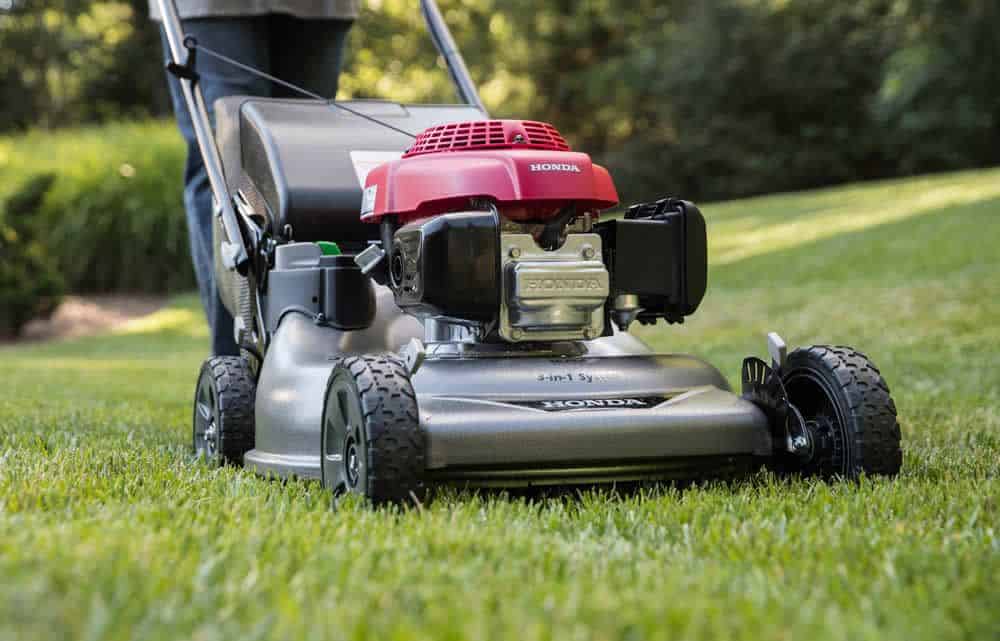
The engine brand is more important than the mower brand because the engine is the heart of the machine. Honda GCV160 and GCV170 engines (used in Honda IZY mowers, Hayter Spirit and several other premium machines) are widely regarded as the most reliable small petrol engines available, with a documented service life of 15 to 20 years under domestic use. Briggs and Stratton 550e, 575EX and 625EX engines are the standard fit on most mid-range domestic mowers worldwide, and are reliable for 10 to 15 years if serviced annually. Loncin, Kohler and Stiga engines are the next tier and are perfectly adequate for 8 to 12 years of use.
The engines to be cautious about are unbranded or generic engines on £150 supermarket mowers. These typically come with no spare-parts supply chain, so a fouled carburettor at year three turns into a binned mower because no service centre can source the components. Pay 30 to 50 percent more once and avoid the second purchase.
Features Worth Paying For (and Features Worth Skipping)
Three features truly earn their cost. The first is a 4-in-1 deck system that lets you choose between collecting clippings into a bag, mulching them back into the lawn, side-discharging them, or rear-discharging them. Mulching saves 30 to 40 percent of mowing time across a summer because you stop emptying the box, and the clippings return roughly 25 percent of the lawn’s annual nitrogen requirement to the soil for free.
The second is a single-point height adjustment lever, which lets you change the cut height in one motion rather than adjusting each wheel separately. On a typical lawn you might cut at 35mm in spring, 45mm in summer and 30mm in autumn, and a single-lever system makes those switches a 2-second job rather than a 2-minute one.
The third is auto-choke (often branded as Autochoke or Easy Start). Older petrol mowers needed manual choke adjustment to start cold, which is the source of most “my mower won’t start” frustration. Modern auto-choke engines (Stiga ST series, Honda GCV, Briggs and Stratton 575EX) pull the choke automatically based on engine temperature, so you pull the cord and the engine runs.
Features that mostly add cost without much benefit are electric start (an £80 to £150/$100 to $200 upcharge for a battery and starter motor on a machine that pulls easily anyway), aluminium decks on mowers under £400 (the corrosion protection on steel decks is good enough at this price), and rear rollers on mowers smaller than 46cm (rollers add value for stripes but the deck width is too narrow to make stripes visible).
Where to Buy and What to Expect from Servicing
Buy from a dealer with a service department rather than from a supermarket or a generalist DIY shop. The reason is that a domestic petrol mower needs an annual service in year three onwards: oil change, spark plug, air filter and blade balance, costing £60 to £100/$80 to $130 at a good dealer. A mower bought through a dealer typically comes with a free first-year service and a pre-delivery inspection that supermarket models do not get. B&Q, Home Depot, Lowe’s, Amazon and Wickes sell mowers but cannot service them, so you end up paying for service trips to a dealer anyway. Local lawnmower specialists, agricultural merchants, and dealer chains such as Just Lawnmowers, Mower Magic, Gardenmachinerydirect.co.uk and Home Depot’s authorised service network are the right starting points.
Warranty length is a useful indicator of build quality. A 1-year warranty is the legal minimum and a sign the manufacturer expects problems. A 3-year domestic warranty is standard for mid-range machines. A 5-year warranty (Mountfield’s standard) or 5+ year warranty (Honda) is the marker of a machine the manufacturer is confident in. Read the warranty terms carefully though: most exclude wear items (blade, belt, air filter) and require annual servicing through an authorised dealer to remain valid.
The Honest Best-Buy Shortlist
For a lawn under 250m2, the Mountfield HP41 at £157 to £189/$200 to $240 is the right answer for a first mower. Easy to start, easy to maintain, and supported by every UK garden machinery dealer plus a 5-year warranty. The SP41 self-propelled version at around £225/$285 is the upgrade if you have any slope or are over 60.
For 250 to 600m2, the Mountfield SP46 at around £350/$445 or the Stihl RM 248 T at £440/$560 are the practical choices. The Stihl costs more but has the slightly better engine, better build quality and the dealer network that comes with Stihl ownership.
For 600m2 and up, the Hayter Spirit 41 at around £400/$510 with a Honda GCV160 engine, or the Hayter Harrier 48 at £750/$950, are the long-haul machines. Both are designed to last 15 to 20 years with annual servicing.
Spend the extra £150 to £200 over a supermarket special on your first petrol mower and the machine will outlast three of the cheaper alternatives. That is not a marketing pitch, it is the difference between an engine designed for 500 lifetime running hours and one designed for 2,000.