The single most expensive mistake with a petrol mower is putting the wrong kind of fuel in it, and whether a fuel is right or wrong depends entirely on one thing: does the engine run on two strokes or four? A four-stroke mower takes plain petrol in the tank and its oil goes in a separate sump. A two-stroke mower burns petrol and oil mixed together in the tank at a set ratio. Fill a two-stroke with straight petrol and it runs for a few minutes with no lubrication and then seizes solid. Pour pre-mixed two-stroke fuel into a four-stroke and it smokes, fouls the plug and gums up the exhaust. Knowing which engine you own, and feeding it correctly, is the difference between a mower that lasts fifteen years and one that dies in a season.
Almost every walk-behind mower sold today is a four-stroke, and two-stroke walk-behind mowers have all but vanished from the market. Plenty of older machines are still in sheds, though, and two-stroke engines live on in strimmers, hedge trimmers, chainsaws and some brushcutters, so the moment you own more than one piece of garden kit you are almost certainly juggling both fuel types. Getting them mixed up is easy, and the engines do not forgive it.
What the Two Designs Actually Do Differently
A stroke is one travel of the piston up or down the cylinder. A four-stroke engine completes its cycle in four of them: intake pulls in fuel and air, compression squeezes the mixture, combustion fires it and drives the piston down, and exhaust pushes the burnt gas out. That gives each job its own dedicated stroke, and it lets the engine keep its lubricating oil in a separate sump where it never enters the combustion chamber. The oil stays clean, the burn stays clean, and the exhaust comes out with almost no smoke and only a mild smell.
A two-stroke engine does the whole cycle in two strokes, combining intake and compression on the way up and combustion and exhaust on the way down. It fires on every single revolution rather than every other one, which is why a two-stroke of the same size feels punchier and weighs less. The trade-off is lubrication. With no separate oil sump, a two-stroke has to carry its oil in the fuel itself, so a measured dose of oil rides through the crankcase and cylinder with every drop of petrol and burns off alongside it. That is the blue haze and the sharp oily smell a two-stroke leaves behind, and it is also why the oil has to be replaced constantly by adding more to every tank.
Feeding Each Engine the Fuel It Wants
A four-stroke mower runs on ordinary unleaded straight from the pump, poured neat into the fuel tank. Its oil is a completely separate matter: you fill the sump with a dedicated four-stroke engine oil, usually an SAE 30 or a 10W-30, check the level with the dipstick before each mow, and change it once a season or roughly every 50 running hours. The two never mix. Overfill the sump or tip the mower the wrong way and oil can find its way into the cylinder, which is the usual cause of a four-stroke that suddenly blows white smoke.
A two-stroke needs its petrol and oil blended before it goes in, at the ratio the manufacturer prints on the machine, commonly 40:1 or 50:1. That means 40 or 50 parts petrol to one part of a proper two-stroke oil, which comes to 25ml of oil per litre of petrol at 40:1, or 20ml per litre at 50:1. Use a two-stroke oil designed for the job, not sump oil, measure it with the cap that comes on the bottle or a marked jug, and shake the can to blend it before filling. Mix too little oil and the engine runs hot and seizes; mix too much and it smokes heavily, fouls the spark plug and coats the exhaust port in carbon. The correct ratio is not a suggestion, it is what keeps the moving parts alive.
One modern fuel problem hits both engines: ethanol. Most pump petrol now contains up to 10 percent ethanol, sold as E10, and ethanol attracts water and turns acidic as it sits, which corrodes carburettors and rots fuel lines over a few months of storage. Small garden engines suffer far more than cars, as they sit unused for weeks. Buy fuel in small amounts you will use up quickly, add a fuel stabiliser such as Briggs & Stratton fuel treatment or STA-BIL (around £8/$10 a bottle from B&Q, Home Depot, Amazon or Screwfix) if petrol will sit longer than a month, and drain the tank before winter storage. For a valued two-stroke tool, ready-mixed alkylate fuel such as Aspen 2 (around £25/$32 for 5 litres) contains no ethanol, keeps for years and burns far cleaner, which many owners find pays for itself in avoided carburettor repairs. The same clean-burning fuel suits a four-stroke mower too, in the correct neat form rather than a mix, so one type of quality fuel can serve every small engine in the shed and take much of the guesswork out of winter storage.
How to Tell Which Engine You Have
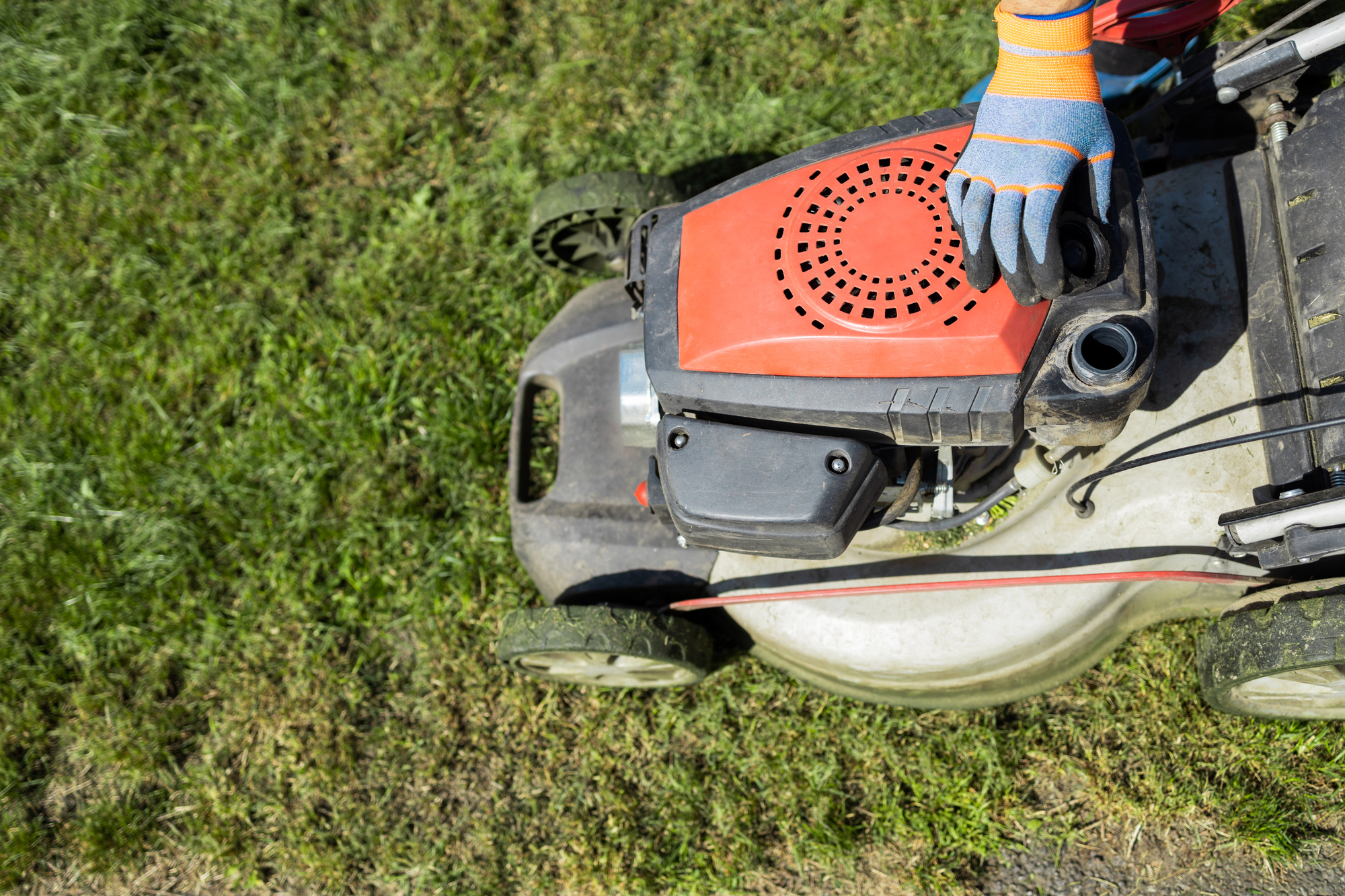
If you are not certain, look before you fill. The clearest sign is the number of filler points. A four-stroke has two separate caps, one for petrol and one for the oil sump, and usually a dipstick. A two-stroke has a single fuel cap and no separate oil fill at all, and the cap or a nearby label often prints a ratio such as 50:1. The engine data label will state the oil type or the mix ratio directly. As a rule of thumb, a walk-behind rotary mower bought in the last twenty years is a four-stroke, while a strimmer or chainsaw with one filler cap and a mixing bottle in the box is a two-stroke. When the label has worn away, the safest move is to check the model number against the maker’s site before adding anything.
The practical habit that prevents disaster is keeping your fuels clearly apart. Store four-stroke unleaded in one container and pre-mixed two-stroke in another, label both in bold, and never top up a mower from a can you have not read. A garden shed with an unmarked jerrycan of mystery fuel is how a good four-stroke ends up choking on two-stroke mix, or a two-stroke strimmer seizes on neat petrol. Two minutes with a marker pen protects hundreds of pounds of equipment.
Which One to Buy Now
For a mower, the choice has largely been made for you: new walk-behind and ride-on machines run four-stroke engines, and that is the right call for a mower. Four-strokes are quieter, cleaner, thriftier with fuel and far less fussy about it, and a mower does not need the featherlight build that made two-strokes popular in handheld tools. Where two-strokes still make sense is at the end of a long pole or a spinning chain, where every kilogram you are holding up counts and the simplicity of an engine with fewer moving parts is worth the extra fuss over mixing. If you are replacing an old two-stroke mower, treat it as a chance to move to a clean four-stroke or a cordless battery machine and leave the mixing bottle behind.
Whichever engines end up in your shed, the rule that protects them never changes. Learn what each one drinks, keep the cans labelled and separate, respect the mix ratio to the millilitre on anything two-stroke, and keep old ethanol petrol from sitting in a tank for months. Do that and a petrol garden engine will start on the second pull and run for years. Ignore it, and the repair bill or the replacement arrives far sooner than it should.