The robot mower used to be the gadget your neighbour with the engineering job bought because he liked machines. In May 2026 it has become the most-asked-about lawn tool at every garden centre in the country, and the reason is simple. The price floor for a working, reliable, branded robot mower in the UK has now dropped under £500, and the maths against a new petrol mower or even a decent cordless rotary stack up faster than most homeowners realise.
For a small UK back garden of up to 400m², a £500 robot mower will save you roughly 60 hours of mowing time per year, eliminate fuel costs, eliminate the storage problem and produce a thicker, denser lawn than the same garden could ever produce with a fortnightly hand cut. The reason the lawn improves is the same reason the time savings happen: a robot mower cuts every day or every other day, takes a tiny clipping each time and mulches it back into the lawn as free nitrogen.
Why the £500 Price Point Changes the Decision
Until around 2023, the cheapest reliable robot mowers from established brands started around £700. The sub-£500 models were either cheap unbranded units that broke within a year, or boundary-wire mowers from secondary brands whose support disappeared if anything went wrong.
That changed when Worx, Yard Force and Husqvarna all released entry-level models in the £350 to £499 bracket, and Bosch followed with a slimmed-down Indego variant in the same range. For the first time, you can buy a unit from a manufacturer with a UK support office and a parts supply chain for less than the cost of a midrange Honda petrol mower.
The four models worth considering at this price point in May 2026 are:
Worx Landroid M500 WR165E, £399 at Argos. Covers up to 500m². Boundary-wire navigation. Comes with one battery and a charging dock. The cheapest reliable option for a typical UK back garden.
Yard Force Compact 300RBS, £349 at Amazon UK. Covers up to 300m². Best for the smallest gardens. Slimmer body than the Worx so it handles narrow gaps between flower beds.
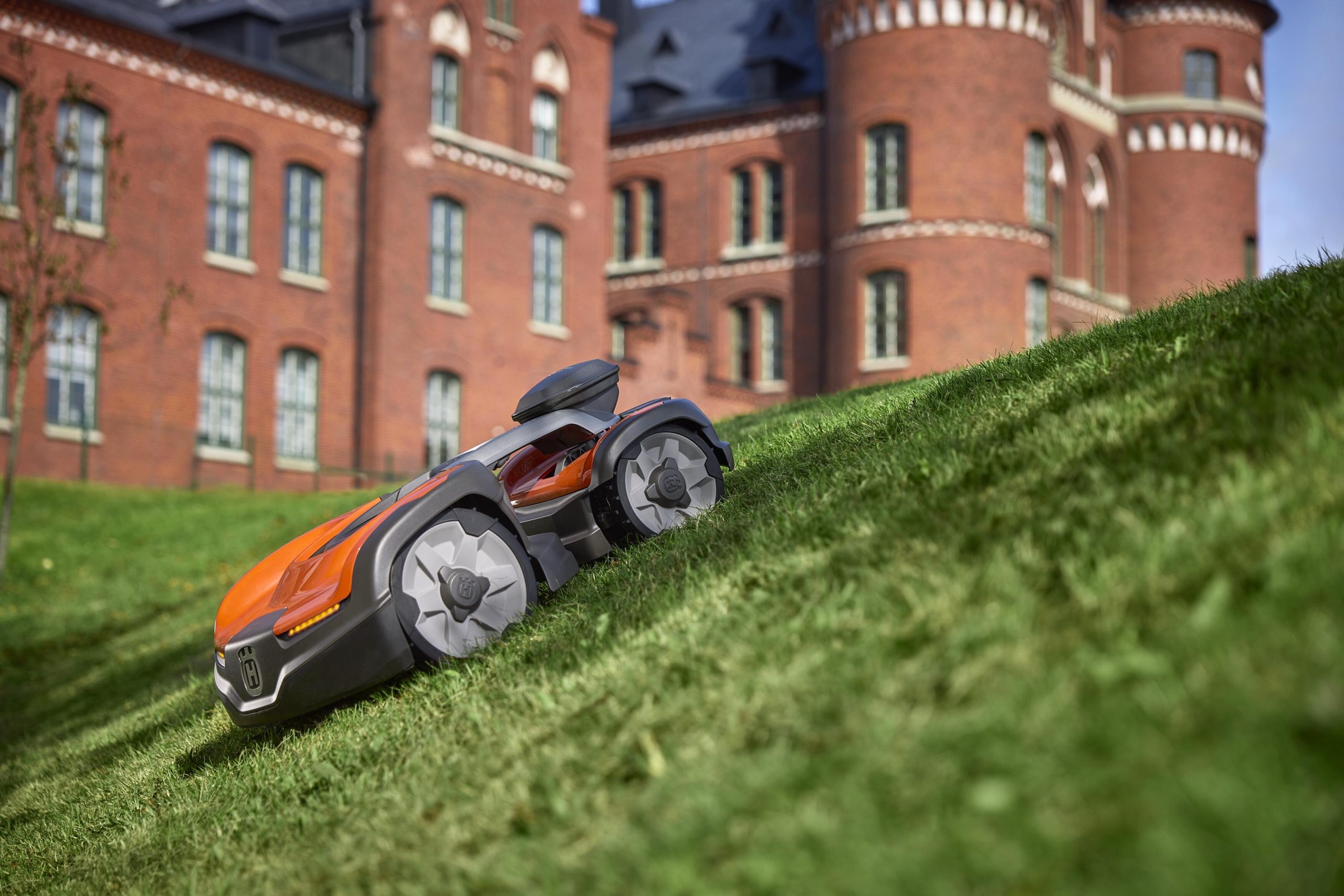
Husqvarna Automower 105, £499 at B&Q. Covers up to 600m². The cheapest unit from the brand that effectively invented the category. Quieter than any of the others (58dB vs 65dB on the Worx). Resale value is higher than competitors if you ever need to sell it on.
Bosch Indego XS 300, £429 at Wickes. Covers up to 300m². Distinctive because it cuts in parallel lines rather than the random pattern of the others, so it produces visible mowing stripes more like a conventional mower.
The Time Maths Most Buyers Skip
The real argument for a robot mower is time, not money. A typical 100m² UK back garden takes 25 to 30 minutes to mow with a cordless rotary, including setting up, mowing, emptying the box and putting the mower away. Mow weekly for 30 weeks of the year and you have invested 15 hours.
If you currently mow that lawn twice a week (which most lawn care guides recommend from May to July), that is 25 to 30 hours. Over a five-year ownership window of a £499 Husqvarna Automower 105, you have just bought back 125 to 150 hours of Saturday mornings for £499. That works out at £3.30 to £4.00 per hour of time recovered, which is a better return than almost any other domestic time-saving purchase you can make.
The other line that does not show up in the price comparison is the fuel saving. A petrol Honda HRG416 uses roughly 0.4 litres of petrol per cut. At £1.43 per litre (May 2026 UK average for unleaded), that is 57p per cut. Mowed 40 times a year, that is £23 of fuel per year, plus £8 to £15 a year in oil changes. Over five years that is £150 to £200 of running cost that disappears with a robot.
How a Robot Mower Actually Changes the Lawn
The reason robot-mown lawns look noticeably better than hand-mown lawns within 6 to 8 weeks is mulching at high frequency. Conventional mowing takes 30 per cent of the grass height off in one cut once a week. The robot takes 5 to 8 per cent off every day. The clippings produced by a daily 5mm cut are tiny, fall back into the sward and disappear within hours.
Those mulched clippings return roughly 25 per cent of the lawn’s nitrogen needs across a full season, which means you can drop your annual feed application by one or two doses and save another £20 to £30 in fertiliser.
The lawn also thickens up because the grass plants are constantly being trimmed at the same height. The crown of each plant is stimulated to produce more tillers, which fills in the spaces where weed seeds would otherwise germinate. Most robot mower owners notice a 30 to 50 per cent drop in lawn weeds within two seasons without any change in herbicide use.
The Boundary Wire Question
The four models above are all boundary-wire mowers, which means you have to lay a thin wire around the perimeter of the lawn and around any flower beds, trees or features the robot needs to avoid. The wire is pegged into the soil at intervals and disappears under the grass within 4 to 6 weeks. It is not visible from any reasonable distance once the lawn has grown over it.
Installation takes 90 minutes to 3 hours for a typical back garden depending on the shape. A simple square lawn with one flower bed is a 90-minute job. A garden with sweeping curves, three trees and an island bed is closer to 3 hours. The wire and pegs are supplied with the mower in every case.
The boundary wire is the only thing wire-free robot mowers (Segway Navimow, Mammotion Luba) have over the wired models, and the wire-free options start around £600 for the cheapest reliable unit and run up to £2,500. If you are reading this as a first-time robot mower buyer, the boundary wire is not the obstacle the marketing suggests.
The Five Reasons a Robot Mower Is Not For You
Before recommending one, the honest list of situations where a robot mower is the wrong purchase:
Your lawn has a slope steeper than 35 per cent in any one section. The entry-level models all max out at 30 to 35 per cent slope. If you have a slope you can barely walk up with a wheelbarrow, the mower will not handle it either.
Your lawn includes multiple unconnected zones (a front lawn, a back lawn and a side strip) and you cannot dig a buried channel between them. The mower can only cut what it can reach from the charging dock.
The lawn has more dog mess than you are prepared to deal with daily. Most robot mowers will simply mow over a deposit and spread it across the lawn. If you have a dog, you need a 30-second pre-mow sweep every day or two.
You have very young children or pets who play on the lawn during the day. Most robots include lift sensors and stop the blades within 0.3 seconds of being tilted, but scheduling the cut for early morning or late evening is the cleaner solution and means you live with a mower that runs at 5am.
You have less than 50m² of lawn. A small lawn does not justify the upfront cost. A cordless mower (Bosch Easy Rotak 32 at £79 from B&Q or Flymo SimpliMow 300 at £89 from Argos) does the job in 10 minutes and saves you most of the £500.
The Running Costs Most Buyers Underestimate
The running costs of an entry-level robot mower over 5 years are modest but worth knowing:
Replacement blades every 6 to 8 weeks during the cutting season. A pack of 30 Worx Landroid blades is £14.99 on Amazon UK and lasts most users two seasons.
Battery replacement around year 5 or 6. The lithium-ion battery in a Worx M500 is £79 at the time of writing. Husqvarna and Bosch replacement batteries run £99 to £129. Budget around £80 to £100 in the second half of the ownership window.
Electricity to charge the mower runs around £8 to £12 per year at May 2026 UK rates. Less than a single tank of petrol for the rotary it replaces.
Total cost of ownership over five years for a Worx Landroid M500: £399 purchase, £30 in blades, £90 battery replacement, £50 in electricity. £569 over five years for a lawn that gets cut up to 150 times a year automatically.
What to Look For When You Buy
Lawn size rating: pick a model rated for at least 25 per cent more than your actual lawn area. A 400m² lawn needs a 500m² rated mower, not a 400m² rated mower. This buys you margin for slopes, obstacles and the days the mower gets confused.
App control: every model worth buying has a smartphone app for scheduling. Check the app is still being updated (read the App Store reviews for the last 6 months).
Rain sensor: every model in this list has one. Confirm it is enabled in the setup. A robot that mows in heavy rain damages the lawn and shortens its own life.
Warranty: 2 years from Worx and Yard Force, 3 years from Bosch and Husqvarna. The longer warranty is worth roughly £40 to £50 in expected repair costs over the ownership period.
Stock and support in the UK: all four brands above have UK-based service centres. Avoid unbranded direct-import units below £300, where warranty claims involve shipping the mower to China.
A robot mower at £400 to £500 is no longer a luxury purchase for the lawn-obsessed. For most UK back gardens between 100m² and 400m², it is the lowest-running-cost, lowest-effort mowing solution on the market in 2026, and it produces a better-looking lawn than the alternative. Worth your weekend morning a lot more than the petrol mower it replaces.