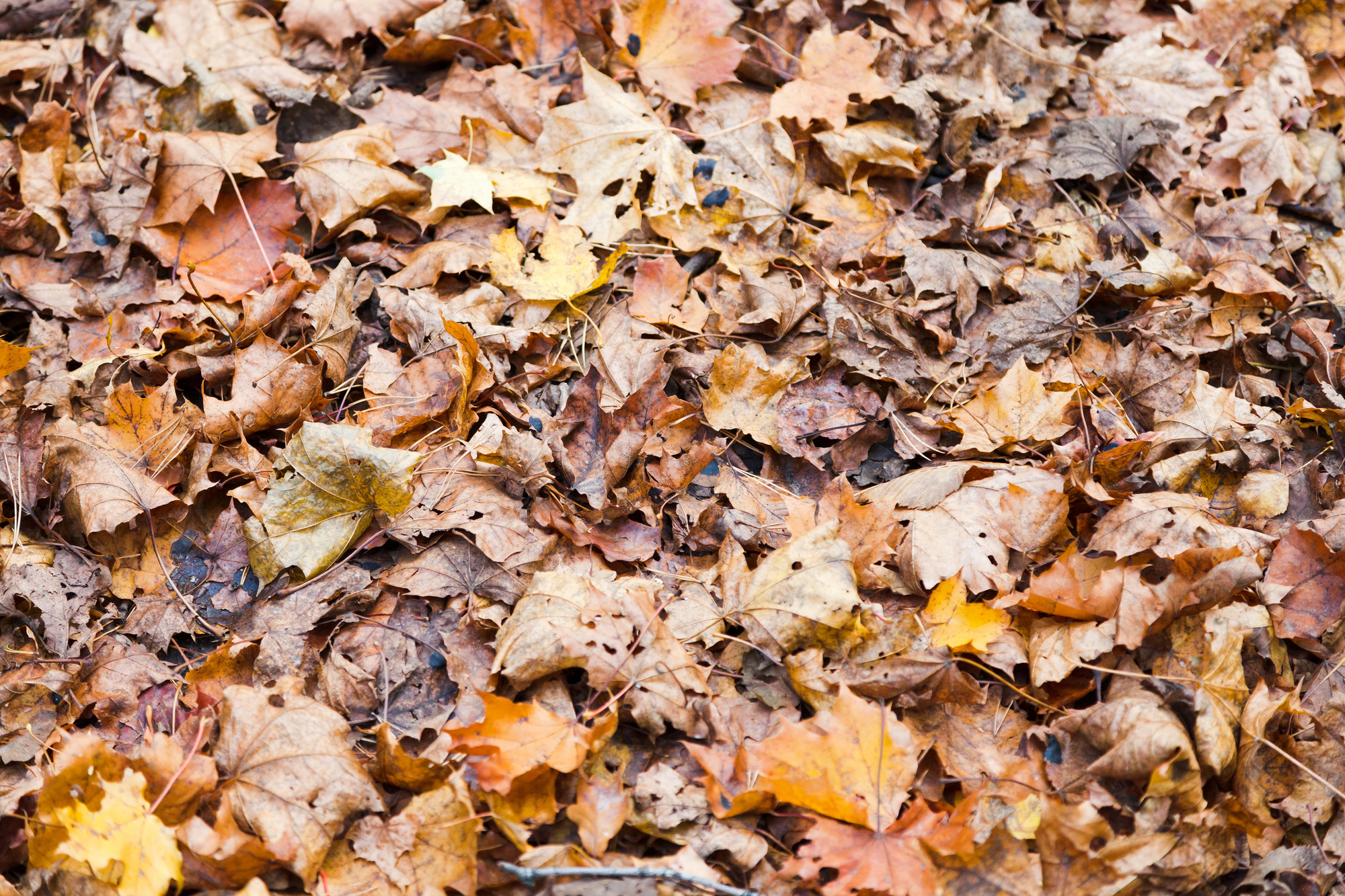
- A thin scatter of leaves does no harm, but a wet mat left for a couple of weeks blocks the light and air the grass needs and leaves yellow, thinning patches behind.
- Raking by hand is the cleanest way to lift them, and running the mower over a light covering with the box on shreds the leaves and feeds the clippings straight back.
- Piled into a cage of chicken wire or a punctured bin bag, the same leaves rot down into leaf mould, a free soil conditioner and autumn top-dressing.
The Leaves Are Not Feeding Your Lawn, They Are Smothering It
There is a comfortable belief that fallen leaves left on the grass will rot down over winter and feed the lawn, so the tidy thing to do is nothing. It is half right. Leaves do rot into something the garden wants. They just will not do it lying flat on living grass without taking the grass down with them.
The Royal Horticultural Society is blunt about the reason: remove fallen leaves from lawns so they do not smother the grass, blocking out light and moisture. Grass does not shut down in autumn. It keeps photosynthesising and keeps growing while the soil stays above 7°C (45°F), which in cooler northern climates runs well into November. A light-tight mat of wet leaves stops that cold. The blades underneath cannot catch any light, so they stop making food, pale from green to yellow, and thin out. Trapped damp sits against the leaf tissue and invites fungal patch disease, which spreads fastest on soft, sheltered, overfed growth. Worms drawn up to the rotting layer leave muddy casts that smear across the surface the moment anyone walks on it.
How fast the harm shows depends on the leaves and the weather. Broad, flat leaves such as sycamore, plane and horse chestnut do the most damage, as they lie down into an airtight sheet that water cannot drain through. Small leaves such as birch do less on their own but pile deep under the tree they drop from. A dry, breezy week buys you time. A wet one glues the layer down within days, and a fortnight under a soaked mat is enough to turn healthy autumn grass soft and yellow.
Leave a thick layer in place through autumn and winter and you do not get a fed lawn in spring. You get pale, dead patches where the mat sat longest, and moss and flat-growing weeds moving into the bare ground the dead grass left behind. The fix is not hard, and most of the leaves need not leave the garden at all.
When the Leaves Are Fine to Leave
This is where you can do less than the tidy gardener down the road. A thin, dry scatter you can still see grass through does no harm and breaks down fast enough on its own. You do not need to chase every leaf off the lawn the day it lands.
Better still, put the mower to work on a light covering. Run a rotary mower over the leaves with the grass box on and the blade chops them into confetti and mixes in grass clippings at the same time. The RHS notes that mowing leaves with a rotary mower shreds them, speeds up their rotting and adds clippings that raise the nutrient value of the end result. Tip that shredded mix straight onto a border as a mulch, or add it to the leaf pile where it will rot down twice as fast as whole leaves. What has to come off, every time, is the thick soggy mat that builds under trees and settles in the low, shaded corners of the lawn where it never dries out.
How to Clear Them Properly
Raking is the best option for most lawns, and the RHS says so outright. A spring-tine lawn rake (£8 to £15, or $10 to $20) flexes over the grass and lifts leaves without tearing at the turf the way a stiff garden rake can. Work when the leaves are dry and still rather than wet and pinned down, and rake in the direction the wind is blowing so you are working with it instead of fighting it across the whole garden.
There is no need to clear every day. A rake once or twice a week through the worst of leaf-fall keeps the layer thin enough that light still reaches the grass between sessions. The job only gets harder the longer you put it off, as rain mats the leaves together and frost sticks them to the blades, so little and often beats one grim afternoon in December trying to lift a frozen carpet.
Lift the piles with a pair of plastic hand grabbers (£5 to £9, or $7 to $12) or two offcuts of plywood used as leaf boards, which cost nothing and save your back from the stooping that turns a ten-minute job into a sore afternoon. On a large lawn a leaf blower makes the gathering quicker, and a battery model is quieter and cleaner than a petrol one, though for an average garden a rake and a few minutes does the job without the noise. If you would rather let a machine do the lot, our rundown of what to check before you buy a leaf blower walks through the features that matter. Get the leaves off before the first hard frost and before heavy rain packs them into a mat you have to prise up.
Turn the Leaves Into Free Leaf Mould Instead of Binning Them
Here is the part that makes the raking worth it. Do not bag the leaves for the council. The RHS calls leaf mould an invaluable free soil conditioner, and it costs you nothing but a corner of the garden and a little patience. The best leaf mould comes from oak, beech and hornbeam, which rot down with no help at all. Thicker leaves such as sycamore, horse chestnut and sweet chestnut break down far faster if you shred them first, which is one more reason to run the mower over them before they go on the pile.
Two methods work, and both are cheap. Stuff the leaves into a bin liner, moisten them if they are dry, punch a few holes in the bag with a fork, tie the top loosely and stack the bags out of sight. Or build a cage of chicken wire held up on canes in a sheltered spot so the leaves cannot blow away, and make the heap as big as you can to speed the rotting. Keep either one damp and leave it alone. Most leaves take about two years to turn into crumbly brown mould, and shredded ones are quicker.
When it is ready, spread it as a mulch at least 5cm (2in) thick from late autumn to late winter, use it as an autumn top-dressing worked into the lawn after aeration, or lay it as a winter blanket over bare soil. The leaves that would have smothered your grass become the thing that feeds it, one season removed. If the dead patches have already appeared, our guide to overseeding a thin, worn lawn this autumn covers putting the grass back.
What Happens If You Leave the Mat Down
Think about the lawn you are protecting against. A thick blanket of leaves pinned down by autumn rain and left through winter does its damage slowly and then all at once. By late February the grass that spent four months in the dark is yellow where it is not dead, the bare patches are furred with moss that thrives in the damp shade the leaves created, and flat weeds have taken the open ground before the grass can recover. Worm casts stand proud across the surface, smearing into mud underfoot and flattening into little bald spots when you mow. A ten-minute rake once a week through leaf-fall is cheaper, in time and in temper, than the reseeding and moss-raking that a smothered lawn hands you in March.