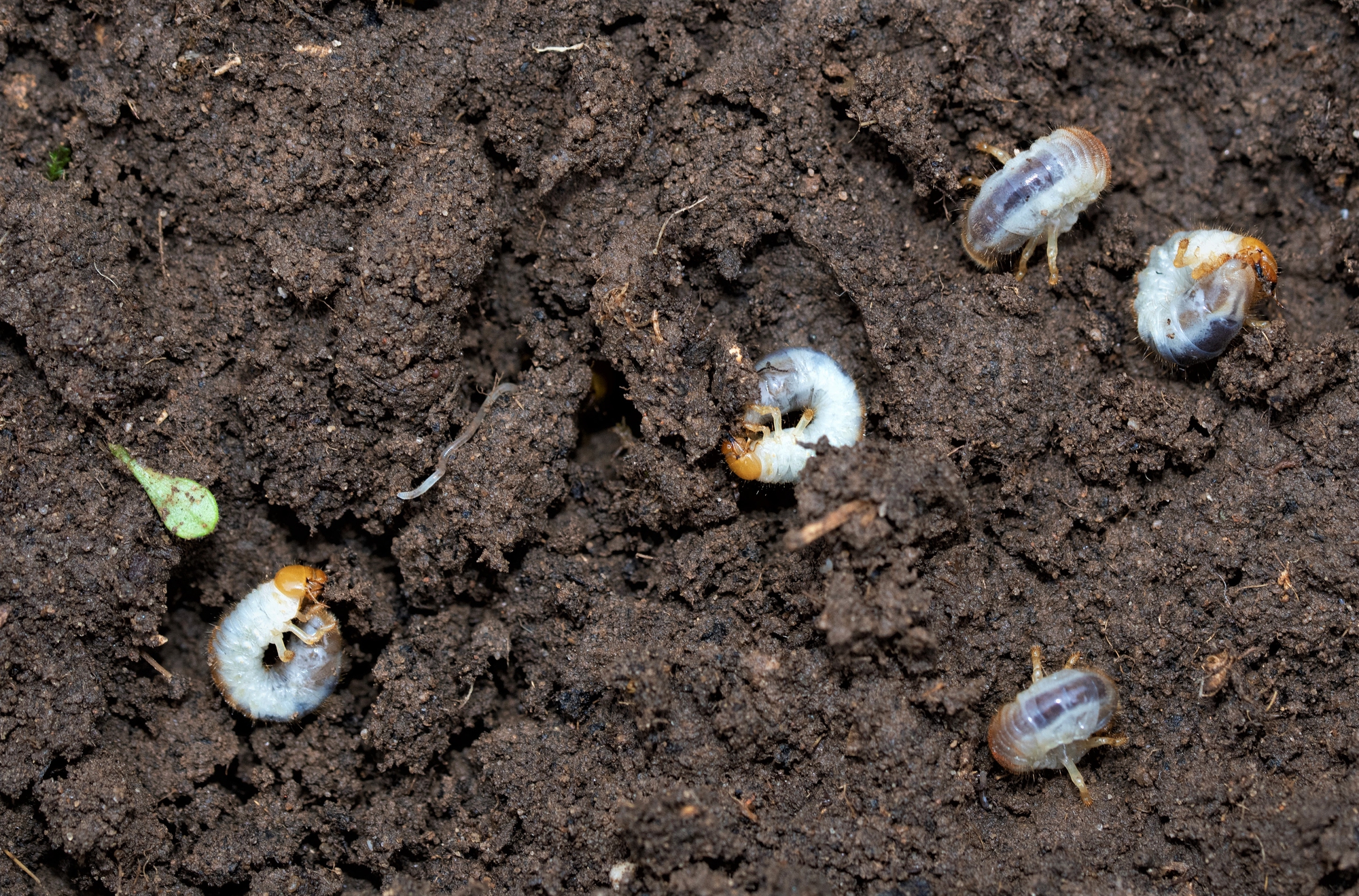
When sections of your lawn lift away like a loose rug in July and August, the trouble sits two to three centimetres (about one inch) below the surface. Fat white C-shaped grubs or leathery grey-brown larvae have been chewing the grass roots through the warm months, and the birds ripping at the turf above are mining for them. The repair is a watering can, the correct nematode, and precise timing. Apply the treatment a few weeks too early or too late and you spend money on microscopic worms that cannot survive to do their job.
Two culprits cause almost all of this damage, and telling them apart decides which treatment you buy and when you apply it. Lift a square of loose turf and look at what wriggles underneath.
Chafer Grubs Versus Leatherjackets: Know Which One You Have
Chafer grubs are the larvae of chafer beetles. They are plump, creamy-white, and curl into a distinct C shape when you expose them, with a brown head and three pairs of visible legs near the front. They sit in the top 5cm (2 inches) of soil and feed on grass roots from late summer through autumn, then again the following spring after overwintering deeper down. A bad infestation runs at 30 or more grubs per square metre, and at that density the root system is severed so completely that you can roll the dead turf back like carpet.
Leatherjackets are the larvae of crane flies, the long-legged daddy-long-legs that swarm in late summer. They are tubular, grey-brown, legless, and tougher-skinned, which is where the name comes from. The adult crane flies lay eggs in damp lawns in late August and September, and the young larvae feed on roots and the base of grass stems through autumn and again in spring. A lawn with leatherjackets shows yellowing, thinning patches that spread, and the grass pulls up with almost no resistance because the roots have been grazed off below the crown.
The reason this distinction changes your shopping list is that the two pests are killed by different nematode species applied in different windows. Buy the wrong pack or treat in the wrong month and the result is the same: a dead lawn and a wasted twenty pounds. So lift two or three test squares from the worst patches before you order anything, count what you find, and identify the body shape.
Why the Birds Are Doing More Visible Damage Than the Grubs
Starlings, rooks, jackdaws, magpies, and crows detect grubs by sound and vibration, then drive their beaks into the turf to pull them out. On larger lawns, badgers and foxes go further, peeling back whole sheets of grass overnight to reach a protein-rich meal. The holes, scattered soil, and torn turf you wake up to are often worse than the grubs alone would ever cause. That secondary digging is a reliable warning sign: if birds work the same patch of lawn day after day, and the grass there feels spongy underfoot, you almost certainly have a grub or leatherjacket population feeding below.
Spongy footing happens because the severed roots no longer anchor the turf or carry water up to the blades. The grass keeps a little colour for a while on stored reserves, then yellows and dies in expanding patches. People often mistake this for drought and start watering, which does nothing for the roots that are already gone and can make a leatherjacket problem worse by keeping the soil moist and inviting. Before you blame the weather, do the lift test.
How to Treat With Nematodes, and the Timing That Decides Everything
Nematodes are microscopic predatory worms that hunt the larvae in the soil, enter the body, and release bacteria that kill the host within a few days. They are the standard control because they are safe for children, pets, wildlife, and the grass itself, and you can use the lawn straight after applying them. Chafer grubs are targeted with Heterorhabditis bacteriophora; leatherjackets are targeted with Steinernema feltiae. Products such as Nemasys Chafer Grub Killer or Nemasys Leatherjacket Killer are sold by coverage area, around 19 to 25 pounds (about 24 to 32 dollars) for a 100 square metre pack, rising to roughly 120 pounds (about 150 dollars) for a 500 square metre pack, available from garden centres, Amazon, and specialist suppliers. They arrive as a damp powder you keep in the fridge and use before the printed expiry, because they are living organisms.
Timing is the part most people get wrong. Nematodes only work on young larvae and only when the soil is warm and moist. Apply chafer nematodes from July to September, and leatherjacket nematodes from late August into early October, while the larvae are small and feeding near the surface. Soil temperature must sit between 12 and 20 degrees C (54 to 68 degrees F); below 12 degrees the nematodes go dormant and the larvae survive. A cheap soil thermometer pushed 5cm into the ground tells you whether you are inside the window.
To apply, water the lawn first if the soil is dry, because the nematodes travel through a film of moisture between soil particles and die in dry ground. Mix the full sachet into water following the rate on the pack, typically one pack per the stated area in a watering can fitted with a coarse rose, and walk the lawn evenly. Remove fine rose filters so the worms pass through. Water again straight afterwards to wash them down to root depth, then keep the lawn damp for the next two weeks so they can move and hunt. Apply in the evening or on a dull day, since ultraviolet light kills nematodes within minutes of exposure on a bright afternoon.
Repair the Damage and Stop It Returning
Once the larvae are dead, firm any lifted turf back down and water it in. For patches too far gone to recover, rake out the dead material, level the soil, and oversow with a hard-wearing ryegrass mix in early autumn while the ground is still warm, sowing at about 35 grams per square metre. Keep the seedbed moist and the new grass will knit in before winter.
Prevention works on the adults and the conditions they like. Crane flies prefer to lay eggs in damp, thatchy lawns, so scarifying out built-up thatch each autumn and improving drainage on heavy soil removes the moist surface layer the eggs and young larvae depend on. A lawn that drains freely and stays slightly drier at the surface in early autumn is a far less attractive nursery. Encouraging starlings and other birds the rest of the year helps too, because they eat large numbers of grubs, though their digging during an active outbreak is the very damage you are trying to limit. Most lawns need one well-timed nematode treatment to break a serious infestation, then good autumn maintenance to keep numbers low. The single biggest mistake is leaving it until the grass is already dying in spring, by which point the larvae have grown large, moved deeper, and become far harder to kill.
It helps to rule out the look-alikes before you spend on nematodes. Drought browns the whole lawn evenly and the grass stays firmly rooted when you tug it. Dog urine scorches small rings with a darker green edge. Fungal diseases such as red thread leave pink-tinged patches but the turf still grips the soil. Grub and leatherjacket damage is the only one of these where the grass lifts freely and the surface feels loose, so the lift test is the single check that settles it. Pull a handful: if it comes away with bare, rootless bases, you have a soil pest, not a leaf problem.
The cost of getting the season wrong is worth spelling out. A pack of nematodes is a living product with a shelf life of two to three weeks even in the fridge, so you cannot buy in spring and store until autumn. Applied to cold soil below 12 degrees C (54 degrees F), the worms shut down and the larvae feed on through the winter, emerging in spring as larger, hardier grubs that shrug off a second treatment. That is why the late-summer and early-autumn window earns the effort: the larvae are small, shallow, and feeding hard, exactly when the predators can reach and kill them. Mark the dates, check the soil thermometer, and treat once, properly, rather than three times in hope.