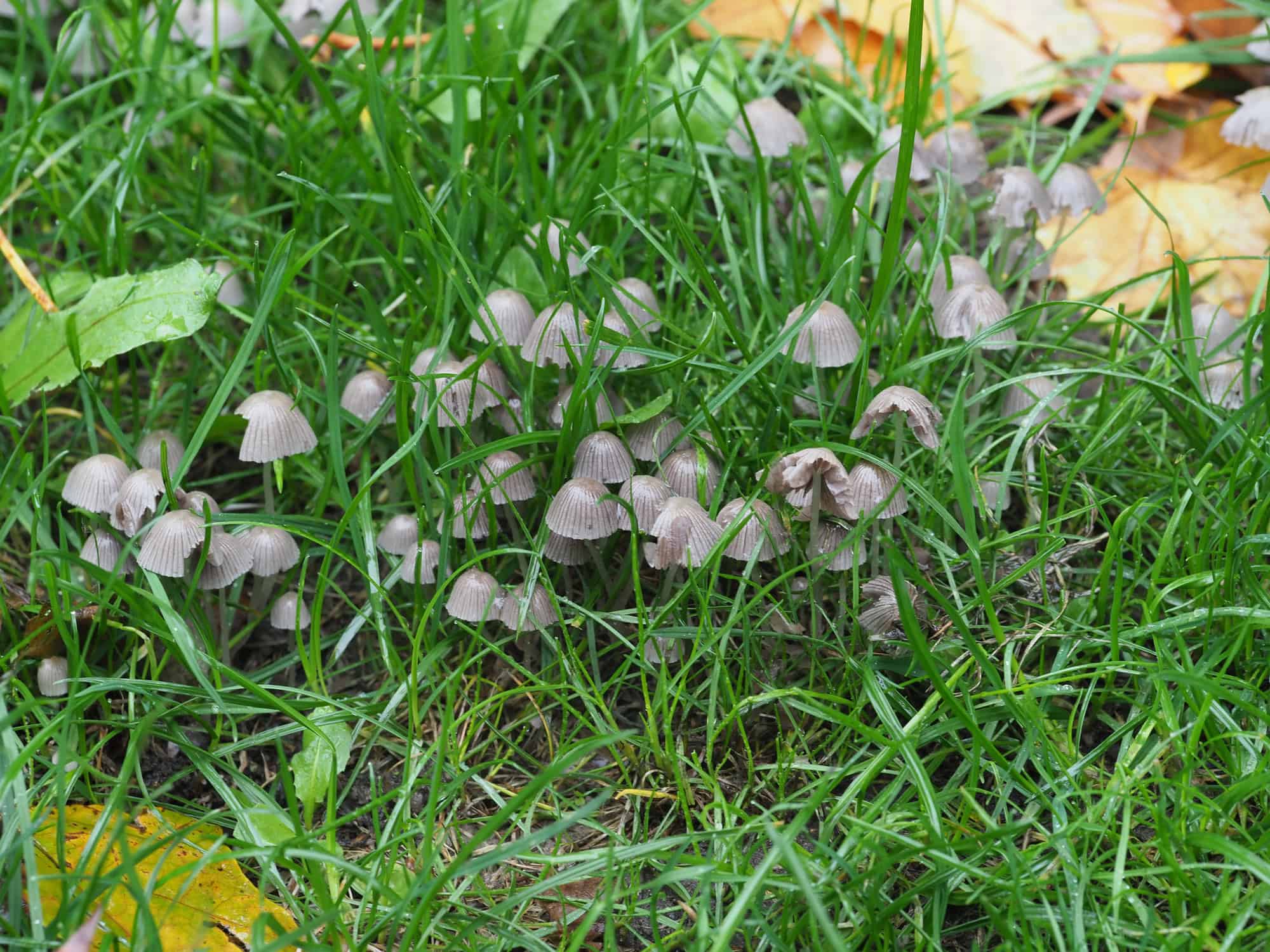
If circular patches of tan, straw-coloured grass have appeared on your lawn during a warm, muggy spell, the cause is almost certainly brown patch, a fungal disease driven by the soil organism Rhizoctonia solani. The practical takeaway is short: stop watering in the evening and hold off on feeding, and an active outbreak usually stops spreading within five to seven days. Understanding why those two small changes work tells you almost everything about keeping brown patch off your lawn in the first place.
How to Recognise Brown Patch Before It Takes Over
Brown patch shows up as roughly circular areas of tan or brown grass that start around 15cm (6 inches) across and can widen to a metre (3 feet) or more. In a bad outbreak the individual circles run together into large, irregular blotches spanning 3 metres (10 feet) and beyond. The single most reliable identifying feature is a dark grey or purplish border around the edge of each patch, often described as a smoke ring. It is easiest to see in the early morning while dew is still on the grass, and it tends to fade as the day dries out.
The second giveaway also appears at dawn. On dew-covered turf you can often see fine white threads of fungal growth, the mycelium, webbing across and between the grass blades inside the patch. It looks a little like cobweb laid over the lawn and disappears once the surface dries. Brown patch hits cool-season grasses hardest, especially perennial ryegrass, tall fescue and bentgrass, which is why it is such a common complaint on family lawns and sports turf alike.
Speed is what makes the disease frightening. Under the right conditions the fungus can blight a large area of turf within six to eight hours, so a lawn that looked healthy at the weekend can show fresh circles by Monday morning. People often mistake those circles for drought stress or a pet urine burn, but drought browning is patchy and irregular, urine burns have a dark green ring of thick growth around them, and neither produces the dawn smoke ring or the white mycelium that confirm brown patch.
Some lawns are far more prone to brown patch than others, and knowing whether yours is one of them helps you stay ahead of it. Newly sown or recently overseeded ryegrass is especially vulnerable because the young, soft growth is exactly what the fungus prefers. Shaded, sheltered corners where dew lingers late into the morning, low spots where water pools after rain, and lawns with compacted soil or poor drainage all hold the overnight moisture the disease needs. If your lawn ticks several of those boxes, treat warm humid forecasts as your cue to tighten up watering and mowing before any circles appear.
Why Warm, Humid Weather Sets It Off
Brown patch is a heat-and-moisture disease. It becomes active when night-time temperatures stay above 20 degrees C (68 degrees F), daytime highs sit in the 27 to 35 degrees C band (80 to 95 degrees F), and humidity climbs above 90 percent. The trigger that pushes a quiet infection into a fast-spreading outbreak is leaf wetness: when grass blades stay wet for many hours overnight, the fungus has the film of water it needs to grow from blade to blade.
The mechanism is worth understanding because it explains every piece of advice that follows. Rhizoctonia solani survives in the thatch and soil as tough resting bodies. When the soil warms and the air turns humid, those resting bodies wake up and send out mycelium. That mycelium can only travel where the leaf surface is damp, spreading outward in a ring and entering the leaf through the pores and through any cut or bruise. This is why a wet, warm night is the perfect breeding ground and a dry, breezy day is not.
Nitrogen is the other accelerant. The fungus targets soft, fast-growing leaf tissue, and a heavy nitrogen feed produces exactly that kind of growth. Feeding a lawn during warm, humid weather is, in effect, laying out the tender young tissue the fungus prefers and inviting it to spread. That is the biological reason the two key fixes are about water timing and holding back the feed, not about reaching for a chemical first.
The Watering and Feeding Changes That Stop It
Water only in the early morning, ideally between 4am and 9am, so the blades dry fully by midday and never sit wet through the night. Aim for deep, infrequent soakings of about 2.5cm (1 inch) per week measured with a rain gauge or a straight-sided tin, rather than a light sprinkle every evening. If you have been watering daily, simply stopping the evening waterings can slow an active outbreak within a week, because you are removing the overnight leaf wetness the fungus depends on.
Put the fertiliser away until the outbreak has been under control for three to four weeks, then resume with a balanced, slow-release product rather than a quick-release high-nitrogen feed. Check your thatch layer too: if the spongy brown layer between the green grass and the soil is thicker than 2.5cm (1 inch), it holds moisture against the crowns and feeds the disease, so scarify in autumn to bring it back under control. Improve airflow by trimming back any shrubs or overhanging branches that trap humid air over the lawn, and keep the mower blade sharp so it shears cleanly rather than tearing ragged wounds the fungus can enter. While the disease is active, collect the clippings instead of mulching them, which removes some of the fungal material from the lawn.
When and How to Use a Fungicide
For most home lawns the cultural changes above are enough, and turf specialists at university extension services consistently say good practice is cheaper and more effective than spraying. If you do need a chemical on high-value turf, choose a systemic fungicide that moves into the plant rather than a contact product that only coats the surface, because a contact spray cannot reach an infection already inside the leaf. Azoxystrobin and propiconazole are the two active ingredients most often recommended, and alternating between them reduces the risk of the fungus developing resistance.
A widely sold granular option is Scotts DiseaseEx, which contains 0.31 percent azoxystrobin. A 4.5kg (10lb) bag treats around 465 square metres (5,000 square feet) and costs in the region of £20/$24, working out at roughly £4/$4 per 90 square metres (1,000 square feet) at the preventative rate of just under 1kg per 90 square metres. It begins working within 24 hours and gives up to four weeks of protection, with reapplication every 14 to 28 days if conditions stay disease-friendly. You will find it and similar products at B&Q, Home Depot, Amazon and most garden centres.
What happens if you ignore the warning signs? If you keep watering at night and feeding heavily through a humid spell, the fungus can move from a few small circles to blighting a whole section of lawn in a matter of hours, and the bare, thinned turf left behind takes weeks to knit back together and is wide open to weeds in the meantime.
The longer-term answer is to build a lawn that shrugs the disease off. Raising the mowing height slightly in summer keeps more leaf area working and reduces stress, and the one-third rule, never removing more than a third of the blade in a single cut, avoids the sudden flush of soft regrowth that follows a hard scalping. Where brown patch returns year after year, overseeding in autumn with modern disease-resistant ryegrass and fescue cultivars gradually shifts the balance of the sward toward grasses that fight it off better. A typical bag of hard-wearing lawn seed costs around £15/$19 for 1.5kg, enough to overseed roughly 50 square metres.
Think of brown patch control as a short checklist you run whenever the weather turns warm and sticky: water before 9am only, skip the feed, keep the blade sharp, clear away clippings, and give the lawn as much air movement as you can. None of these steps cost anything, and together they remove the conditions the fungus cannot do without. The disease is one of the fastest-moving problems a lawn can face, but it is also one of the most preventable once you understand that it lives or dies on overnight leaf wetness.