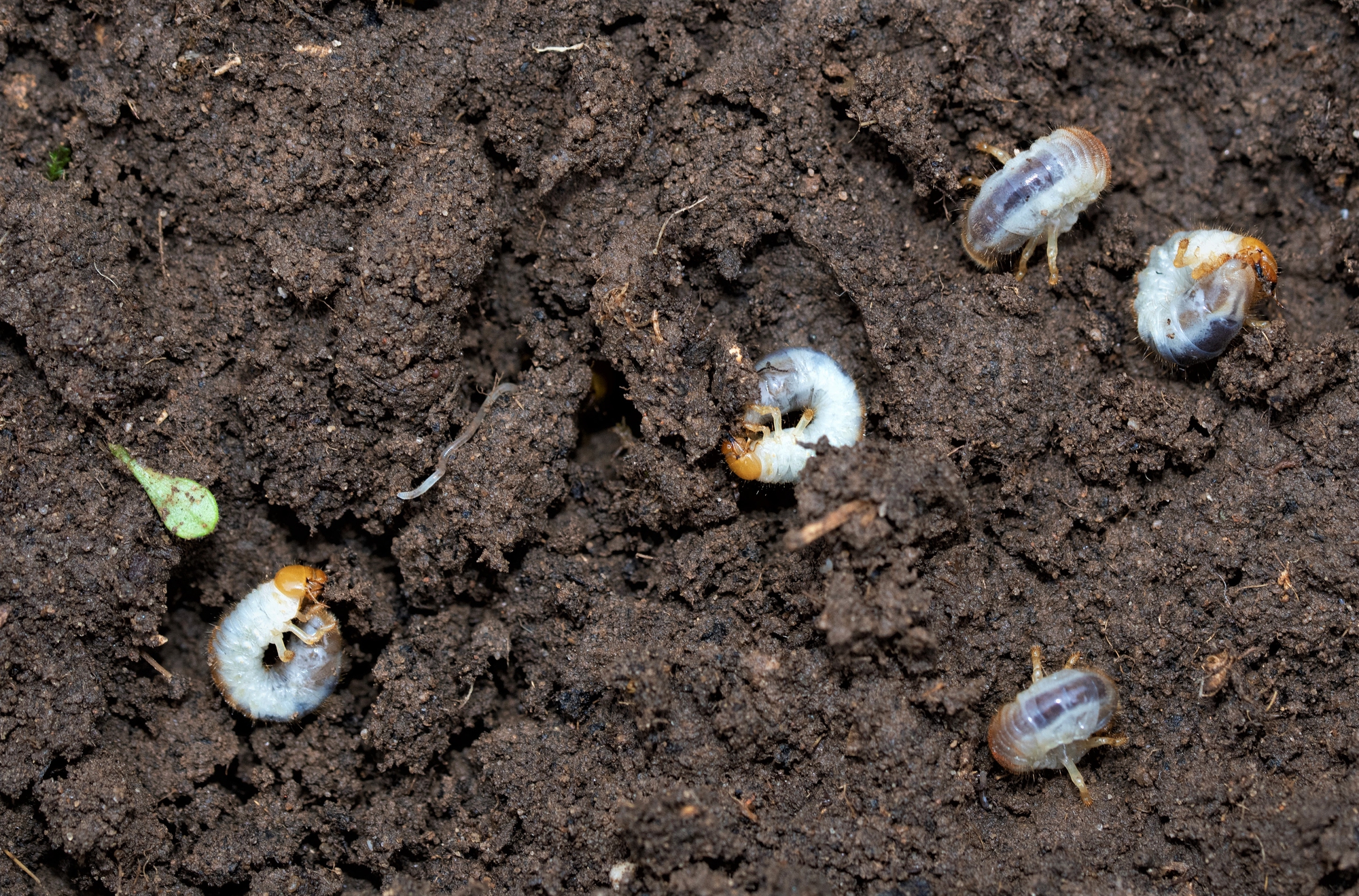
If patches of your lawn lift away like a loose carpet, or birds and animals have started tearing at the turf overnight, the cause is almost certainly chafer grubs feeding on the roots below. The fastest reliable fix is a watering of beneficial nematodes, applied to moist soil between July and September when the soil sits at 12 to 20 degrees C (54 to 68 degrees F). Treat the problem now and you stop a few brown patches turning into a ruined lawn by autumn.
Chafer grubs are the larvae of chafer beetles, including the garden chafer and the larger Welsh chafer and cockchafer. The adults fly and mate from late spring into early summer, then lay eggs in turf. The eggs hatch into fat, C-shaped white grubs with orange-brown heads and three pairs of legs near the front. They live in the top few centimetres of soil and eat grass roots through summer and autumn before moving deeper to overwinter. A small population does little harm, but a heavy infestation severs so many roots that the grass can no longer draw up water, which is exactly why the damage shows up worst during a dry summer spell.
The reason the turf lifts so easily is mechanical. Healthy grass is anchored by a dense root mat that binds the soil. When grubs chew through that mat, the leaf blades stay green for a while because they still hold stored water, but there is nothing holding them down. Take a corner of an affected patch and pull, and it rolls back like turf that was never laid properly. Underneath you will see the curled white grubs, often a dozen or more in a single spadeful. The Royal Horticultural Society treats roughly five or more grubs per 30cm (12 inch) square as a level worth acting on.
Why Birds and Animals Make the Damage Far Worse
The grubs themselves thin and weaken a lawn, but the dramatic overnight destruction is usually the work of predators hunting them. Crows, magpies, rooks, jackdaws and starlings probe and rip at the surface to reach the protein-rich larvae, and where badgers or foxes are active they will dig deep holes and flip whole sections of turf in a single night. To the lawn owner it looks like vandalism, but it is simply wildlife following a food source. This is the key insight that generic pest articles skip: the birds are a symptom, not the problem, and scaring them off does nothing because the grubs are still there feeding.
It also explains the timing of complaints. People often notice nothing through early summer, then wake one morning in late summer or autumn to a lawn that looks dug over. The grubs had been quietly growing larger and more nutritious, and once they reached a worthwhile size the birds and mammals moved in. If you see this pattern, do not waste effort relaying torn turf until you have dealt with what is underneath, because the diggers will simply return.
How Nematodes Kill Chafer Grubs
The most effective home treatment, and the one professional groundskeepers reach for, is a dose of pathogenic nematodes. The species sold for chafer grubs is Heterorhabditis bacteriophora, a microscopic worm that actively hunts the larvae in the soil. It enters a grub through a natural body opening, then releases a symbiotic bacterium that multiplies inside and kills the host, usually within a couple of days. The nematodes feed and breed on the dead grub, then the next generation spreads out to find more. Because they target the grubs specifically, they are safe around children, pets, wildlife and edible crops, which is why they have largely replaced the older chemical grub killers that have been withdrawn from garden use.
A typical pack treats 100 square metres (about 1,075 square feet) and contains around 50 million nematodes. Prices run from roughly £7 to £20 (about $9 to $25) a pack depending on retailer and size, available from Nematodes Direct, Gardening Naturally, Amazon, or garden centres under brand names such as Nemasys. Buy them for immediate use, because they are living organisms with a short shelf life and should be kept refrigerated until application.
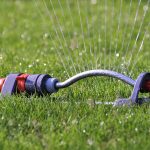
Application is simple but the conditions are not optional. Mix the powder into water following the pack rate, then apply through a watering can with the rose removed or a hose-end feeder, and keep the suspension agitated so the nematodes do not settle. Water the lawn before and after so the soil stays moist for at least two weeks, because nematodes move through the film of water around soil particles and will die in dry ground. They are also killed by ultraviolet light, so apply in the evening or on a dull, damp day, never in bright sun. Soil temperature must be in the 12 to 20 degrees C band, which is why July to September is the standard window. For a known severe infestation you can also treat in April or May and follow up in September.
Repairing the Lawn and Preventing the Next Generation
Once the grubs are dealt with, firm any lifted turf back down and water it well to re-establish root contact. Bare patches can be raked level and overseeded with a hard-wearing ryegrass mix in early autumn, when soil is still warm and moisture is reliable. A lawn that recovers a thick, deep root system is more resilient, so feed appropriately and avoid scalping the grass, since longer leaf supports deeper roots that shrug off light grub feeding.
Prevention leans on making the lawn less inviting to egg-laying beetles and more able to withstand the larvae. Adult chafers prefer to lay in dry, thin, stressed turf, so keeping the lawn reasonably dense and not cutting it too short reduces the appeal. Some gardeners deliberately encourage natural predators, and there is sense in it, though the most dependable control remains the annual nematode treatment in late summer for anyone whose lawn has a history of grubs. The mistake to avoid is doing nothing after the first year of damage. Chafer populations build over successive seasons, and a problem ignored in one summer is usually a bigger problem the next, by which point the birds and badgers will have made the repair bill considerably larger.
It helps to be sure of the culprit before you treat, because chafer grubs are sometimes confused with leatherjackets, the larvae of crane flies. Leatherjackets are grey-brown, legless and tube-shaped, while chafer grubs are plump, white and C-shaped with a distinct brown head and visible legs, and they curl into a comma when disturbed. The two pests are controlled by different nematode species, so identifying which one you have decides which product you buy. Dig a few sample squares of turf in different parts of the lawn and count what you find before spending money, rather than treating blind.
The most common mistake is treating at the wrong moisture or temperature and assuming the nematodes failed. They are living organisms, and a dose watered onto dry, cold or sun-baked ground simply dies before it reaches a grub, which is why people sometimes report no effect and give up. If you keep the soil damp for a fortnight, apply in the cool of the evening, and stay inside the temperature window, success rates are high. A second mistake is leaving repair until spring; bare patches left open over winter fill with moss and annual meadow grass, so reseed in early autumn while warmth and moisture still favour fast germination.
Worth knowing too is how the population builds across a season. The beetles you see flying at dusk in early summer are the parents of the grubs that will damage the lawn months later, so a heavy beetle year often signals a difficult autumn ahead. Keeping the lawn dense and not scalped through summer makes it both less attractive for egg-laying and better able to mask the feeding of a modest grub population, which is why a well-managed lawn can carry a few grubs with no visible harm while a thin, stressed one shows damage from the same number. If your garden backs onto rough grass or pasture where chafers breed freely, treat it as an annual job rather than waiting for the birds to announce the problem.