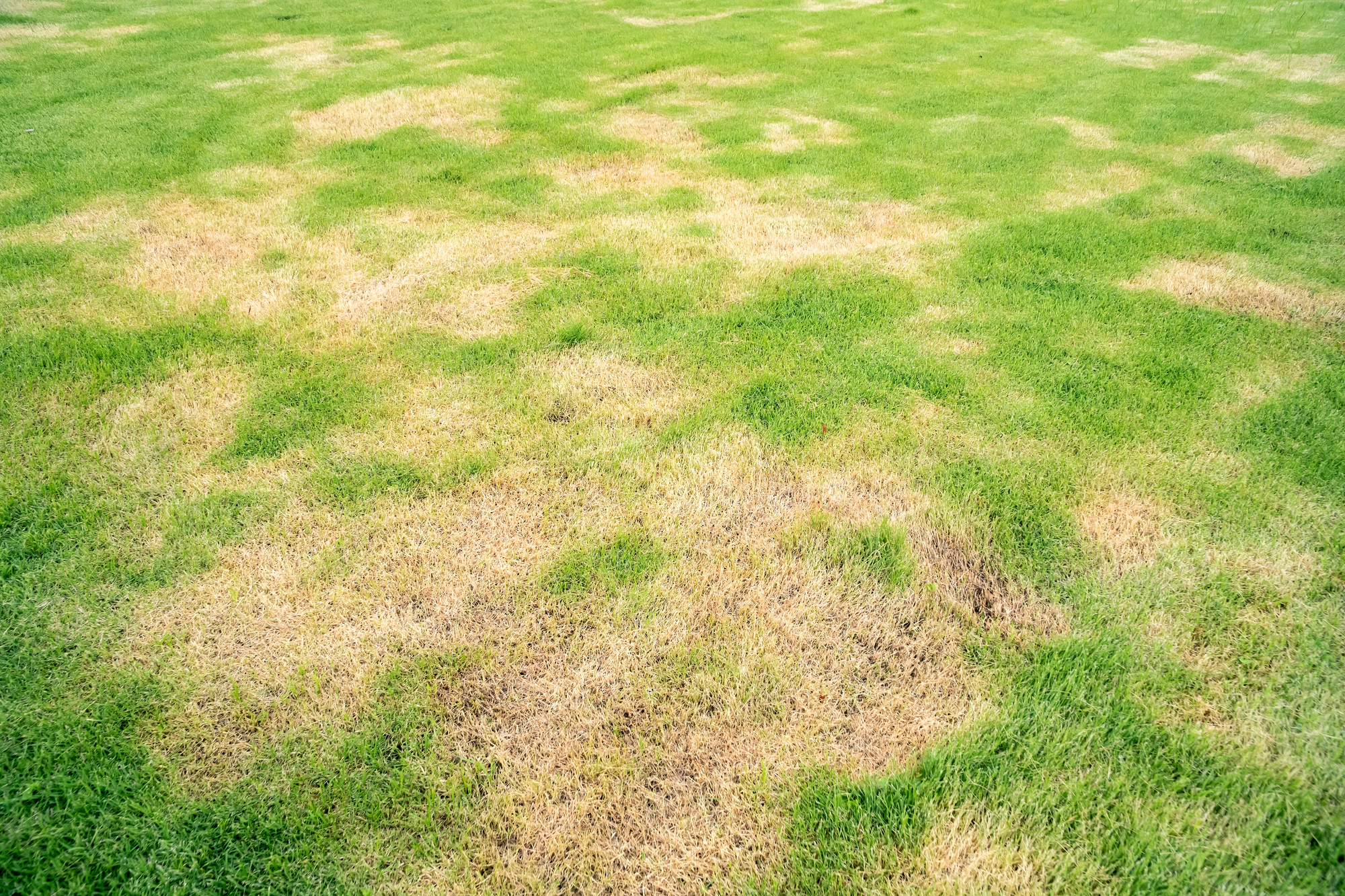
A ring of straw coloured grass that widens week by week in July is rarely a watering fault and rarely simple drought. On cool season lawns built from Kentucky bluegrass, annual meadow grass or fine fescue, those spreading circles usually point to summer patch, a root rotting fungus that works out of sight long before the surface browns. The grass you can see is the last part of the plant to die. Catching it early, feeding lightly rather than heavily, and keeping the crown cooler are what separate a lawn that grows back from one that thins out for the rest of the season.
What Summer Patch Actually Is
Summer patch is the work of a soil fungus called Magnaporthiopsis poae, once listed as Magnaporthe poae. Unlike leaf diseases that scar the blade, this one attacks the roots and the crown, the short stem at the base where new leaves emerge. Penn State Extension and Purdue Extension both describe it as a root and crown rot of cool season turf, and that detail changes everything about how you treat it.
The classic sign is a circular or crescent patch of dead grass, anywhere from 8cm to 30cm (about 3 to 12 inches) across, that widens over two or three weeks. Grass at the outer edge often turns a bronze or orange shade before it collapses. Many rings keep a tuft of green grass alive in the centre, which gives the frog-eye look that turf managers use to tell summer patch apart from ordinary heat scorch. If you lift a plug from the edge of a ring and the roots are brown or black instead of white and firm, you are almost certainly looking at summer patch rather than a dry spell.
Two other diseases fool people into treating the wrong thing. Necrotic ring spot makes similar rings but tends to show earlier, in cooler spring and autumn weather, and its centres often stay sunken. Take-all patch prefers wet, high-pH ground and reddish bronze margins. The reliable way to separate them at home is the root check plus the calendar: rings that blow open in the first serious heat of the year, on a bluegrass or fine fescue lawn, with dark rotted roots, are summer patch until proven otherwise. Getting the name right saves you from buying a product aimed at the wrong fungus, as the DMI and strobilurin chemistry that suppresses summer patch is not the same as the approach for a leaf-spotting disease.
The grasses it hits hardest are annual meadow grass (Poa annua), Kentucky bluegrass and the fine fescues. That host list is worth remembering, as the grasses it leaves alone give you the cure. Perennial ryegrass, turf-type tall fescue and creeping bentgrass shrug the fungus off, so a lawn heavy in ryegrass or tall fescue rarely shows the disease at all.
Why the Rings Form in the Hottest Weeks
The fungus starts colonising roots much earlier than the damage suggests. It becomes active once soil temperature at a 5cm (2 inch) depth climbs past about 18 to 20 degrees C (65 to 68 degrees F), which in most gardens lands in late spring. For weeks it spreads quietly along the root system, plugging the narrow vessels that carry water up into the plant. Nothing shows on top while the weather stays mild and moist.
Then a hot, dry spell arrives and the lawn has to pull hard on its roots to replace the water it loses through its leaves. A healthy plant manages this. A plant whose roots are already half rotted cannot keep up, so it wilts, browns and dies in the space of a few days. That is why the rings seem to appear overnight in a heatwave when the real trouble has been building underground for a month. The heat does not create the disease. It exposes damage that was already done.
Several habits make an outbreak far worse. Compacted or poorly drained soil holds the warm, wet conditions the fungus likes. A heavy dose of fast-release nitrogen in late spring pushes soft leafy growth at the expense of roots, exactly when the roots need to be strongest. Cutting cool season grass shorter than 4cm (about 1.5 inches) in summer stresses the crown and thins the canopy, letting the soil heat up further. High soil pH also tips the balance in the fungus’s favour.
How to Stop It Before the Damage Shows
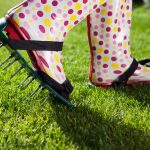
Prevention is cultural first and chemical second. Raise the mower for the summer so Kentucky bluegrass and fescue sit at 6 to 7.5cm (2.5 to 3 inches). Taller grass shades the soil, keeps the crown cooler and grows a deeper root system that resists the fungus. Water deeply and no more than two or three times a week, early in the morning, so the top few centimetres are not left warm and damp through the night. Aerate compacted ground in autumn to break up the layer where the fungus thrives, and swap a spring feed to a slow-release nitrogen at a modest rate, around 25 to 35g per square metre, rather than a quick greening feed. A light dressing of sulphate of ammonia nudges soil pH down slightly, which turf scientists have found reduces summer patch severity on bluegrass lawns.
For a lawn you value enough to protect with a fungicide, the timing rule is the one thing most gardeners get wrong. This is a root disease, so a spray applied to the leaves after the rings appear does almost nothing. The active ingredients that work, azoxystrobin and propiconazole, have to go down as a preventive treatment when soil first reaches 18 degrees C (65 degrees F), then again about 28 days later, and each application must be watered in with 5 to 10mm of irrigation so it reaches the root zone. A granular azoxystrobin product such as Scotts DiseaseEx costs around £16/$20 for a 4.5kg (10lb) bag that covers roughly 465 square metres (5,000 square feet). A liquid propiconazole concentrate works out cheaper per treatment and rotates well with azoxystrobin to slow resistance. Both are sold through garden centres, Amazon, Home Depot and Lowe’s.
Drainage deserves its own line on the list. Summer patch feeds on soil that stays warm and airless, so a lawn that puddles after rain or sits on heavy clay gives the fungus a head start every year. Hollow-tine aeration in autumn, followed by a sandy topdressing brushed into the holes, opens the root zone and lets it dry and cool between waterings. Over three or four seasons that single change does more to shrink the rings than any spray, and it costs nothing beyond a hired corer and a few bags of sand from B&Q, Wickes or a builders merchant.
What to Do Once the Patches Appear
If the rings are already open, resist the urge to throw down a strong feed to green things up. High nitrogen in the heat drives soft top growth on a plant that cannot support it and often widens the dead zone. Keep watering deep and slow to take the edge off the heat stress, and hold off on any renovation until early autumn when cool season grasses recover.
The lasting fix is to change what grows in the affected patches. In September, rake the dead thatch out of each ring, scratch up the surface, and overseed with perennial ryegrass or a turf-type tall fescue at about 35g per square metre, then topdress lightly and keep the seedbed damp. Both grasses resist the fungus, so every year you overseed you shift the sward towards a mix the disease cannot touch. Ignore the problem and the rings return each July, widen, and eventually run together until the only cure left is stripping and relaying the worst areas. A packet of ryegrass seed and one autumn afternoon is a great deal cheaper than new turf.