If pale, broad-leaved tufts are standing proud of an otherwise fine lawn within a day or two of mowing, you are looking at coarse grass invading your sward. The reason it suddenly stands out in summer is that these tougher grasses keep growing fast and throw up seed heads while the fine grasses around them slow down in the heat. There is no weedkiller that removes one grass and spares another, so the answer is mechanical: weaken and rake out the clumps, cut out and reseed the worst patches, and thicken the fine grass so the coarse stuff has no room to spread. Tackle it before it seeds and a patchy lawn evens out within a season.
How to Spot Coarse Grass Among Fine Lawn
Three or four culprits account for most coarse patches. Yorkshire fog (Holcus lanatus) is the most common, forming pale, soft, slightly hairy tussocks that stay a lighter green than the lawn around them and feel noticeably softer between the fingers. Couch grass (Elytrigia repens) is darker and tougher, with flat blue-green blades, and it spreads underground by white creeping stems called rhizomes. Annual meadow grass (Poa annua) sits lower but gives itself away with a constant scatter of pale, feathery seed heads even when mown short. Rough-stalked meadow grass (Poa trivialis) creeps across damp, shaded ground in glossy patches that go limp in dry weather.
The quickest way to tell coarse grass from your lawn grass is to look the day after mowing. Fine fescues and bents recover slowly and stay level, while Yorkshire fog and couch put on visible height within 24 to 48 hours, so the clumps rise above the cut surface and catch the light in a paler shade. Run your hand over the lawn and the coarse patches feel rougher and bristlier. Once you have learned to spot them, you will notice the same clumps reappearing in the same places after every cut.
Why Coarse Grasses Spread Through a Fine Lawn in Summer
Coarse grasses become obvious in summer for two reasons working together. The first is differential growth. Yorkshire fog and couch are vigorous, fast-growing species that tolerate heat and dry soil better than the fine fescues and bents in a quality lawn. When a dry, warm spell slows the fine grasses almost to a standstill, the coarse grasses keep powering upward, so the gap in height and colour widens between cuts. The second reason is seeding. Summer is when these grasses flower, and the pale seed heads of Yorkshire fog and annual meadow grass make the clumps far more visible while also scattering the next generation across the lawn.
How they spread tells you how to deal with each one. Yorkshire fog grows in discrete tussocks from a shallow, fibrous root system, so it stays where it lands and is comparatively easy to lift or weaken. Couch grass is the harder problem, because it travels sideways underground on rhizomes that push out new shoots some distance from the parent plant. Pull off the leaves and you achieve nothing, because the rhizome simply sends up another shoot within days. This is also why there is no chemical shortcut. Couch, fescue, and ryegrass are all grasses, so a selective lawn weedkiller that targets broadleaf weeds passes straight over them, and there is no product that kills one grass while leaving another standing.
Cutting and Raking Coarse Clumps Out
For scattered clumps, physical removal is the most reliable approach, and the method depends on which grass you have. Yorkshire fog, despite looking tough, is surprisingly delicate and dislikes being cut low and abraded.
- For isolated tussocks, slice around and under each clump with an old kitchen knife or a hand trowel and lift it out whole, then firm soil into the hole and reseed.
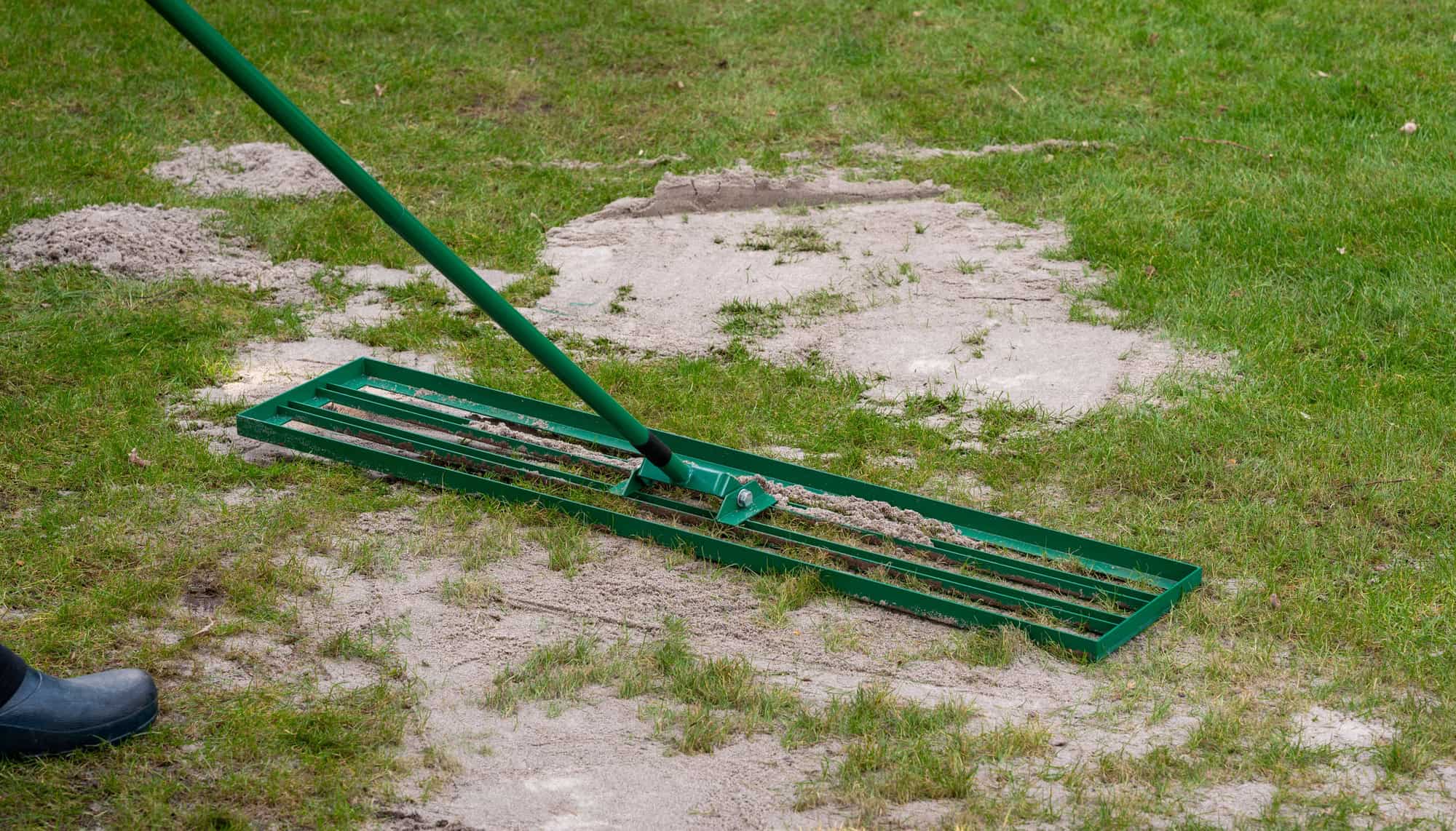
- For a lawn freckled with Yorkshire fog, scarify hard with a spring-tine rake or a powered scarifier. A spring-tine lawn rake costs around £15 to £20 (about $20 to $26). Raking lifts the soft, sprawling leaves upright and tears at the crowns, and because Yorkshire fog resents this treatment, repeated scarifying through the season weakens and thins it while the tougher lawn grasses shrug it off.
- For couch grass, dig out the whole patch with a fork and tease every white rhizome out of the soil. Any fragment of rhizome left behind will resprout, so this is a job to do thoroughly rather than quickly.
Raking serves a second purpose here, because it doubles as scarifying, which removes the spongy thatch layer that lets weed grasses root. If you are not sure how much thatch your lawn is carrying, our guide on what thatch is and why a thick layer could be killing your lawn explains how to check and clear it.
When to Kill and Reseed a Bad Patch
Where coarse grass has taken over a sizeable area, hand removal stops being practical and the cleanest fix is to kill the whole patch and start again. The timing to aim for is late summer, around late August, when the grass is growing strongly and there is still warmth left in the season for new seed to establish. Spray the patch with a glyphosate-based weedkiller, costing around £12 to £16 (about $16 to $20) for a ready-to-use or concentrate bottle, and wait for it to kill everything in the treated area. Glyphosate is non-selective, so it takes out the coarse grass and the fine grass alike, which is exactly why you confine it to the patch and accept that you are clearing the ground completely.
Once the patch is dead, rake out all the brown material, lightly fork over the surface, and reseed with a quality lawn mixture or lay a piece of fresh turf cut to fit. The single most important step is not to leave the bare soil open. Exposed ground is where the seed bank of coarse grass and weeds germinates first, so reseeding promptly with the grasses you actually want is what stops the patch coming straight back as bad as before. Keep the new seed watered until it is established and growing away.
Mowing height plays a quiet part in all of this. Cutting a lawn very short favours coarse grasses over fine ones, because species like Yorkshire fog and couch tolerate close, frequent mowing better than delicate fescues, which thin out and surrender ground when scalped. Raising the cut to around 3 to 4cm (about 1.2 to 1.6 inches) and following the one-third rule keeps the fine grasses strong and shades the soil surface, so fewer coarse-grass and weed seeds find the light and bare ground they need to germinate. A lawn mown a little higher is a lawn that holds its fine grasses and resists invasion.
Keeping Coarse Grass From Returning
Long-term control comes from denying coarse grass the two things it needs, open ground and the chance to seed. Scarify the lawn at least once a year to weaken creeping and tussock-forming grasses and to clear the thatch they exploit, and overseed afterwards with a good fescue and bent mixture so the fine grasses thicken up and crowd out invaders. Choose your seed and turf with care, because cheap general-purpose seed mixes and budget turf often carry ryegrass and coarse meadow grasses that become next year’s problem, and a clean, named fine-lawn mixture costing around £15 to £20 (about $20 to $26) per kilogram is money well spent. Above all, do not let the coarse patches flower. Mowing before the seed heads ripen stops the plants topping up the seed bank, so each year there is less to deal with rather than more.
It helps to know exactly what you are working with, because the fine grasses you are trying to encourage need different care from the coarse grasses you are trying to remove. Our guide on how to identify your grass type and choose the right care for it walks through the main lawn and weed grasses side by side. Lift the clumps you can see, weaken the rest with regular raking, and reseed every gap, and the patchwork of light and dark slowly knits into one even, fine lawn.