A ring of darker, faster growing grass appearing in your lawn through summer, sometimes with toadstools around its edge and a band of dead grass inside, is a fairy ring. It is caused by a fungus living in the soil, feeding on buried organic matter and slowly spreading outward in a circle. The dark green is not a problem in itself, but the dead band is, and the cause is dry soil rather than the fungus poisoning the grass. The practical answer for most gardens is to break up the soil under the ring, soak it with a wetting agent, and feed the lawn evenly so the dark circle blends back in. Digging it out is the last resort, not the first.
What a Fairy Ring Actually Is and Why It Glows Green
Fairy rings are produced by a group of soil fungi known as basidiomycetes, the same broad family that includes mushrooms and toadstools. Species such as Marasmius oreades, Lycoperdon and Agaricus live on dead organic material in the soil: an old tree stump, buried roots, a long gone fence post, or simply a thick layer of thatch and decaying matter. The fungus grows outward from a central point in all directions at a fairly even rate, which is why the affected area forms a near perfect circle that widens a little each year, often by 15 to 30cm.
The dark green colour comes from nitrogen. As the fungus digests organic matter it releases nitrogen into the soil in a form the grass can take up, so the grass directly above the active fungal growth gets a free feed and grows taller, thicker and greener than the rest of the lawn. That is why the ring shows up most clearly on lawns that are slightly underfed, where the contrast is sharpest. On a well fed lawn the surrounding grass is already green, so the ring is far less obvious. This is the first clue to managing it: feeding the whole lawn evenly reduces the contrast that makes the ring an eyesore.
Why the Grass Dies Inside the Ring
The band of dead, brown grass that appears inside many rings looks as though the fungus is killing the lawn, but the real culprit is water, or the lack of it. As the fungal threads, called mycelium, grow thickly through the soil, they coat the soil particles with a waxy, water repellent substance. This makes the ground hydrophobic, meaning rain and irrigation bead up and run off rather than soaking in. The grass roots in that band are then trapped in a small pocket of drought even when the rest of the lawn is moist, and they brown off and die.
You can confirm this with a simple test. Push a trowel or screwdriver into the soil under the dead band and under the healthy grass beside it. If the soil under the dead grass is dry and dusty while the soil a few centimetres away is moist, hydrophobic soil is the problem, and the treatment is about getting water back into that band rather than killing any fungus. The toadstools you may see after rain are just the fruiting bodies of the same fungus. They are harmless to the lawn, though you should knock or rake them off if children or pets use the garden, as some species are poisonous if eaten.
How to Treat a Fairy Ring Without Digging
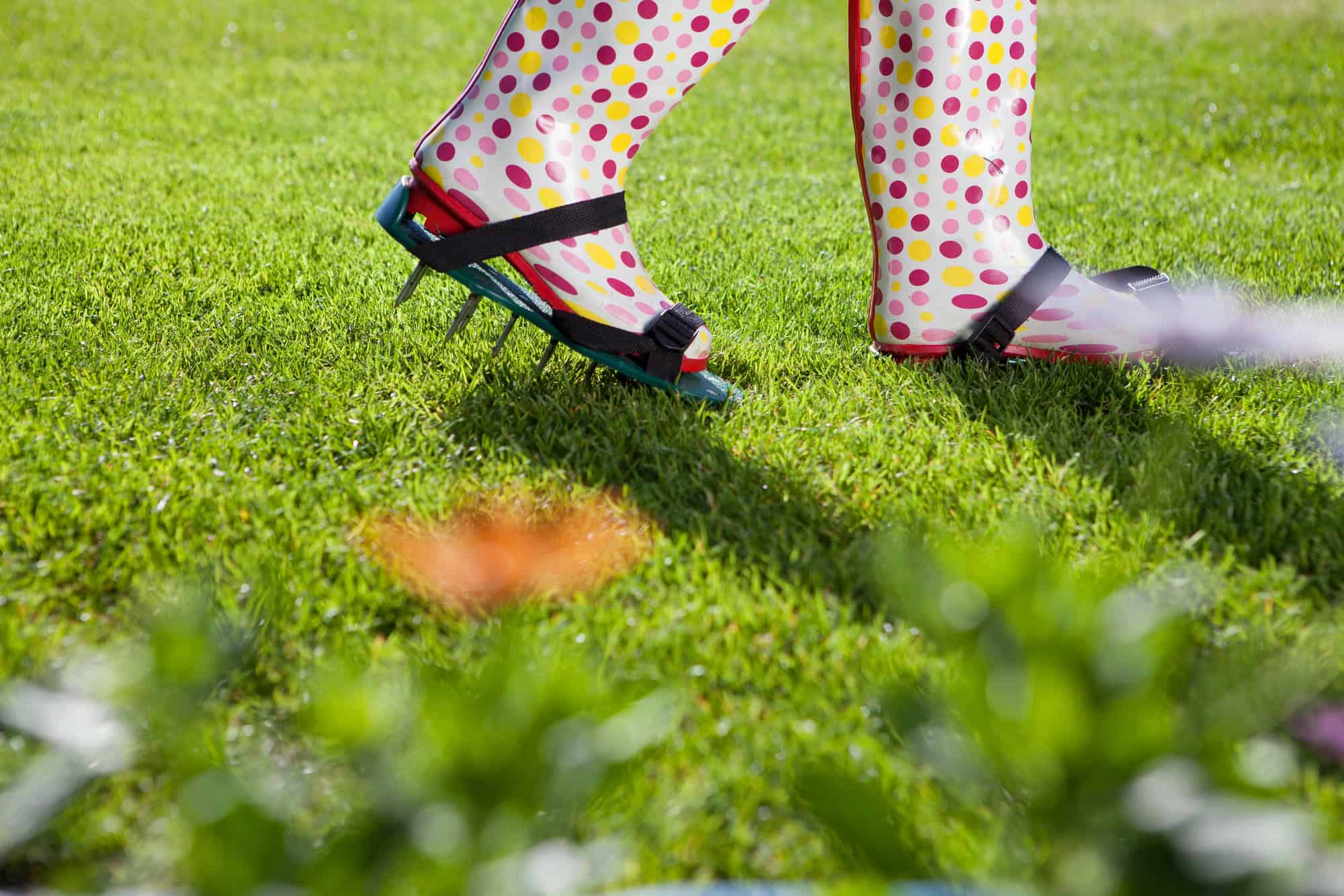
For the great majority of garden fairy rings, the cultural approach works and avoids the upheaval of excavation. Start by breaking up the soil through the ring with a garden fork or a hollow tine aerator, pushing in to a depth of 10 to 15cm (4 to 6 inches) and rocking gently to open channels. Do this across the dead band and a little way into the green grass on either side. Aeration shatters the waxy seal the fungus has created and gives water a route back into the soil.
Next, apply a wetting agent over the ring. These products break the surface tension that the fungal coating creates and let water soak through to the roots. A liquid wetting agent such as A1Lawn Hydrate Plus or a granular one like MoistureMax costs around £15 to £21 ($18 to $26) and covers 250 to 500 square metres. Water the treated ring well after applying, then keep it moist by watering daily for a couple of weeks while the grass recovers. The aim is to rewet the band thoroughly and keep it wet long enough for new growth to fill in.
Finally, feed the whole lawn with a balanced summer fertiliser to even out the colour. A nitrogen feed such as Westland SafeLawn at around £12 ($15) for 150 square metres, or Miracle-Gro EverGreen, green up the surrounding grass so the dark ring stops standing out. Apply at the rate on the box, typically 35g per square metre, and water it in if no rain falls within 48 hours. Within a few weeks the dead band greens over, the colour contrast fades, and the ring becomes hard to see even though the fungus is still present in the soil. Mowing the ring at the same height as the rest of the lawn and collecting the clippings from it also helps, because it removes some of the surface fungal material and stops it spreading on the mower.
When to Take Stronger Action, and What Not to Bother With
Timing helps the recovery. Tackle the ring while the lawn is in active growth, which through spring and summer means it can knit the dead band back together quickly once the soil is rewetted. A ring treated in the heat of a drought with no follow up watering will simply brown again, because the underlying problem is dry soil and you have not addressed it. Mark the edge of the ring with a few canes before you start so you can see at a glance whether your treatment is holding the spread or whether the circle is still creeping outward, which tells you whether to repeat the aeration and wetting agent next month.
It also helps to understand which of the three types of fairy ring you are dealing with, because they behave differently. The most troublesome type produces the ring of dead grass from hydrophobic soil and responds to the aeration and wetting agent approach described above. A second type shows only the band of dark green stimulated grass with no dead zone, and that one needs nothing more than even feeding to mask it. A third type produces a ring of toadstools or puffballs with little effect on the grass colour at all, and you can simply rake or mow those off. Identifying which you have stops you digging up a lawn that only needed a feed.
If a ring is severe, keeps killing grass year after year, and the cultural approach has failed, the only reliable cure is to remove the food source. Dig out the soil to a depth of 30cm (12 inches) and 30cm beyond the ring on all sides, taking care not to spill the contaminated soil across clean lawn, and replace it with fresh topsoil before reseeding or returfing. This is hard work and disruptive, which is exactly why it should be the last option after aeration, wetting agents and feeding have been given a full season to work.
Two things are not worth your money. Domestic fungicides rarely reach the fungus, which sits deep in the soil and is protected by the same waxy layer that repels water, so they tend to disappoint. And pouring household products, bleach or strong detergents onto the ring damages the grass you are trying to save and harms soil life without touching the fungus. Reducing the conditions the fungus thrives on does more good in the long run: keep thatch down by scarifying in autumn, remove buried wood and old roots when you find them, and feed and water evenly so the lawn never shows the fungus off. A fairy ring is one of those lawn problems where patience and good basic care beat any quick fix.