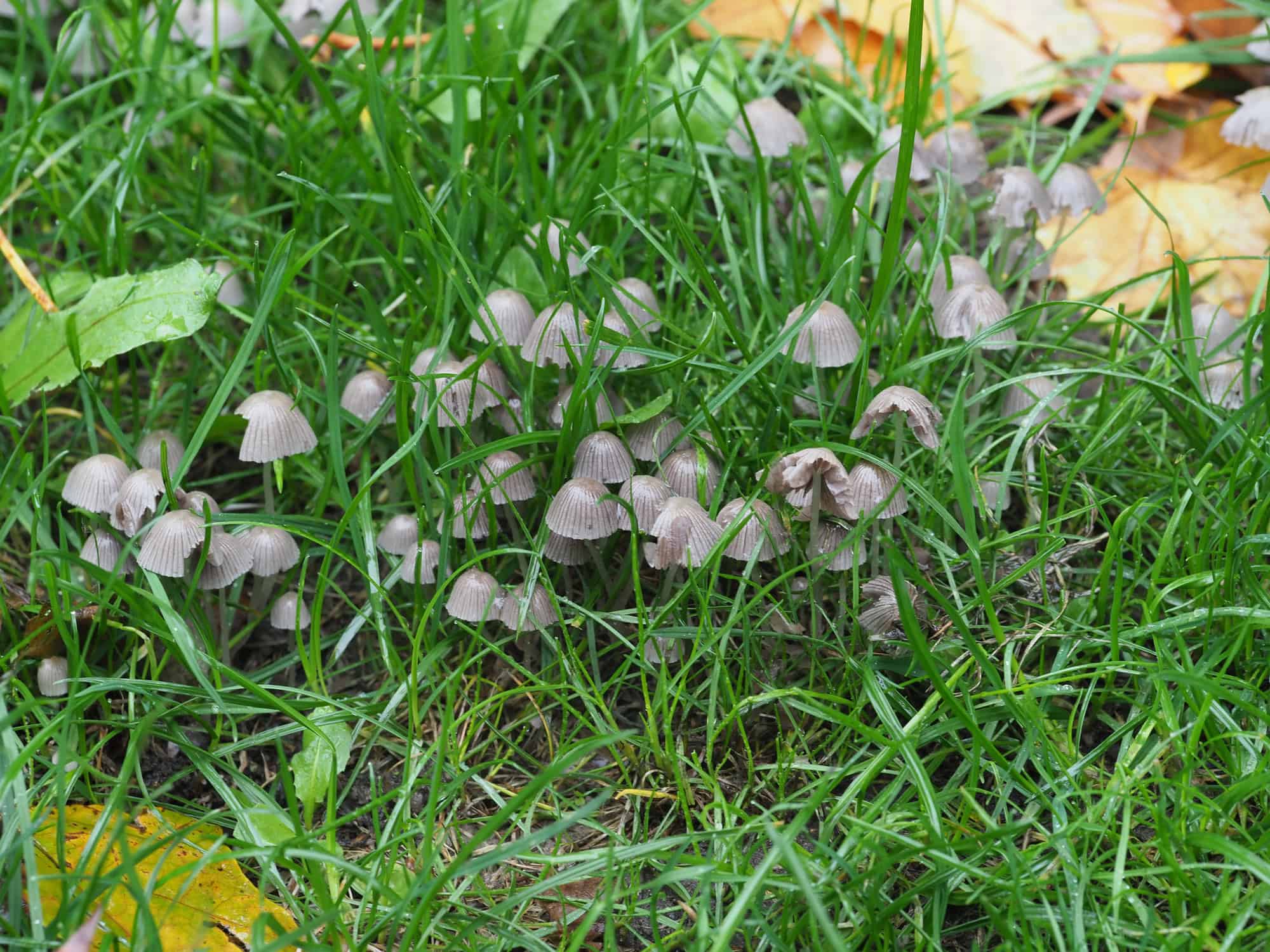
If you have ever raked away a ring of toadstools, scraped off the dead grass, and watched the same dark circle return a few weeks later, the problem is not your effort. It is where the fungus actually lives. A fairy ring is fed by a dense mat of fungal threads sitting 10 to 30cm (4 to 12 inches) below the surface, far deeper than anything a rake or a hand fork can reach. Left alone, that buried colony expands outward by roughly 15 to 30cm (6 to 12 inches) every year. This article explains what is happening underground and the steps that actually break the cycle, rather than the surface fixes that send it into hiding for a month and no longer.
What a Fairy Ring Actually Is
A fairy ring is a colony of soil fungi feeding on dead organic material buried in or under your lawn. The usual food source is an old tree root, a piece of buried timber left by a builder, or simply a thick layer of thatch, the spongy mat of dead grass stems that sits between the green leaf and the soil. As the fungus digests that material it spreads outward in a roughly circular pattern, which is why the visible ring grows wider season after season.
The Royal Horticultural Society groups fairy rings into three types based on what you see above ground. Type 1 produces a band of dead, brown grass, usually with a ring of darker green just inside or outside it. Type 2 shows only a ring of fast-growing dark green grass and no dead zone. Type 3 produces a circle of mushrooms or toadstools after wet weather, with little effect on grass colour. Type 1 is the damaging form, and it is the one most likely to keep returning, because it is driven by the most aggressive of the ring-forming fungi, Marasmius oreades, which thrives through summer and into autumn.
Here is the part that generic articles skip, and the reason your raking never works. The grass above a Type 1 ring does not die because the fungus is eating the roots. It dies of thirst. As the fungal mat grows it releases waxy, water-repellent compounds that coat the soil particles, turning that band of ground hydrophobic. Rain and irrigation hit the surface and run sideways or sit in beads instead of soaking down to the roots. The dark green band beside the dead zone is the opposite side effect: as the fungus breaks down organic matter it releases a flush of nitrogen, and the grass feeding on that surge grows faster and greener than the rest of the lawn. So a single ring shows you two things at once, a starved strip and an over-fed strip, both caused by the same buried colony.
Why They Keep Coming Back
When you pull the toadstools, you remove only the fruiting bodies, the fungal equivalent of picking apples off a tree and expecting the tree to die. The living colony is the white, thread-like mycelium below, and on an established ring that web can sit 15 to 30cm (6 to 12 inches) down and spread a metre or more across. No rake reaches it. No mower touches it. A light surface scratch leaves more than ninety per cent of the organism intact, and within weeks it pushes up a fresh flush of mushrooms after the next warm, damp spell.
The water-repellent soil is the second reason rings return. Even after the fungus is knocked back, the waxy coating on the soil particles can persist, so that strip of ground stays dry and weak and the grass struggles to recolonise it. And the third reason is the food source. If a buried lump of wood or a dead tree root is feeding the colony, the fungus will keep regrowing from that reservoir no matter how many times you treat the surface. Until you deal with the depth, the water repellency, and the food, the ring has everything it needs to return.
How to Weaken and Finally Remove a Ring
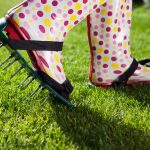
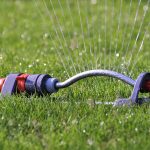
The realistic goal for most home lawns is to mask the ring and starve it slowly, because the only certain cure is to dig the whole thing out. Start by breaking up the water repellency, since that is what kills the visible grass. Spike the affected band and a 30cm (12 inch) margin around it with a garden fork, pushing the tines 10 to 15cm (4 to 6 inches) deep and rocking gently to open channels. Then apply a soil wetting agent, which is a surfactant that lowers the surface tension of water so it can break through the waxy coating and soak in. A1Lawn Hydrate Plus costs around £15/$19 for a 1 litre bottle that treats up to 500m2, and similar products are sold by ProGreen, Pitchcare, or under house brands at most garden centres, B&Q, and Amazon. Dilute as directed, drench the aerated band, and then water it in heavily, around 10 to 15 litres per square metre, repeated every few days through dry weather. Deep, repeated watering does what a sprinkle never can: it carries the wetting agent down to the fungal mat and rehydrates the dead zone.
Next, even out the colour. The dark green ring stands out because the rest of the lawn is hungrier than the fungus-fed strip. Feeding the whole lawn with a summer fertiliser closes that gap so the ring blends in. A spring and summer feed with an NPK around 11-5-5 costs roughly £39/$49 for a 25kg bag covering about 1000m2 at the standard 25g per square metre, and the steady nitrogen keeps the surrounding grass thick and dark enough that the ring stops drawing the eye. For a small front lawn of 50m2 that is only 1.25kg per application, so one bag lasts a long time.
If the ring is small and you want it gone for good, dig it out. Excavate the dead band plus 30cm (12 inches) on either side and down to 30cm (12 inches), removing every trace of white mycelium and any buried wood or root you find. Keep your tools and boots clean so you do not smear infected soil across the rest of the lawn, backfill with fresh topsoil from a different part of the garden, firm it, and reseed or returf. It is heavy work, but it is the only method that removes the colony rather than hiding it. Garden fungicides sold to homeowners do not reliably reach mycelium at that depth, which is why they are rarely worth the cost for fairy ring.
The Mistakes That Make It Worse
The most common mistake is watering little and often. Light sprinkling never penetrates hydrophobic soil; it sits on the surface, evaporates, and leaves the fungal band as dry as before, so the dead zone widens. Always water deeply and less frequently. The second mistake is digging out the ring but stopping at the visible edge. The mycelium always extends beyond the brown grass, so if you leave a 10cm margin of infected soil, the ring simply regrows from it and you have done all that work for nothing. The third is ignoring the food source. If you treat the surface but leave a rotting tree stump or a slab of buried builder timber underneath, you are feeding the colony while trying to kill it, and it will outlast you. Lift toadstools promptly whenever they appear, ideally before children or pets reach them, since some lawn fungi are poisonous if eaten, and bag them rather than composting them so you are not spreading spores. Get any of these three wrong and the ring keeps its grip. Get the water repellency, the depth, and the food source all dealt with, and you finally break the loop that has been beating your rake every summer.