- Summer lawn feed is loaded with nitrogen, which pushes soft leafy growth that struggles in cold, wet weather and falls prey to fungal disease.
- Autumn feeds drop the nitrogen and load up on potassium and phosphorus, feeding the roots so the grass banks energy for a strong spring.
- Timing and technique decide whether the feed helps or harms: spread a light, even dose just before rain, and get the raking, spiking and seeding done first.
The One Change That Sets Your Lawn Up for Spring
Grass takes a beating over summer. Foot traffic, ball games, dogs digging and long dry spells all leave a lawn thin, patchy and tired by the time the nights draw in. The reflex is to reach for the same box of feed that greened things up in June. That is the mistake. Summer feed and autumn feed do opposite jobs, and using the wrong one now can hand your lawn a winter of disease instead of the recovery it needs.
The Royal Horticultural Society is blunt about it in its September lawn advice: apply an autumn feed only if the grass is growing poorly, and never reach for leftover summer feed. The reason sits in the numbers printed on the bag.
What Nitrogen Does to Grass in Cool, Damp Weather
Every lawn feed carries three headline nutrients, shown as an NPK ratio on the pack: nitrogen (N), phosphorus (P) and potassium (K). Nitrogen drives leaf growth. Feed a lawn a nitrogen-rich product in spring or summer and it responds with a flush of soft green blades, exactly what you want in the growing season.
Push that same growth in early autumn and you create a problem. The new blades are soft, sappy and full of water, with thin cell walls that have had no time to harden. As daylight shortens and temperatures fall, that tender growth cannot cope. It sits wet for long spells, and fungal diseases such as red thread and fusarium patch move straight into the weakened tissue. You end up feeding the disease rather than the grass. The RHS warns that summer feed used now stimulates exactly this kind of vulnerable growth heading into the coldest, wettest months.
There is a second cost. Blade growth burns through the sugars the grass has stored, drawing energy up and out at the very point in the year when the plant should be sending reserves down into its roots. A lawn that spends October making leaves it cannot protect goes into winter underfed at root level, and limps into spring.
Why Potassium and Phosphorus Feed the Part You Cannot See
An autumn feed flips the ratio. It carries little nitrogen and instead leans on potassium and phosphorus. A typical example, Viano MO Bacter, an organic feed carried under RHS branding, runs an NPK of roughly 6:6:16, so the potassium figure is nearly three times the nitrogen.
Potassium does not build leaf. It builds toughness. Inside the plant it thickens cell walls, regulates the tiny stomata pores that control water loss, and lowers the temperature at which the grass suffers cold damage. A lawn well supplied with potassium going into winter is more able to shrug off frost, waterlogging and disease. Phosphorus does the underground work, driving root development and the energy transfer that lets roots grow deeper and denser while the soil is still warm from summer.
That root growth is the whole point of feeding now. Gardeners’ World puts it plainly: building roots in autumn means the grass can pull in far more water and nutrients the following spring, which is when you actually want the leafy top growth to arrive. Feed the roots in September and October, and the lawn repays you in April and May.
A domestic bag of autumn lawn feed runs from about £8 to £23 ($15 to $35) depending on the area it covers, with Westland Aftercut Autumn and the Viano MO Bacter range among the common choices. Both Gardeners’ World and the RHS point toward organic feeds, seaweed-based products, pelleted poultry manure or home-made sieved compost and leafmould, over synthetics. The reason is soil life: studies have found that synthetic fertilisers cut the population of fungi, bacteria and other microbes in the soil, and those microbes are what keep a lawn feeding itself over the long run. An organic feed works with that soil life rather than against it.
When and How to Spread It Without Scorching the Grass
Get the application wrong and even the right feed can burn stripes into a lawn. Two rules keep it safe.
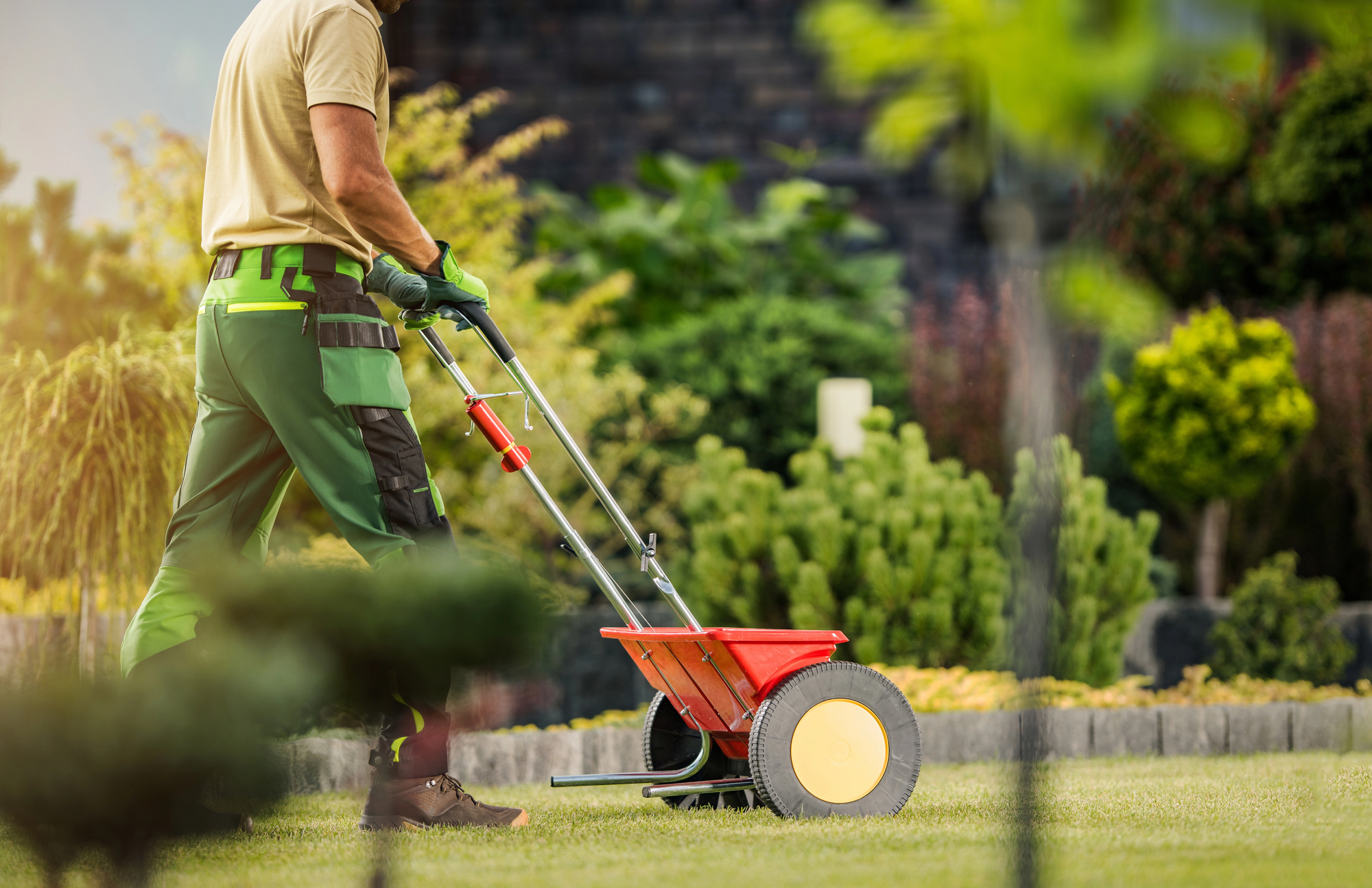
First, spread it evenly and lightly. The RHS and Gardeners’ World both suggest a rate of roughly a handful per square metre (a handful per square yard), scattered as evenly as you can manage. A calibrated lawn spreader with a trough does this far better than a hand can, and stops the clumping that leaves dark green patches next to scorched yellow ones. If you are spreading by hand, split your feed into two halves and walk the lawn twice at right angles, so any unevenness in one pass is cancelled by the other.
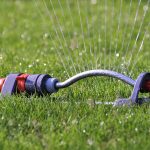
Second, time it to the weather. Apply autumn feed just before rain is forecast, so it washes off the blades and down to the soil where the roots can take it up. Granules left sitting on wet leaves in sunshine draw moisture out of the blade and burn it. If no rain arrives within a day or so, water it in yourself with a hose or sprinkler. Never apply feed to a lawn that is bone dry or already frosted.
Restraint helps too. More feed is not better. A double dose of even a gentle autumn product loads the soil with salts that pull water out of the roots, the opposite of what you want, and any nitrogen it does contain is pushed into growth the plant cannot use. Stick to the rate on the pack.
The Jobs to Do Before You Feed
Feed lands best on a lawn that has been cleared and opened up first, so the granules reach soil rather than a mat of dead thatch. Work through these steps over an afternoon before you spread anything.
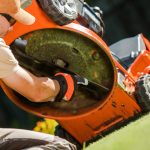
Raise the mower and cut high. As daylight shortens, grass has fewer hours to photosynthesise and store sugars in its roots. Leaving the blades longer, around 4cm (1.5in), keeps more leaf area working for the plant. Collect the clippings rather than leaving them, as damp trimmings sitting on the surface in autumn invite disease. Mow less often as growth slows, and never cut a wet or frosted lawn.
Scarify to strip out thatch and moss. Rake the lawn hard with a spring-tined rake to drag out the brown layer of dead stems and moss that has built up over summer. A small amount of thatch is fine, but a thick mat blocks water and feed from reaching the soil and shelters disease. A spring-tine rake costs about £10 to £18 ($13 to $23); on a large lawn a powered scarifier saves your back. The lawn will look ragged afterwards and recover within a fortnight.
Spike to relieve compaction. A summer of use packs the soil down and squeezes out the air roots need. Drive a garden fork in about 8cm (3in) deep every 15cm (6in) across the lawn, rocking it gently to open the holes. This improves drainage and gets oxygen to the roots. A sturdy garden fork runs £15 to £30 ($20 to $40). On heavy clay, a hollow-tine aerator that pulls out cores works better, and you can brush a sandy top dressing into the holes afterward to keep them open.
Overseed the thin patches. Autumn soil is still warm and the rain is returning, which is close to ideal for grass seed. Loosen any bare or thinning areas with a fork, scatter seed, cover lightly with compost and water in. A bag of ryegrass-based lawn seed costs around £8 to £18 ($10 to $23). New seed sown now roots and greens up before the cold sets in.
In cooler northern regions this full routine is best tackled in September or October. In milder southern areas there is no rush, and you can spread the work into late autumn. Only once the lawn is mown, raked, spiked and reseeded should you reach for the feed, and only then if the grass clearly looks starved.
What Happens If You Skip the Feed Altogether
Here is the part the fertiliser aisle will not tell you: most lawns do not need feeding at all in autumn. Given the return of regular rain and lighter use, a healthy lawn recovers from summer perfectly well on its own. Feeding is worth it only when the grass is visibly weak, pale, thin or slow to green up after the first rains.
The real risk is not skipping the feed. It is feeding wrongly. A lawn left alone comes through winter unharmed. A lawn given a heavy nitrogen dose in September enters the cold season carrying soft, disease-prone growth it cannot support, and you spend next spring raking out red thread and reseeding the scars. If you are going to feed, feed for roots, spread it thin, time it to the rain, and let the grass do the rest.