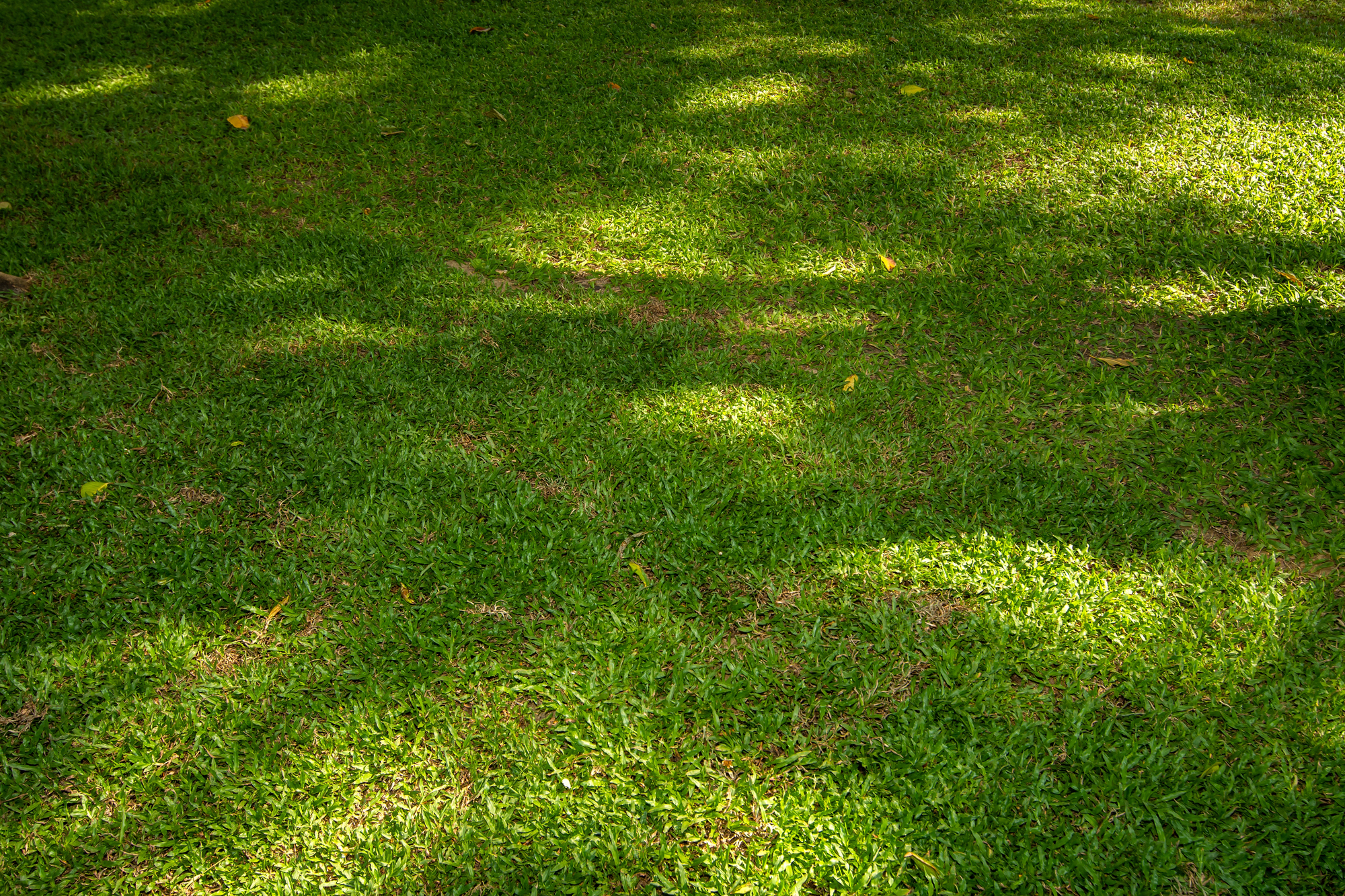
The patch of lawn under the big tree at the side of the garden is the single most frustrating piece of turf in any garden. It thins. It moss-fills. It stays sparse no matter how much you seed, feed, or water it. The reason has nothing to do with the seed mix and everything to do with the basic biology of grass. Cool-season lawn species need a minimum of four hours of direct sun a day to photosynthesise enough sugar to maintain the root system. Under a mature oak, beech, or conifer canopy, the available light in summer can drop to five percent of full sun, and at that point the grass is in a permanent calorie deficit. It cannot grow, only survive, until the canopy thins in autumn or you find a way to bring more light in.
Most homeowners try the wrong fix first. They buy a more expensive grass seed, scatter it on the bare patches, and wait. The new seedlings germinate, push up a thin blade or two, and then collapse within weeks because the light still is not there. They throw fertiliser at the problem, which makes things worse because nitrogen feed without sunlight just feeds the moss. They water heavily, which compacts the already-shaded soil and tips the conditions even further toward moss and away from grass. The real fix is a combination of choosing a shade-adapted seed, raising the mowing height dramatically, reducing competition from tree roots, and accepting that some areas will never sustain a fine lawn no matter what you do.
Why Shade Defeats Most Grass Seed
Standard lawn seed mixes are built around perennial ryegrass and meadow grasses that evolved on open grassland. They need full sun, recover well from mowing, and crowd out competition by spreading sideways. Under shade they fail at all three jobs. The growth rate slows because of the calorie deficit, the recovery from mowing takes weeks instead of days, and any thin patch that opens up gets colonised by moss faster than the grass can reclaim it. The right shade mix is built around different species entirely.
Creeping red fescue (Festuca rubra rubra) is the workhorse of any serious shade mix. It tolerates low light, low nutrient soil, and dry conditions because it evolved on the woodland edge. Chewings fescue (Festuca rubra commutata) adds a finer leaf and tighter density, which means a thicker canopy that resists moss. Smooth-stalked meadow grass (Poa pratensis) brings drought tolerance and recovery capacity. Together with a small percentage of high-quality amenity dwarf ryegrass for wear tolerance, this mix can hold a respectable lawn in light to moderate shade.
For UK gardens, GreenCare Shady Mix is a typical example, containing 30% amenity dwarf perennial ryegrass, 40% creeping red fescue, 12.5% smooth-stalked meadow grass, 15% chewings fescue, and 2.5% browntop bent. It retails around £18/$22 for a 1kg pack covering 30 square metres at the recommended sowing rate. Barenbrug Bar 7 and Rolawn Shaded Areas Mixture are higher-spec alternatives at around £30/$38 per kilo. For damp shade, look for mixes with a higher proportion of bent grasses, which tolerate moisture better than the fescues alone.
Mowing High Is the Secret Weapon
The single most effective change you can make to a shady lawn is to raise the mowing height. Where a sunny lawn cuts well at 25-30mm (1 to 1.2 inches), a shady lawn needs 50-65mm (2 to 2.5 inches) minimum. The reason is direct sunlight per square millimetre of leaf area. Taller grass blades have more total leaf surface available to capture the limited light that does reach the canopy, and more photosynthesising area means more sugar produced and more root growth. Mowing short in shade is like asking a runner to win a race on half rations.
Long grass also shades out weed and moss germination. Most weed seeds, including dandelion and chickweed, need light striking the soil to break dormancy and germinate. A canopy of grass at 60mm (2.4 inches) blocks most of that light, and the population of new weed seedlings drops noticeably within one growing season. Combined with the deeper root system that a taller cut encourages, mowing high addresses two of the three biggest problems in shaded lawns at once.
The frequency of mowing also drops in shaded areas. Where a sunny lawn might need cutting twice a week in May, the shaded section grows so slowly that once every ten to fourteen days is plenty. Following the one-third rule, which says you never remove more than a third of the blade length per cut, means if you are leaving the lawn at 60mm you cannot cut below 40mm without stressing the grass. The practical answer is to mow infrequently and consistently at the higher setting, and accept that the shaded zone will always look slightly different in texture from the sunny areas.
Tree Roots Are Half the Problem
Shade is only one of the challenges under a tree. The other is competition for water and nutrients. A mature oak draws up to 380 litres (about 100 gallons) of water per day from the surrounding soil in summer, and most of that comes from the top 30cm (12 inches) where the grass roots live. The fine feeder roots radiate out far beyond the canopy, reaching at least as wide as the crown and often twice as wide. Within that root zone, the grass is in direct competition with a vastly larger and deeper root system that always wins.
Royal Horticultural Society advice is to keep a turf-free zone of at least 1m (3.3 feet) around the base of any tree, especially young trees, and to mulch that area with bark or composted leaf mould rather than trying to maintain grass right up to the trunk. The mulch suppresses weeds, holds moisture for the tree, and avoids the constant battle of mowing close to the trunk where mower wheels damage the bark. Beyond the mulched zone, accept that grass density will be lower than the sunny part of the lawn and adjust your expectations accordingly.
Watering the shaded lawn deeply but less often helps the grass roots compete. Light frequent watering keeps moisture in the top few centimetres, which is exactly where the tree feeder roots dominate. Deep watering once a week pushes moisture down 15-20cm (6-8 inches), where the grass roots can extend without immediately running into tree roots. Apply 25mm (1 inch) of water in a single session, measured by placing a tin can on the lawn and timing how long the sprinkler takes to fill it, then leave the lawn alone for a week before the next deep soak.
When to Give Up and Plant Something Else
There is a point at which no lawn will grow no matter what you do. Under the dense canopy of an evergreen conifer, in a north-facing corner that gets no direct sun even in June, or in a courtyard surrounded by tall walls, the available light falls below the survival threshold for any turf grass. Pushing on with seed and feed in these conditions wastes money every year and leaves the area looking permanently shabby. The smart move is to switch to a shade-loving ground cover that actually thrives in those conditions.
Wood spurge (Euphorbia amygdaloides Robbiae), barrenwort (Epimedium), creeping dogwood (Cornus canadensis), and various mosses and ferns make a far better cover than failing grass. For a more lawn-like appearance, mind-your-own-business (Soleirolia soleirolii) creates a dense green carpet that tolerates light foot traffic and zero direct sun. It looks like very fine grass at a distance and grows happily where lawn fails entirely. The transition from struggling lawn to deliberately chosen shade planting often improves the whole feel of a garden, because the area finally looks intentional rather than apologetic. For more on adapting your lawn to difficult conditions, see our guides to why late May is your last window to fix bare patches and how to identify your grass type and choose the right care for it.