
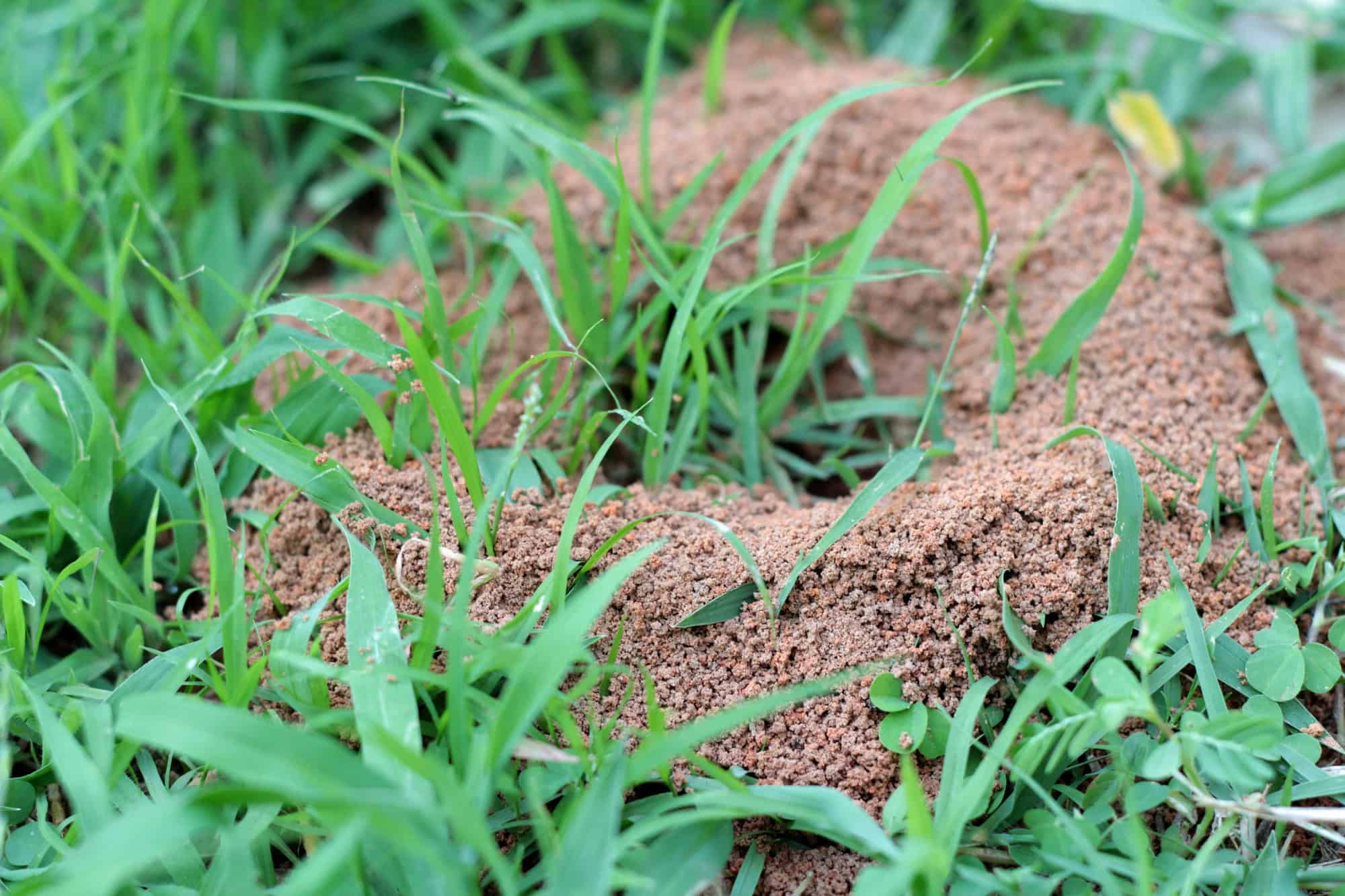
If small craters of fine, loose soil are pushing up through your lawn in dry summer weather, ants have moved in beneath the grass. The instinct is to pour something on the nest and be rid of them, but that is the slowest and least effective response. Ant hills are a cosmetic and a mowing problem far more than a threat to the grass, and the lasting fix is to make the spot less inviting and to keep levelling the spoil, not to wage a chemical war on the colony.
Why Ant Hills Erupt in Summer
The mound itself is not a pile of ants. It is excavated soil, the fine spoil the colony brings to the surface as it digs out chambers and tunnels below. Ants choose lawns for very specific reasons, and every one of them peaks in summer. They want warm soil, because heat speeds up the development of their brood. They want dry, free-draining ground, because a waterlogged nest drowns the eggs and larvae. And they want to be left undisturbed in a sunny, settled spot. A lawn that has baked hard and dry through a hot spell is close to perfect, which is why nests that were invisible in spring suddenly throw up mounds in June and July as the colony expands and the workers excavate more space for a growing brood.
The species most gardeners see is the common black garden ant. A single mature nest can hold thousands of workers and one long-lived queen who may have been in the same patch of lawn for years. The mounds you notice are the outward sign of a colony that is busy and thriving, and they tend to appear in the same dry, sunny areas year after year because those areas keep offering the conditions ants prefer.
It helps to know what you are actually looking at, because three different lawn lumps get confused. An ant hill is a small dome of fine, crumbly, dry soil with no central hole, often with ants visible if you disturb it. A worm cast is a smaller, darker, twisted squiggle of moist soil left by earthworms, most common in autumn and spring rather than high summer. A molehill is far larger, a fist-sized or bigger heap of coarse soil pushed up from a deep tunnel. The treatment for each is different, so identifying the dry, fine summer dome correctly as ant spoil saves you chasing the wrong problem.
Why the Mounds Damage Your Lawn and Mower
Ants themselves do not eat grass and their tunnelling actually helps the soil, opening channels that let air and water move down to the roots in much the same way that deliberate aeration does. The damage comes from the soil they bring up. A mound of loose, dry tilth sitting on top of the sward smothers the short grass beneath it, cutting off its light. Under a mound left in place for a few weeks the grass yellows and dies, leaving a bare patch once the soil is cleared, and bare patches are exactly where weeds such as clover, yarrow and meadow grass establish.
The bigger nuisance is at mowing time. Run a mower over a hardened ant hill and the blade slams into a heap of compacted, often stony soil. That blunts the cutting edge quickly, can chip or bend the blade, and on a mound that sits proud of the surface the mower scalps the top clean off, ripping out the grass and leaving a bald, soil-filled scar. A lawn dotted with mounds also becomes distinctly uneven underfoot, and the rough surface makes a clean, level cut almost impossible. Birds compound the problem, scratching and digging at the mounds to feed on the ants and their eggs, which tears the turf further. A blunt blade caused by hitting mounds then tears rather than slices every blade of grass on the whole lawn, leaving frayed white tips that brown off and invite disease, so the cost of ignoring a few mounds spreads well beyond the mounds themselves.
How to Level and Discourage Them
The single most useful habit is to brush the mounds flat before you mow, and to do it when the soil is dry. On a dry day a stiff yard broom or a besom scatters the loose spoil back down into the surrounding grass, where it disappears into the sward and does no harm, and it leaves the mower a level surface to cross. Brushing wet mounds is a mistake, because damp soil smears into a muddy cap that smothers even more grass, so always wait for a dry spell. Repeat the brushing every few days through the active season. Ants dislike constant disturbance, and a nest that is broken open and levelled again and again will often relocate to a quieter spot such as a border or the ground beneath a path.
Work on the conditions as well as the mounds. Because ants favour dry soil, watering the affected area deeply and regularly, applying around 2.5cm (1 inch) at a time, makes the site far less attractive and encourages the colony to move on of its own accord. For a stubborn nest, a biological control works without poisoning the soil life or harming pollinators. Ant control nematodes, a microscopic worm called Steinernema feltiae sold as products such as Nemasys No Ants, cost around £10 to £15 (about $13 to $19) for a pack at garden centres, Amazon or specialist suppliers. You water the nematode solution into the nest when the soil is moist and above 10 degrees C (50 degrees F); the nematodes irritate the colony so much that the queen relocates the nest rather than tolerate them, which is a more durable result than killing the surface workers. Once a mound is gone and the bare patch is exposed, loosen the soil, sprinkle a little fresh grass seed and keep it watered to close the gap before weeds find it.
Timing helps too. Ant activity is highest through the warm months and tails off as autumn cools and the soil dampens, so a colony you struggle to shift in July often quietens on its own by October. The aim through summer is simply to manage the mounds and steer the ants elsewhere rather than to eliminate them, accepting that their tunnelling does some good underground even as their spoil makes a nuisance on top. If the same sunny corner throws up nests every single year, the most effective long-term change is to reduce how dry and undisturbed it stays: water it as part of your normal routine, keep the grass a little longer to shade the soil, and the spot gradually loses the baked, settled character that makes it such prime ant real estate in the first place.
The Mistakes That Make Ant Hills Worse
The classic mistake is a kettle of boiling water tipped over the nest. It scalds the grass as thoroughly as it scalds the ants, leaves a dead brown circle that then needs reseeding, and rarely reaches the queen deep in the nest, so the colony simply rebuilds within days while you are left with bare turf. The second mistake is scattering a general ant powder or insecticide across the lawn. It kills indiscriminately, harming the beneficial insects and soil life that keep a lawn healthy, and it does little to a nest whose queen sits well below the treated surface. The third mistake is mowing straight over hard mounds without levelling them first, which blunts the blade, scalps the turf and leaves the soil scars that start the whole bare-patch cycle. The fourth is flattening mounds when they are wet, smearing mud across the grass and smothering more of it than the ants ever would. Treat ant hills as spoil to be brushed away and a site to be made less welcoming, keep the area moist and disturbed, and you will keep the lawn level without resorting to anything that harms it. For more on summer surface problems, see our guide to levelling a bumpy lawn.