
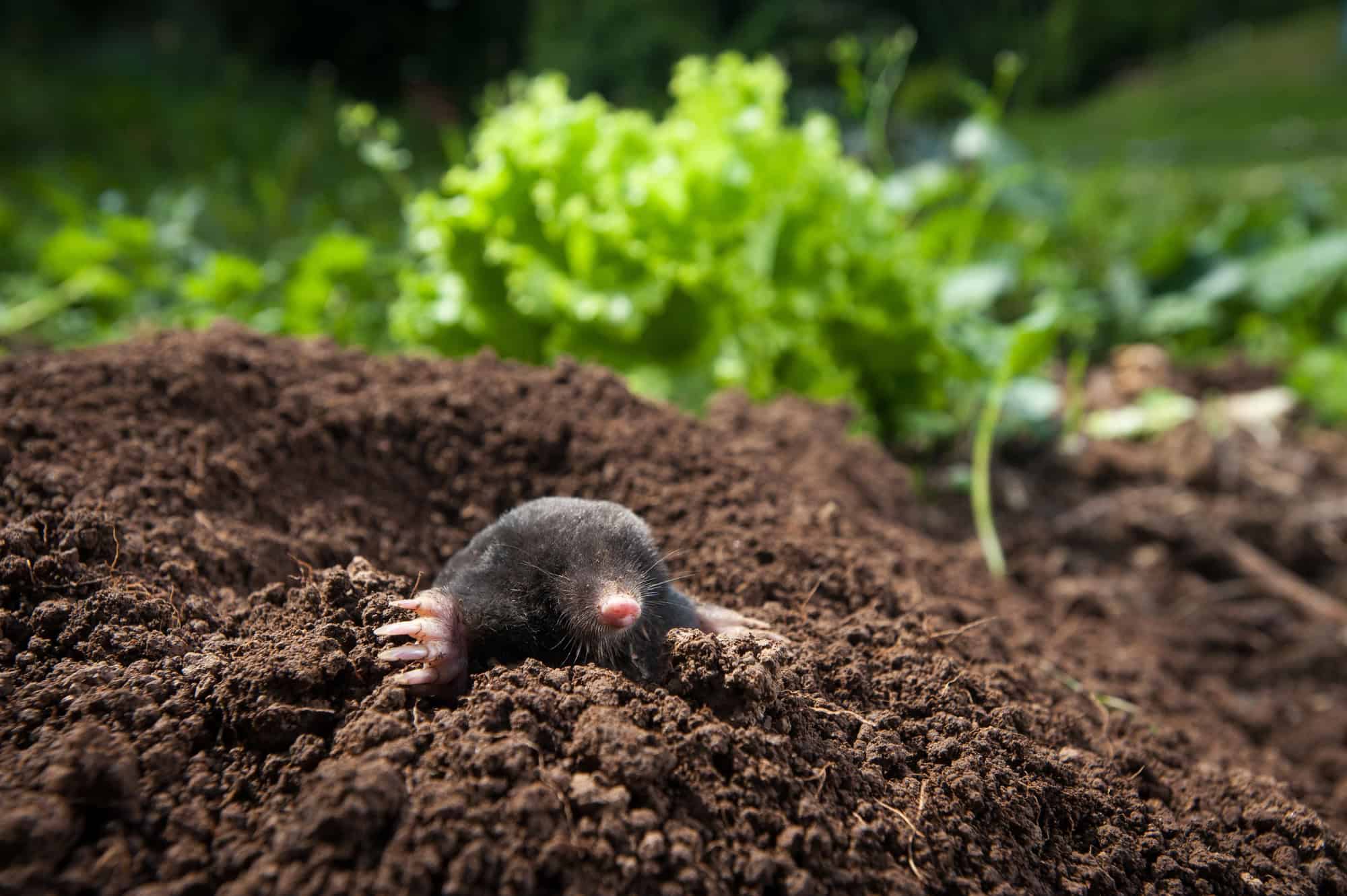
- Molehills are not a sign the lawn is being eaten: moles are carnivores after earthworms, and the heaps of soil are simply the spoil they push up as they dig, so the grass itself is unharmed.
- Almost all the activity in a normal garden is one solitary animal, which is why a trapping or poisoning war is usually the wrong fight to pick.
- The fastest fix is to lift the fine soil off before you mow, firm the collapsed runs, and make the ground less inviting to the worms the mole is following.
Those Soil Heaps Are a Digging Problem, Not an Eating Problem
You walk out onto the lawn after a wet week and there are three or four fresh mounds of dark soil sitting on the grass, with more appearing every couple of days. It looks like something is destroying the lawn from below. It is worth knowing what is actually going on before you reach for anything drastic, as the usual reactions make more mess than the mole does.
A molehill is spoil. A mole digs a network of tunnels below the surface and has to put the excavated soil somewhere, so it pushes it straight up, which is the heap you see. The tunnels, not the hills, are the animal’s home and hunting ground. A mole is a small creature, about 15 centimetres long (6 inches), with oversized front paws built for one job, which is shifting soil at speed.
The part that changes how you treat the whole problem is what a mole is down there for. In the words of the Royal Horticultural Society, “Moles don’t feed on plants, they are carnivorous feeding on invertebrates that fall into their system of tunnels.” It is hunting earthworms and grubs, not grass roots. The lawn is not being eaten. Any harm to the turf is a side effect of the digging, and in an established lawn that harm is limited to the mounds themselves and the odd soft ridge where a tunnel runs close to the surface. Seedlings and small plants in a bed can have their roots disturbed, but a mature lawn is not under attack.
Why They Turn Up on the Lawn in Autumn
Mole activity runs all year and reaches its peak in late winter and early spring, but autumn is when the hills tend to become obvious on a lawn, and there are two reasons for that. The first is the rain. Damp, soft ground is easy to tunnel through, and a wet autumn brings earthworms up toward the surface where the mole can reach them, so it extends its runs into the open lawn to follow the food. The second is the grass. Growth slows right down as the season turns, so the lawn stops hiding the damage. A fresh mound on fast growing summer grass gets mown off and forgotten; the same mound on a near dormant autumn lawn sits there in plain view for a fortnight.
There is one reassuring fact to hold onto while you look at a lawn dotted with heaps. The RHS points out that all the mole activity in a small garden is likely the work of a single animal. Moles are solitary and territorial outside the brief breeding season, so a dozen hills across a garden is the work of one resident, not an infestation. That single animal will often move on of its own accord once it has worked through the easy worms in your patch.
Clear the Hills Without Ruining the Grass
The wrong move is to run the mower straight over a molehill. That smears a thick layer of soil sideways across the grass, which smothers the blades it lands on, kills patches of lawn and leaves a bald scar far wider than the original heap. So the order is always the same: deal with the soil first, mow second.
Wait for the mound to dry out for a day or two, then lift the loose soil off the grass with a shovel or a stiff brush and a bucket rather than raking it flat into the turf. Underneath you will usually find the entrance to the run, slightly sunken. Firm it back down with your heel or the back of a rake so the surface sits level again. Where a shallow tunnel has lifted a soft ridge across the lawn, tread it down the same way. Once the soil is off and the ground is firm, mow as normal.
Do not throw the soil away, as it is the best free resource a mole leaves behind. Molehill soil is fine, stone free and already sieved by the animal, which makes it excellent for topdressing thin spots on the lawn, levelling small hollows, or mixing into homemade potting compost. Collect it in a bucket, pick out any roots or stones, and keep it dry for spring. The one job it is not suited to is filling the tunnels, which collapse and settle on their own.
Moving the Mole On Without Poison or Traps
You can kill a mole with a trap set in a tunnel, and a professional can gas the runs where the ground is well clear of any building. Both work. Both also leave the tunnels open for the next mole to find, and a cleared territory with good worm numbers tends to be refilled within a season, so the lethal route often becomes a yearly ritual rather than a cure. If you would rather move the animal along than kill it, a few methods push a mole toward the edge of the garden or next door.
Battery powered sonic spikes, pushed into the ground and sending a regular buzzing pulse through the soil, are the most common deterrent. A pack of three or four costs around 15 to 25 pounds (roughly 20 to 30 US dollars). They do not harm the mole; they make a stretch of ground unpleasant enough that it tunnels elsewhere, with the honest caveat that “elsewhere” can mean the far end of your lawn or your neighbour’s. Space them along the active runs and move them every week or two so the mole does not learn to ignore a fixed point.
Smell works on the same logic. Mole repellent granules and smoke cartridges based on castor oil, at roughly 10 to 15 pounds (about 12 to 20 US dollars), taint the soil and the worms in it with a taste and smell moles avoid, and watering them in after rain carries the castor oil down into the runs. Some gardeners plant caper spurge, Euphorbia lathyris, near problem areas for the same deterrent effect, though its roots are the active part so it works slowly and only close by. Allium moly bulbs are sometimes sold for the job but are of doubtful value. Treat the sap of caper spurge with care, as it irritates skin and eyes.
How to Stop the Hills Coming Back
A mole stays where the food is, so the lasting fix is to make the lawn a poorer hunting ground for it rather than to fight the animal directly. Worms thrive in damp, rich soil, so a lawn that is watered hard and heavily fed holds more of them and draws more mole traffic. Easing off the watering as autumn sets in, and not overfeeding, thins the worm population near the surface and gives the mole less reason to stay.
Firming the ground helps too. Rolling or treading the lawn collapses the shallow runs and makes the soil harder to tunnel, which nudges a mole toward softer, easier ground beyond the garden. Keep lifting fresh hills as they appear rather than letting them sit, both to protect the grass and to signal that this is not a quiet corner. For a new lawn on known mole ground, a layer of mole netting laid under the turf before it goes down blocks tunnelling from below, though it does add plastic to the soil and cannot be retro fitted to an existing lawn.
Set against the alternative of a dead lawn, a few mounds from one small animal that eats the grubs and aerates the soil as it goes is a problem worth keeping in proportion. Clear the hills, save the soil, firm the runs and make the ground less worm rich, and the single resident digging under your lawn will usually decide your garden is more trouble than it is worth and move along on its own.