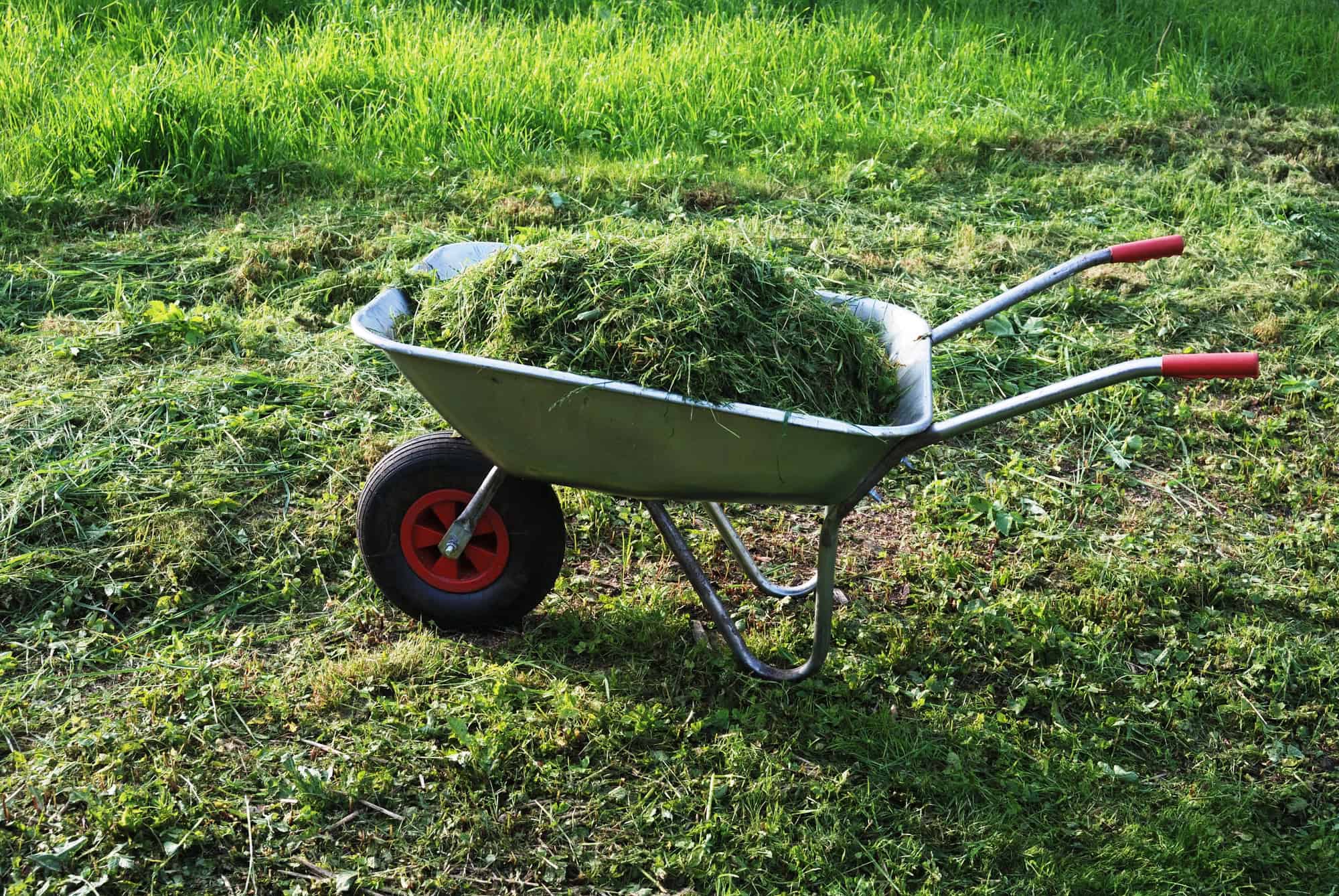
Most lawn owners bag their clippings out of habit, not because the lawn needs it. The bag fills up, you stop to empty it, walk it to the compost heap or the green waste bin, come back, and repeat the cycle two or three times per cut. Mulching eliminates that entire routine. The mower chops the clippings finely and drops them back into the lawn, where they break down and feed the grass for free. No bagging, no trips to the bin, and a lawn that gets a light dose of nitrogen every time you mow. It is the single biggest labour-saving change available to a domestic lawn owner, and it costs nothing to start doing.
The reason most people still bag is a leftover habit from the 1980s, when mower technology was poorer, mulching mowers were rare, and the conventional wisdom was that clippings caused thatch. All of those things have changed. Modern mulching mowers chop clippings into pieces under 5mm long. The pieces drop down into the base of the lawn, decompose within two weeks, and add no thatch at all when used correctly. The change in maintenance is so substantial that the major mower brands now sell mulching as a standard feature rather than an option.
What Mulching Actually Does to Your Lawn
The headline benefit is nutrition. Grass clippings are roughly 85 per cent water and 4 per cent nitrogen by weight. Across a mowing season, returning clippings to the lawn provides about 25 per cent of the nitrogen the grass needs to grow well. That is the equivalent of one full bag of fertiliser per year. For a typical 200 square metre garden, that saves around £25/$32 a year on lawn feed, every year, indefinitely.
The clippings also break down quickly into small amounts of phosphorus and potassium, which are the other two main lawn nutrients. Over three or four seasons of consistent mulching, the soil under the lawn builds up enough organic matter that water retention improves measurably. University extension studies have measured drought tolerance increases of around 20 per cent in lawns that have been mulched for several seasons compared to lawns that have been bagged.
The second benefit is moisture. The thin layer of clippings on the soil acts like a light mulch, exactly the same way bark chips work in a flower bed but in miniature. The mulch layer slows evaporation, keeps the soil surface cooler in hot weather, and reduces water demand by 10 to 15 per cent. In a summer with hosepipe restrictions, that margin is the difference between a green lawn and a brown one.
The third benefit is colour. A lawn that has been mulched for two seasons or more looks visibly greener than an identical lawn that has been bagged. The reason is the slow steady release of nitrogen, which is exactly what bagged lawn fertilisers try to mimic in pellet form. Clippings do it naturally, and at a release rate that the grass can absorb fully without any waste.
The Mistakes That Made People Stop Mulching
The most common reason gardeners give up on mulching is clumping. Wet clippings clump together and lie on top of the lawn rather than falling through to the base. Within a day or two the clumps yellow the grass underneath and you end up with brown patches in clearly mower-shaped lines. The fix is simple. Do not mulch wet grass. Mulching works only when the grass is dry enough that the clippings are light and individual rather than sticky and matted.
The second mistake is mowing too tall. Mulching only works if you cut roughly a third of the grass height. If the lawn has grown to 10cm (4 inches) and you cut it down to 4cm (1.5 inches) in one pass, you are removing too much material for the mower to chop finely. The result is long clippings that fall out of the deck rather than circulating, and a mat of debris that sits on the lawn. Mulch only when the lawn is at most one third taller than your target height, which in May means mowing every five to seven days.
The third mistake is mulching without the right deck or blade. A standard rotary mower with a side discharge will scatter clippings rather than mulch them, even if you fit a mulching plug. A purpose-built mulching mower has a sealed deck and a special blade with extra lift fins that circulate the clippings under the deck until they are chopped fine enough to drop through. Without the right blade, mulching mode produces long, untidy clippings instead.
The fourth is mowing too fast. The mulching action depends on the clippings being held under the deck long enough to be chopped multiple times. If you walk at a normal mowing pace with a side discharge, you walk at maybe half that pace with a mulcher. Most domestic mulching mowers are happy at around 4 to 5 kilometres per hour, which is slow walking pace. You can hear when the mower is working harder, and that is the right speed.
The Best Mowers If You Want to Mulch Seriously
For small to medium gardens up to about 300 square metres, the Bosch UniversalRotak 36-550 (around £170/$215) is the standard recommendation. It is a battery mower with a dedicated mulching plug, light enough for most users to manoeuvre, and the rear roller leaves stripes even in mulch mode. The Flymo SimpliMow 340 (around £130/$165) is a cheaper option that does the job adequately on smaller lawns but with less consistent fine chopping.
The Ego LM2102E-SP (around £550/$700) is the step up for larger gardens. It is self-propelled, mulches very finely, and the 56V battery gives around 60 minutes of runtime which is enough for around 800 square metres of medium-length grass. The Stihl RMA 339 C (around £600/$770) competes directly with this and is slightly better on rougher terrain.
For petrol fans, the Honda HRX 537 (around £950/$1,200) has the strongest reputation in domestic mulching. The Versamow deck combines mulching, bagging and side discharge in a single mower, and the cut quality on dry grass is excellent. The Hayter Spirit 41 (around £550/$700) is a more affordable petrol option with a metal deck.
Robot mowers are the ultimate mulchers because they cut every day or every other day, taking a tiny amount off each time. The clippings are so fine they disappear into the lawn within hours and the feed effect is constant. The Husqvarna Automower 305 (around £900/$1,150) and the Worx Landroid M500 (around £700/$900) both work well on lawns up to 500 square metres. There is more on choosing a robot mower at lawnandmowers.com.
How to Switch Without Killing the Lawn
If you have been bagging for years, the lawn is used to having clippings removed and the soil may have a thin organic layer or a thatch buildup. Switch by stages. Start by mulching one cut in three for the first month. This lets the soil microbes ramp up to handle the new organic input. After a month, move to one in two. After six weeks, you can mulch every cut except when the grass is wet or unusually long after a holiday.
During the switch, mow more often than usual. Every four to five days in May, dropping to every seven days by July. Frequent mowing keeps the clippings short enough to mulch cleanly, and stops you arriving at a situation where you have to mow long grass and bag it just to recover.
Watch the lawn for two weeks after the switch. If you see any signs of mat or yellow striping, scarify lightly with a spring tine rake to break up the surface and let air through. This is rarely needed on a healthy lawn but is worth checking. By the end of the first full season, you will be using around half the fertiliser, spending around half the time mowing, and the lawn will be greener than it was when you were bagging. The bag attachment can stay in the shed except for the final autumn cut, where bagging the last of the leaves and clippings is still useful for tidy winter presentation.