If pale patches of grass have suddenly appeared on your lawn over the past week or two, knit through with fine pink or red threads at the tips, you are looking at red thread. It is one of the most common warm-season lawn diseases, and the single most useful thing to know is this: it is rarely fatal, and the cure is usually a light feed rather than a fungicide. Red thread is the grass telling you it is short of nitrogen. Give it a gentle, balanced feed, keep your mowing sharp, and the lawn grows the problem out within a few weeks. Reaching for a chemical is almost always the wrong first move.
What Red Thread Looks Like and Why It Appears
Red thread is caused by the fungus Laetisaria fuciformis. It announces itself as irregular patches of bleached, straw-pink grass, anywhere from the size of a coin to 25cm (about 10 inches) across. Look closely, ideally in the early morning when dew is still present, and you will see the diagnostic feature: tiny red or coral-pink threads, called sclerotia, extending from the cut leaf tips like fine needles. In humid conditions you may also spot a faint pink, candyfloss-like fluff of fungal growth between the blades. These threads are how the disease spreads, because fragments break off and are carried to fresh grass on mower blades, shoes, and even on the wind.
The fungus becomes active when air temperatures sit between roughly 15 and 25 degrees C (59 to 77 degrees F) and the grass surface stays damp for long periods, which is exactly the pattern of a mild, showery early summer. Fine fescues and perennial ryegrass are the most susceptible species, so the typical garden lawn sown with a hard-wearing ryegrass and fescue mix is a prime target. The good news is that red thread attacks the leaf, not the crown or the roots. That is why the disease looks alarming but seldom kills the plant outright. Once the grass is fed and growing strongly again, the damaged leaf is simply mown off and replaced by healthy new growth.
The reason red thread appears on some lawns and not others almost always comes down to soil fertility. Grass that is growing slowly because it is hungry has thin, soft leaf tissue and a weak ability to outpace infection. A well-fed lawn, by contrast, pushes out new leaf faster than the fungus can colonise it. So while damp weather is the trigger, low nitrogen is the underlying cause, and that is the lever you can actually pull.
The Nitrogen Connection That Drives It
The Royal Horticultural Society is clear that red thread is typically more severe when nitrogen is limited, and that the disease is alleviated by nitrogen applications. This is the mechanism worth understanding. Nitrogen is the nutrient grass uses to manufacture chlorophyll and build new leaf cells. When soil nitrogen runs low, often after heavy spring rain has washed it down beyond the root zone, the grass slows its growth and its existing leaves thin and soften. Those weakened leaves are far easier for Laetisaria fuciformis to invade. Feed the lawn and you reverse the process: the plant resumes vigorous leaf production, the tissue toughens, and fresh growth simply replaces the infected blades.
For a summer feed, choose a product with a steady, moderate nitrogen content rather than a high-strength spring formula that could scorch grass in the heat. Westland SafeLawn (around £12/$15 for a 150 square metre box) is a gentle organic-based feed with an NPK of roughly 6-1-3 that is safe for children and pets to use the lawn 15 minutes after watering in, which makes it a sensible choice for a family garden. If you want a faster visible response, a soluble feed such as Miracle-Gro Water Soluble All Purpose Plant Food (around £8/$10 for a 500g tub), mixed and applied through a watering can or hose feeder, delivers nitrogen straight to the leaf and greens the grass up within days. Apply any granular feed at the rate on the box, typically around 35g per square metre, which for a modest 50 square metre lawn means roughly 1.75kg per application. Water it in within 48 hours if no rain falls, because granular fertiliser sitting dry on the leaf in warm weather can scorch the very grass you are trying to rescue.
One timing caveat is worth knowing. The RHS advises against applying nitrogen feeds from late summer onward, because soft autumn growth raises the risk of other diseases such as snow mould heading into winter. So a summer red thread outbreak is the right moment to feed, while a late-autumn outbreak is better left until the following spring. If your lawn turns up red thread year after year despite feeding, that is a strong signal the soil itself is impoverished and would benefit from a proper annual feeding programme rather than a one-off rescue.
How to Treat and Prevent Red Thread
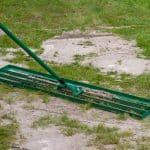
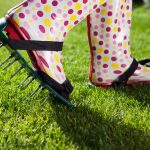
Start with the feed described above, because in most gardens that alone solves the problem. Beyond feeding, the aim is to reduce the surface dampness the fungus depends on. Scarifying the lawn to pull out thatch, the spongy layer of dead stems and roots that builds up at the base of the grass, removes a reservoir that holds moisture and harbours fungal material. A spring-tine rake does the job on a small lawn, or a powered scarifier such as the Bosch AVR 1100 (around £140/$175) for anything larger. Aerating compacted ground with a garden fork or a hollow-tine aerator, pushing the tines 8 to 10cm (3 to 4 inches) deep every 15cm or so, improves drainage and lets the surface dry faster after rain or dew.
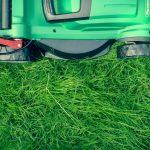
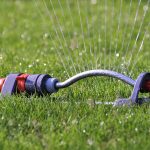
Watering habits make a real difference too. If you water during a dry spell, do it in the early morning so the grass dries through the day, rather than in the evening when the surface stays wet all night and gives the fungus the long damp window it needs. Water deeply and less often, soaking the soil once or twice a week, rather than a light sprinkle every evening. Keep your mower blade sharp as well, because a clean cut seals faster than the ragged, torn wound left by a blunt blade, and a torn leaf tip is an open door for infection.
One point catches many people out: there are no fungicides available to home gardeners for the control of lawn diseases. The professional products that turf managers once used have been withdrawn from general sale, so feeding and cultural care are not just the recommended route, they are the only route. That is no bad thing, because correcting the underlying fertility fixes the cause rather than masking the symptom.
Mistakes That Make Red Thread Worse
The most damaging mistake is to add infected clippings to your compost or, worse, to leave them lying on the lawn. The threads survive in clippings and reinfect the grass, so while the disease is active you should collect and bin the cuttings rather than mulching them back or composting them. Once the lawn has recovered and the threads have gone, you can return to mulching as normal.
The second common error is panic mowing. Cutting the grass very short to “tidy up” the patches removes the healthy upper leaf the plant needs to photosynthesise and recover, and it spreads fungal fragments across the whole lawn on the blades. Stick to the one-third rule, never removing more than a third of the leaf in a single cut, and set the mower to 25 to 40mm (1 to 1.5 inches) through summer. The third mistake is doing nothing at all and assuming the lawn will sort itself out. It often will eventually, but an unfed lawn stays vulnerable, the patches linger for months, and a bad outbreak can thin the sward enough to let moss and weeds colonise the gaps. If you get red thread wrong by ignoring it, you do not usually lose the lawn, but you do trade a fortnight of feeding for a whole season of patchy, second-rate grass. Feed it, sharpen the blade, water in the morning, and the pink threads will be a memory by midsummer.