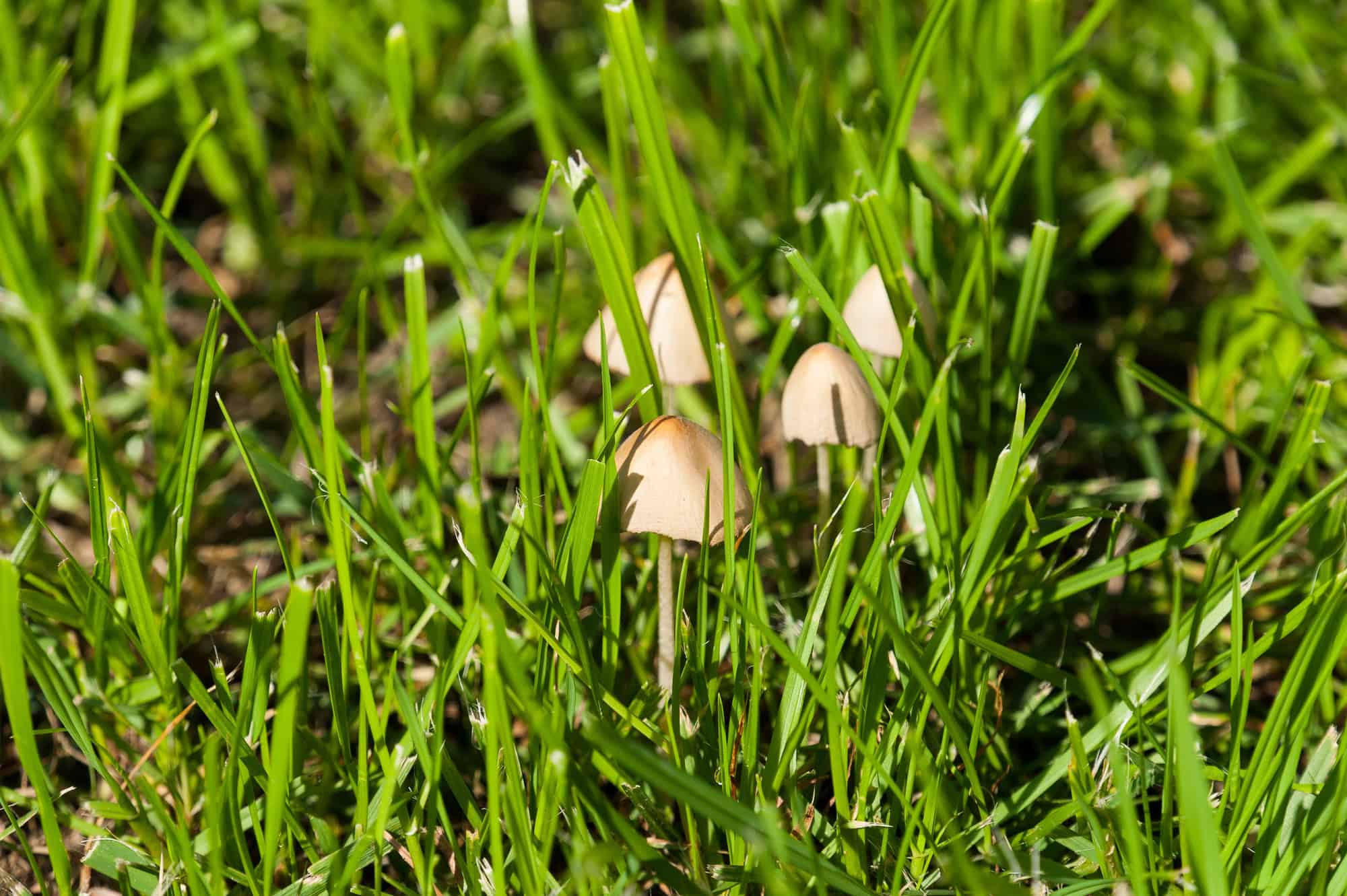
A scatter of toadstools across the grass on a damp late-summer morning looks alarming, but it almost never means your lawn is sick. The caps you can see are the fruiting bodies of a fungus that has been living out of sight in the soil for months. Most of these fungi feed on dead roots, buried wood and old thatch, and in doing so they hand nutrients back to your grass. Knock the caps off, understand what fed them, and in the vast majority of cases there is nothing else to treat.
The Royal Horticultural Society puts it plainly: the appearance of toadstools in a garden should not usually be a cause for concern. Knowing which few species are worth a second look, and what the rest are telling you about the ground underneath, turns a worrying sight into a useful one.
What a Toadstool Actually Is
There is no firm line between a toadstool and a mushroom. Both words describe the same thing: the fruiting body of a fungus, the part that pushes up above the surface to release spores. The classic shape has a stalk and a cap, with gills or pores underneath that carry the spores. Size and colour swing wildly from one species to the next, from pinhead specks to caps the width of a saucer.
The cap is only a tiny fraction of the organism. For most of the year the fungus lives as a network of fine white threads called hyphae, spread through the top few centimetres of soil and thatch. Together those threads form the mycelium. The fruiting body is a short-lived structure, thrown up only when conditions suit, then gone within days. So when toadstools appear overnight, the fungus did not arrive overnight. It was already there, and something tipped it into fruiting.
That trigger is usually water and warmth arriving together. Soil that has been dry through summer takes up the first real rain of late August or September, temperatures are still mild, and the mycelium responds by fruiting while the window is open. This is why lawns that looked clear for weeks can carry dozens of caps two days after a wet spell. The timing is seasonal rather than random: many of the fungi you see on grass fruit in late summer and autumn, then fall quiet again.
Why They Are Showing Up on Your Grass Now
Toadstools on a lawn are a sign of organic matter breaking down below the surface, and there is almost always a food source you can point to.
The most common feast is dead root and thatch. A lawn that has been through a hot, dry summer sheds a lot of fine root and leaf material. Thatch, the spongy brown layer of living and dead stems between the green blades and the soil, is rich in the tough tissue fungi digest well. A thick thatch layer holds moisture near the surface and gives saprophytic fungi both the food and the damp they need to fruit.
Buried wood is the other frequent culprit. Old tree roots left in the ground after a tree came down, offcuts of timber, a rotting fence post, or woodchip worked into the soil years ago will all feed fungi for a long time. Toadstools that keep returning to the same patch of lawn year after year are often sitting directly above a buried lump of wood that is still rotting down.
Newer lawns laid over ground with a lot of organic debris, and lawns under or near trees, tend to see more toadstools than old, lean turf on poor soil. None of this means the grass is failing. It means the soil below is alive and actively recycling.
The Types You Are Likely to See, and the Few Worth Watching
The RHS groups almost everything that fruits on a lawn into two harmless camps. The first is the saprophytes, the fungi that feed on dead plant and animal remains. These are usually good news: as they digest old roots and thatch, they release minerals and nutrients back into the soil and build up its humus content. The second is the mycorrhizae, fungi that partner with plant roots, most often those of trees and shrubs. The fungus draws sugars from the plant, and in return its threads reach far out into the soil and ferry back water and nutrients the roots could never gather alone. The bright red, white-spotted fly agaric near a birch is a mycorrhizal partner, not a threat to your grass.
A short list is worth learning to recognise. Fairy ring fungus, mainly Marasmius oreades, lives among the grass roots and pushes up toadstools in a ring or arc, mostly in late summer and autumn. It marks its territory with bands of darker green or dead brown grass, and its mycelium can form a water-repellent mat that stops rain reaching the roots inside the ring. Honey fungus, several species of Armillaria, is the one that does real damage, though to woody plants rather than to lawns. Clumps of honey-coloured mushrooms at the base of a tree or shrub, or over its roots in autumn, are worth investigating, as this fungus kills trees and shrubs by attacking their roots. Stinkhorn announces itself by smell long before you see it; the foul odour of decay is usually the first clue, and the young stage is a white, half-buried egg.
Everything else is background activity in a healthy soil. If you want a species named, the Royal Botanic Gardens at Kew will answer general enquiries about mushroom and toadstool toxicity.
What to Do, and What to Skip
Start with the point most people miss: there is no fungicide sold to home gardeners for getting rid of lawn toadstools, and in almost every case none is needed. The fruiting bodies collapse on their own within a few days. A quick pass with the mower or a stiff brush clears them, and mowing before the caps open helps knock back the spores they would otherwise shed.
If small children or pets use the lawn, pick the caps off by hand and bin them rather than leaving them to be nibbled. Treat every wild mushroom as inedible: wear gloves when you handle unknown ones, or wash your hands straight afterwards. A fruiting body described in a book as a mushroom is not automatically safe to eat, so the sensible rule on a lawn is simply to remove and dispose.
Where a white, fungal-smelling mat of mycelium sits in the soil and starts repelling water, break it up with a garden fork so rain can move through again. This is the same problem a fairy ring creates on a bigger scale. Driving the fork tines in at 10 to 15 centimetre spacing, roughly every 4 to 6 inches, and rocking gently, opens the mat and lets water in. On a dry, water-repellent patch, a wetting agent helps rain and irrigation soak in rather than run off; a lawn wetting agent costs around 15 to 20 pounds or 19 to 25 dollars from garden centres, B&Q or Amazon, and one treatment lasts several weeks. For a recurring patch fed by buried wood, the lasting fix is to dig down, find the timber or old root, and take it out.
How to See Fewer of Them Next Year
You cannot sterilise a living soil, and you would not want to, but you can remove the conditions that make a lawn fruit heavily. Thatch is the lever most gardeners can pull. Scarifying, raking out the dead spongy layer, cuts the food supply that surface fungi depend on and lets air and water reach the soil. Early autumn is the right window in cooler northern regions, and a spring-tine lawn rake at 12 to 18 pounds or 15 to 23 dollars handles a small lawn; hiring a powered scarifier for a bigger one runs to about 40 to 60 pounds or 50 to 75 dollars for the day.
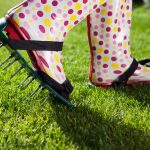
Aeration works alongside it. A hollow-tine fork at 25 to 35 pounds or 32 to 45 dollars pulls small cores from the turf, easing compaction and helping the surface dry out between rains, which leaves fungi with fewer damp spells to fruit into. Improving drainage on a lawn that stays wet, and clearing fallen leaves and grass clippings that would rot into fresh thatch, both nudge the balance the same way. Where toadstools cluster over an old stump or buried root, removing that material ends the cycle for good.
None of these steps is urgent. A lawn dotted with toadstools after autumn rain is doing exactly what a healthy patch of ground does. Clear the caps, watch for the honey-coloured clumps at the foot of any tree or shrub, and treat the rest as free evidence that the soil under your grass is busy turning last season’s growth back into next season’s feed.