- Nine times out of ten the bag stops filling once the airflow has failed, not once the collector is genuinely full.
- The usual causes are a caked deck, a blunt or worn blade, a clogged bag mesh and heavy autumn clippings, all of which you can sort at home.
- Save the repair shop for a cracked deck or a bent blade spindle; the rest is a job of twenty minutes or so.
Your mower bags grass with wind, not a scoop
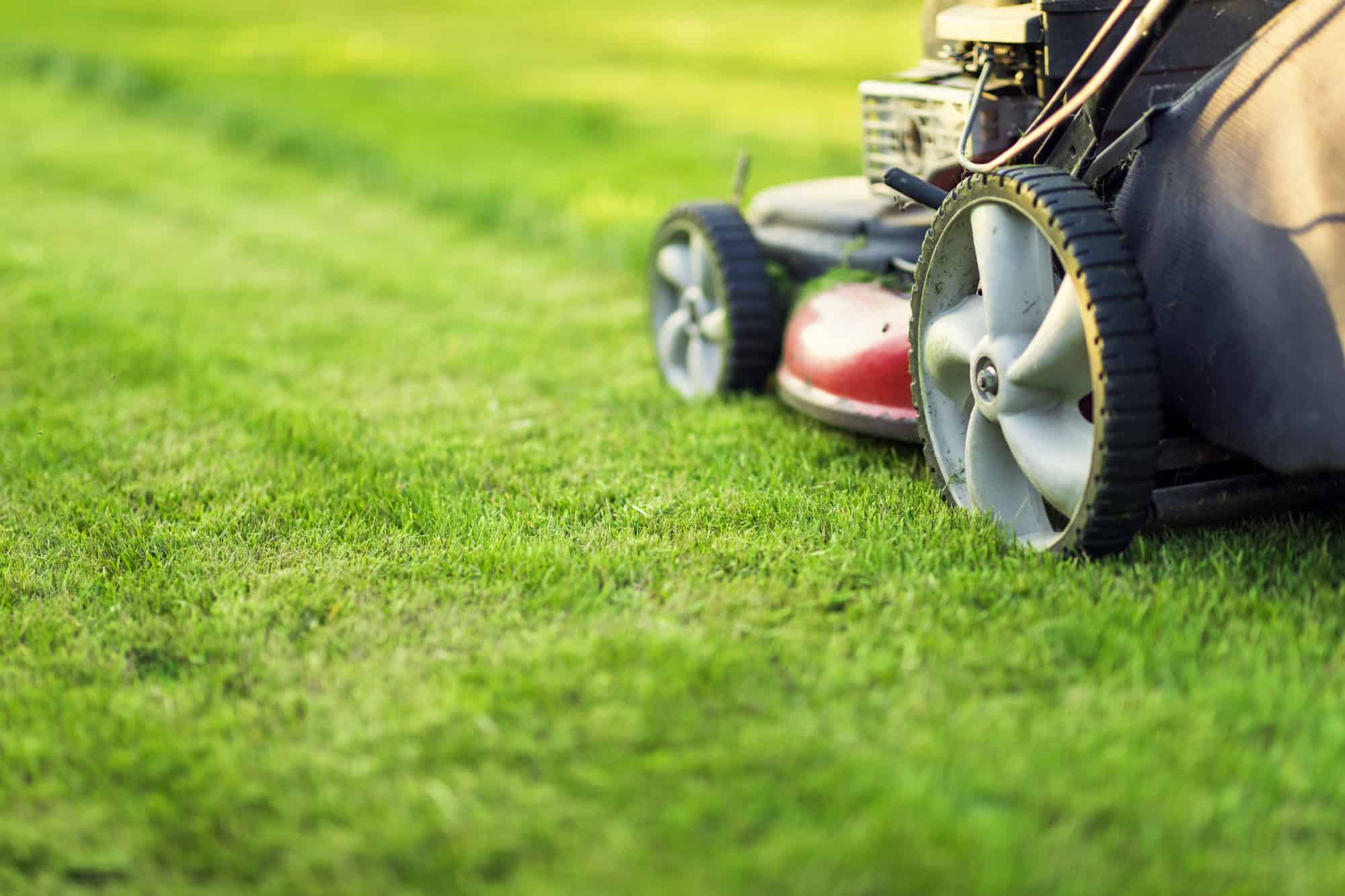
A rotary mower does not scoop clippings into the collector. The spinning blade has small raised wings on its trailing edge that act like a fan, throwing a column of air up the chute, and the cut grass rides that column into the bag. Once the grass starts trailing out the back instead, that airflow has dropped. Bring the airflow back and the collection returns. So before you blame the bag, look at the parts that move air: the blade, the deck and the bag’s own mesh.
First, make the mower safe. Stop the engine, wait for the blade to come to a complete stop, and pull the spark plug lead off a petrol mower, or take out the battery and the safety key on a cordless one. When you tip the machine to look underneath, keep the air filter and carburettor side pointing up, so oil and fuel stay where they belong.
A caked deck is the usual culprit
Damp autumn clippings pack into a hard crust under the deck. That crust narrows the space the blade needs to spin its column of air, the airflow collapses, and grass drops straight back onto the lawn. Scrape the underside clean with a plastic putty knife or a wooden paint stirrer, as metal can nick the blade, then a hose rinses off the rest once it is loosened. Left alone, the crust hands you poor pickup, a ragged cut and trapped damp that rusts a steel deck through winter. A plastic scraper costs about £3 to £6 ($4 to $8).
A blunt or worn blade stops moving air
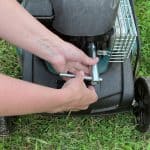
The blade does two jobs at once. It cuts, and it lifts, and the lift comes from those angled wings on the back edge. A blunt edge tears the grass rather than slicing it, and wings worn round with age can no longer fling the clippings up the chute, so they fall back down. Sharpen the cutting edge with a mill file, about £8 to £10 ($10 to $13), taking a few strokes along the angle that is already there, then balance the blade on a nail through its centre hole. If one end dips, file that side until the blade sits level, as an unbalanced blade shakes the whole mower and wears out the bearings. If the wings are rounded off or the blade is cracked, fit a new one, roughly £12 to £25 ($15 to $32).
A clogged bag and a blocked chute
The collector is really a filter. It lets air escape through the fabric or the small holes while it holds the grass back. Old clippings and dust blind those holes, the air can no longer get out, and the grass arriving behind it has nowhere to settle. Empty the bag more often through autumn, and wash a fabric collector out and dry it fully so the mesh can breathe again. Then check the chute, and the inlet where it meets the deck, for a plug of compacted grass, and clear it by hand. A replacement bag runs about £8 to £20 ($10 to $25).
Damp grass and biting off too much
Wet autumn grass is heavier and clings together, so it clogs the chute and falls out of the airflow before it reaches the bag. Cut when the grass is dry, take a shallower bite each pass, never more than a third of the height, and slow your walking speed so the mower has time to move the clippings. Long growth after a wet spell collects far better in two passes at dropping heights than in one greedy cut.
When to stop and call someone
Almost every collection fault comes down to a caked deck, a tired blade or a clogged bag, and all three are cheap and quick. Hand it to a professional, or think about replacing the machine, only when the deck is cracked or holed, the blade spindle or crankshaft is bent so the blade visibly wobbles, or the engine will not hold its revs. A shop sharpen and balance is about £15 to £30 ($20 to $40), and a rotary mower that has already done a hard eight to ten years might be near the end of its life anyway.