- A mower that coughs, sputters and refuses to catch is very often starved of a proper spark, and the spark plug is the cheapest thing on the engine to check first.
- Pull the plug out, read the colour of its tip, clean off dry carbon with fine sandpaper and reset the gap, and most plugs are back in service for the price of nothing.
- A wet, oily black plug or one that will not spark even after a new plug goes in is telling you the trouble is deeper, and that is the point to stop and hand it to a workshop.
Check the Cheapest Part Before You Blame the Whole Engine
You yank the cord and the engine turns but will not catch. Or it fires, runs rough for a second or two, then dies in a puff of smoke. Before you start pricing up a service or, worse, a new machine, spend five minutes on the one part that causes more no-start mornings than anything else: the spark plug. It is a small, cheap component, it comes out with a single socket, and a fouled or badly set plug will stop a perfectly sound engine dead.
The plug’s job is to throw a spark across a tiny gap at the exact moment the engine needs to light the fuel and air inside the cylinder. If that spark is weak, or shorted out by a bridge of soot, or jumping too wide a gap, the fuel does not light cleanly. The result is the sputtering, hard-starting, smoke-belching behaviour that feels like a dying engine but is often a two-pound part doing its job badly. The fix is either free or costs less than a takeaway coffee, so it is always the first stop.
Start safe. Let the engine go cold, then pull the rubber boot off the top of the plug so the wire is disconnected. That single step means the engine cannot fire while your hands are near the blade, and it should be a reflex before any work on a mower. On a cordless or battery machine, take the safety key and the battery out for the same reason.
How to Get the Plug Out and Read What It Is Telling You
The plug sits at the front or side of the engine with a thick rubber wire clipped onto it. Some housings hide it well, so if it is not obvious, the maker’s manual shows the spot, and you can usually find the manual as a free download on the manufacturer’s website if yours has gone missing. Note the plug type printed on it while you are there, as hardware shops stock most common sizes.
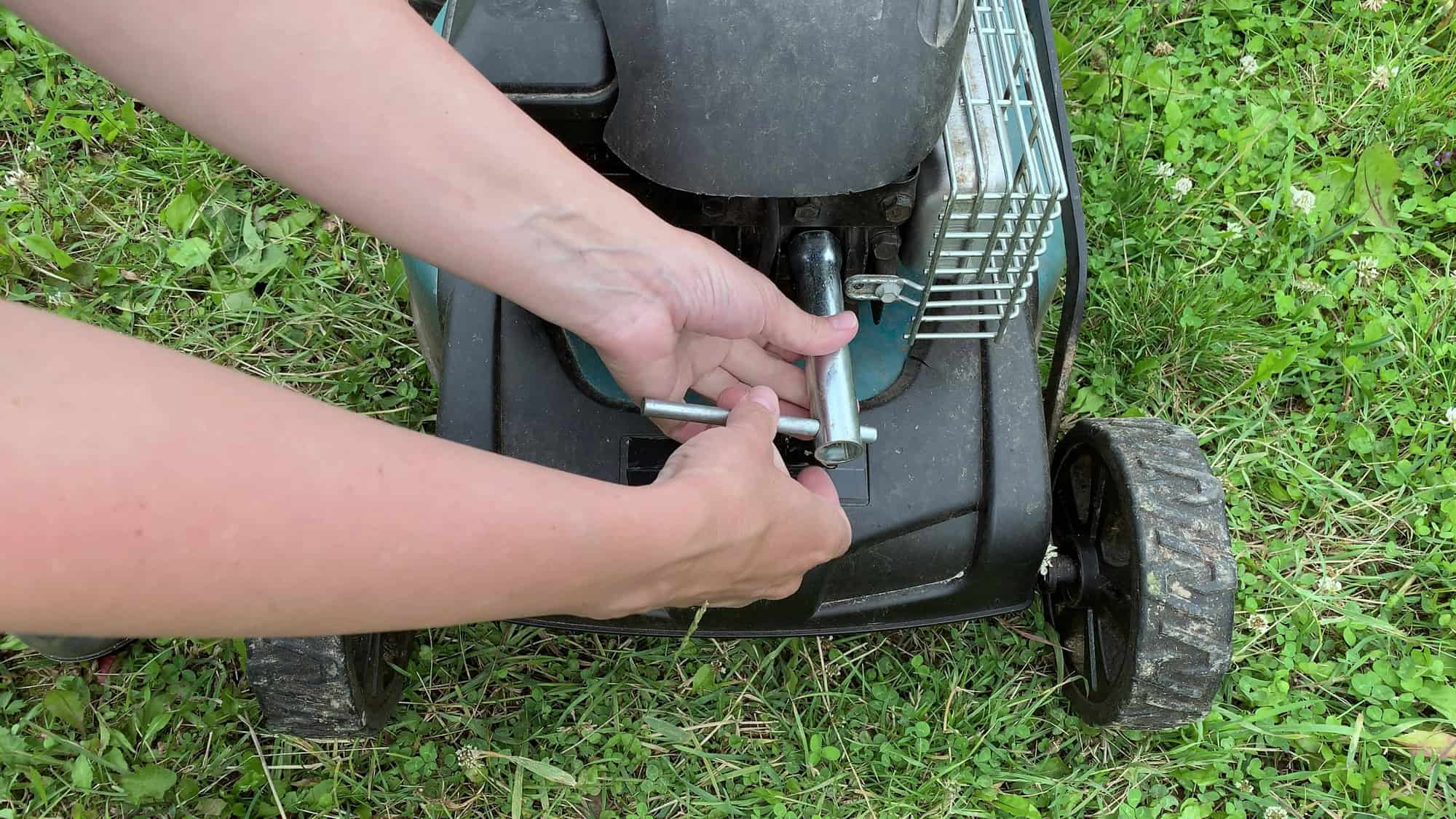
Undo the plug with a socket wrench and a 13/16 inch spark plug socket, which is the standard size for most walk-behind mowers and costs around £4 to £7 ($5 to $9) from Screwfix, Halfords or Amazon. Wind it out and look closely at the tip, as the plug is a diagnostic window into how the whole engine is running. The upper electrode should be grey or light brown, and the white porcelain around the bottom electrode should stay pale. That is a healthy plug and a healthy engine.
Now read the faults. A dry, sooty black coating on the electrode is carbon fouling, and it is the most common thing you will find. It builds up when the engine has been running rich, often from a clogged air filter starving it of air or too much choke, and the soot forms a conductive path that quietly drains the spark to earth before it can jump the gap. That is a plug you can rescue. But if the black deposit is wet and oily, stop reading it as dirt: oil is getting into the combustion chamber, which points to worn internals, and a new plug alone will not cure that. A glazed, cracked or broken insulator is also a plug past saving.
Clean It, Gap It, and Refit It
For a dry, carbon-fouled plug, the fix is fine sandpaper. Rub the electrodes with 120-grit paper until the metal is bright and the soot is gone. Cleaning off that carbon bridge restores the plug’s ability to fire a full spark, which is why a two-minute rub often brings a mower back to life on the next pull. Wipe it clean of grit before it goes anywhere near the engine.
Next, check the gap, which is the distance between the two electrodes and the detail most people skip. That gap sets how far the spark has to jump. Too wide and the spark cannot bridge it reliably, so the engine misfires and starts hard. Too narrow and the spark is small and weak, too feeble to light the fuel properly. Most mowers want a gap of 0.030 inch, roughly 0.75mm, but the exact figure is in your manual and some engines differ, so check before you set it.
Measure it with a gapping tool, a small metal disc with a tapered edge marked in sizes, or a set of feeler gauges. Either costs about £3 to £6 ($4 to $8). Slide the right size through the gap: it should pass with a light drag. If the gap is too wide, press the tool flat against the top electrode and lean on it gently with your thumb to close it. If it is too narrow, most gapping tools have a notch you hook under the electrode to lever it open a fraction. Work in small nudges and re-measure.
If the electrode has worn down to a thin, rounded stub, do not bother re-gapping it. A hot-running engine eats the upper electrode over time, and a worn plug never sparks as strongly as a fresh one. A new plug costs only £4 to £8 ($5 to $10), so fit one rather than fight an old one. Screw the plug back in by hand first to catch the thread cleanly, then nip it up with the wrench: firm, not brutal. Over-tightening cracks the porcelain or strips the soft alloy thread in the engine, which turns a cheap job into an expensive one. Push the wire back on until it snaps home.
Check the Air Filter While You Are There
A fouled plug is often a symptom, and the usual culprit is the air filter sitting right next to it. Even a brand-new plug will run rough if the engine cannot breathe, as a blocked filter throws the fuel-and-air mix too rich and soots up the plug all over again. Pop the filter cover, pull the filter and look at it. A paper filter that is only dusty can be brushed clean with a stiff paintbrush and refitted. One caked with old grass and grime is worth replacing, at around £5 to £12 ($6 to $15), so the plug you just cleaned stays clean. If there is a foam pre-filter behind it, wash that in the sink and let it dry fully before it goes back.
End of season is the natural time to do all of this in one go, and it pays off next spring. A clean plug, a clean filter and, if the engine oil is thin and dark, a fresh fill of SAE 30 oil, brought up to the top line on the dipstick, leaves the mower ready to fire first pull when the grass starts growing again instead of fighting you across the first cut of the year.
When to Stop and Call the Repair Shop
Cleaning and gapping a plug fixes a great many mowers, but it will not fix all of them, and knowing when to stop saves you throwing good parts at a bad engine. If the plug came out wet with oil, that oil is coming from inside the engine and the machine needs a proper service or, on a cheap walk-behind, replacing. If you fit a brand-new plug and still get no spark at all, the fault has moved upstream to the ignition coil or the flywheel key, which is workshop territory. And if the engine fires up cleanly on the new plug but still will not keep running, the trouble is fuel rather than spark: a blocked fuel filter or a carburettor gummed up with stale petrol, both jobs in their own right.
A quick way to tell spark from fuel: pull the plug, reconnect the wire, rest the plug’s metal body against bare metal on the engine and pull the cord while watching the gap. A strong blue spark means the ignition side is fine and you should chase the fuel. No spark, even with a new plug, means the problem is electrical and beyond a home clean-up. A workshop tune-up runs around £50 to £70 ($70 to $90), which is money well spent once you have ruled out the cheap fixes yourself, and you will have lost nothing but a few minutes finding out.