- A mower that fires up and then dies within a few seconds almost always has a fuel supply problem, not a dead engine.
- The usual causes are old fuel gumming up the carburettor, a blocked vent in the fuel cap, or a clogged fuel filter, and you can clear all three at home.
- A one-second squirt of carburettor cleaner is the quick test that tells you whether to keep going yourself or hand the machine to a repair shop.
What the Engine Is Telling You When It Dies After a Few Seconds
You pull the cord, the engine catches and runs for two or three seconds, then it cuts out as cleanly as if you had flicked the switch. Pull again and it does the same thing, perhaps with a splutter or a puff of smoke before it quits. That brief burst of life is the whole clue. There is just enough fuel sitting inside the carburettor to fire the engine once, but nothing is arriving to top it up, so the instant that small reserve burns off the engine starves and stops. A machine that would not start at all points somewhere else. One that starts and then dies is nearly always telling you the fuel is not flowing.
That narrows the hunt to three things, and all three are cheap and within reach of anyone with a socket set and half an hour. Work through them in order and you will fix the great majority of stalling mowers without paying a shop for the privilege.
It helps to be clear on what this symptom is not, so you do not waste time on the wrong fault. A mower that turns over but never fires at all usually has a spark or a deeper ignition problem. A mower that runs fine but slowly loses power as you push it into thicker grass is more often choked with clippings under the deck or breathing through a clogged air filter. The starts-then-dies pattern is its own signature, and it points almost every time at fuel that reaches the engine for a heartbeat and then stops. Keep that distinction in mind and you will not find yourself changing a spark plug that was never the problem.
Gather a few basics before you start: a socket or nut driver set to unbolt the carburettor and float bowl, needle-nose pliers, a small clamp for the fuel line, a length of thin wire, a clean container to catch fuel, and a can of carburettor cleaner. Work in the open air rather than a closed shed, keep the fuel well away from anything hot, and always pull the spark plug lead off before your hands go near the blade or the underside of the deck.
The Gummed-Up Carburettor Behind Most Stalls
The most common cause by a distance is the carburettor, and the reason behind it is fuel that has sat too long. Petrol blended with ethanol draws in moisture from the air and starts to oxidise within a few weeks, leaving behind a sticky varnish and gum. The carburettor doses fuel into the engine through passages and jets barely wider than a pin, and once that gum narrows or blocks the main jet, the engine can no longer pull a steady supply. The bowl at the base of the carburettor holds a small amount of fuel, enough to fire the engine for a moment, which is exactly why it runs for a second or two and then quits. Repair shops make roughly half of their income clearing or replacing carburettors killed off by old fuel, and the labour alone tends to start at £60 to £80 ($80 to $100), so this is well worth an hour of your own time first.
Run one quick test before you unbolt anything. Take off the spark plug lead so the engine cannot fire while your hands are near it, lift away the air filter to expose the mouth of the carburettor, then reconnect the lead, give the throat a one-second burst of carburettor cleaner and pull the cord. If the engine runs for a few seconds on that squirt and then dies again, you have confirmed the problem is fuel getting through, and the carburettor is where to look. If there is no sign of life at all after a few tries, the fault sits deeper in the engine and the machine is better off at a repair shop. A can of carburettor cleaner costs £5 to £10 ($6 to $12) and does the whole job.
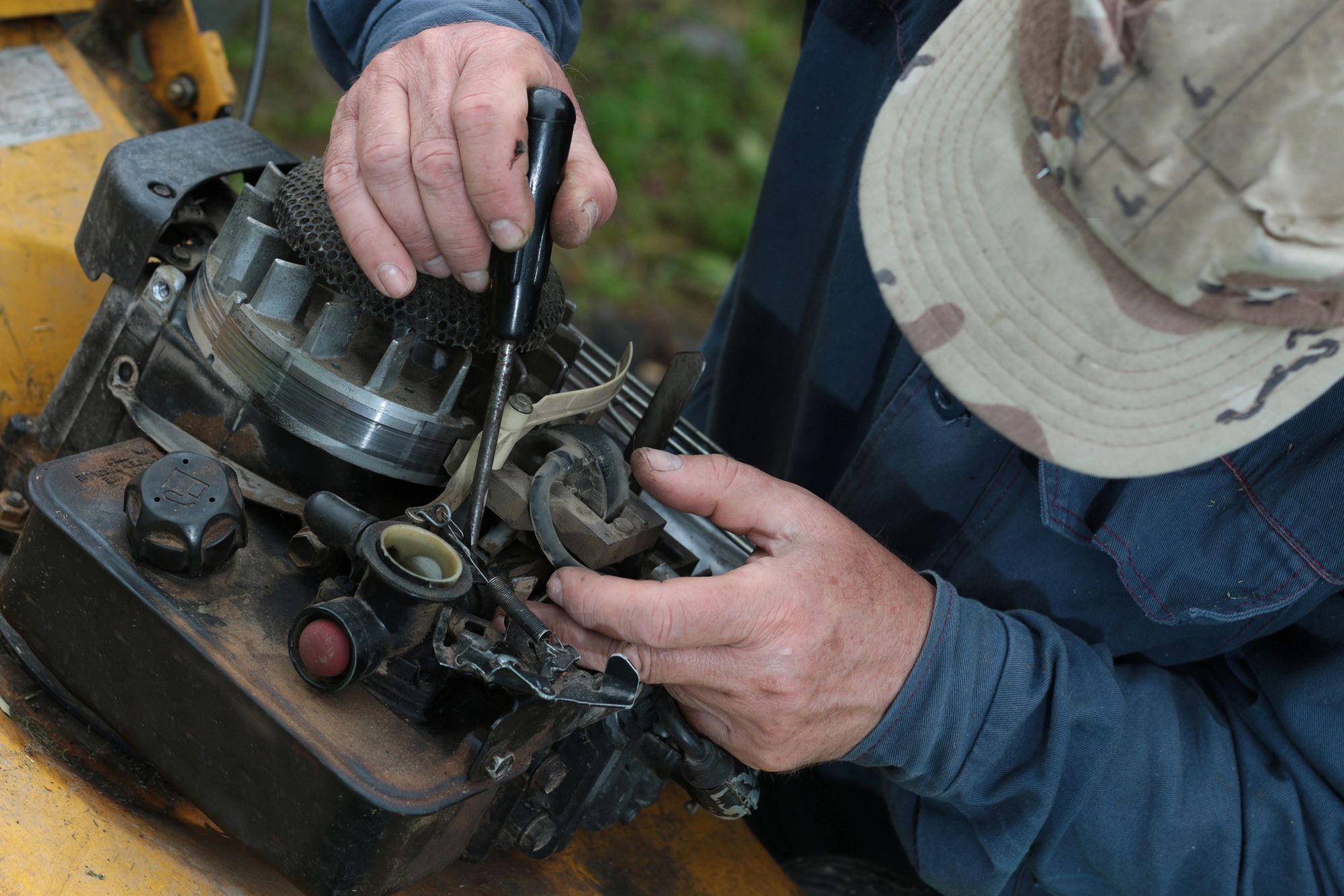
To clear the carburettor, drain the stale petrol from the tank first, then unbolt the float bowl on the underside of the carburettor and tip out whatever is inside. Spray carburettor cleaner into the bowl and up into the jet, and pass a single strand of thin wire through the main jet to push out any gum you cannot dissolve. Reassemble it, refill with fresh fuel and try again. While the bowl is off, look at the metal inside: if it is corroded, crusted or pitted rather than just dirty, cleaning will not hold, as the corrosion keeps shedding into those tiny jets and blocking them afresh. At that point the carburettor needs replacing rather than cleaning. A rebuild kit runs £8 to £15 ($10 to $20), while a whole new carburettor for a common engine is often £15 to £35 ($20 to $45), frequently close enough to the kit price that swapping the part outright is the easier call.
The Two-Minute Fixes People Miss
Before you commit to stripping the carburettor, rule out the cheapest cause of all: the fuel cap. The cap has tiny vent holes that let air into the tank to replace the fuel as the engine burns it. Pack those holes with grass and dust, as happens over a summer of mowing, and a vacuum builds in the space above the fuel. That vacuum holds the petrol back, so the engine runs on the little left in the bowl and then stalls, exactly like a blocked carburettor. The test takes a minute: start the mower with the cap loosened or lifted off, and if it now keeps running, the vent was the culprit. Clear the holes with a pin or wash the cap out, and the fix has cost you nothing.
The third suspect is the fuel filter or the line feeding it. If the carburettor is clean and the cap vents freely but the engine still starves, check that fuel is actually reaching the carburettor. Clamp the fuel line shut, pull the tube off the carburettor stub and hold a small container under it, then release the clamp. Fuel should run out in a steady dribble. If little or nothing comes through, the inline fuel filter or the line itself is blocked. A replacement filter costs only £4 to £8 ($5 to $10) and clips into place in a couple of minutes. Fit a fresh one, refill with clean fuel and the supply should flow again.
When to Stop and Hand It Over
Most stalling mowers are cured somewhere in that run of three checks, but a few are not, and it helps to know when to stop throwing time at one. If the carburettor cleaner test raised no flicker of life, if the inside of the carburettor is corroded rather than merely dirty, or if the machine has already had a carburettor clean and is starving again within weeks, the trouble runs beyond a simple gum-up. A worn engine that has lost compression, or a carburettor too corroded to seal, is a job for someone with the parts and the bench to do it properly. Set that against the age of the mower, too. Most last around eight to ten years, so a machine near the end of that span that needs a new carburettor plus other work can cost more to save than to replace.
The single habit that keeps a mower out of the repair queue is fresh fuel. Petrol left standing over a long break is what gums the carburettor in the first place, so run the tank low at the end of the season, or add a fuel stabiliser if you are storing it with fuel in. Do that, and next spring the engine should catch on the first or second pull rather than firing once and dying in your hand.