
You roll the petrol mower out of the shed on the first warm Saturday in May, prime the bulb three times, brace your foot on the deck and pull the cord. Nothing. You pull again, harder. Still nothing. By the eighth pull your shoulder hurts, the choke lever is in a different position than you remember and the lawn has not moved one millimetre closer to being cut. This is the most common lawn-related search query of the entire year, and it has an almost universal cause.
The reason your petrol mower will not start in May, nine times out of ten, is the fuel you left in it last October. Petrol degrades much faster than most people realise, particularly modern petrol blended with ethanol, and over the five or six months it has been sitting in your tank it has turned into a sticky varnish that will not pass through the carburettor jets. The good news is that fixing it takes about 40 minutes of work, costs less than £20 in parts and tools, and avoids a £100 service charge at the dealer.
The five-minute diagnosis that tells you what is actually wrong
Before you assume anything, walk through a short checklist that takes about five minutes and rules out the easy stuff. First, pull the spark plug cap and remove the spark plug with a 16mm or 21mm plug spanner depending on your model. Hold the plug against the engine block with the cap reattached and pull the cord. You should see a clear blue spark jump across the electrode gap. No spark means the ignition is the problem, not the fuel. A weak yellow or orange spark suggests a fouled plug.
Second, look at the spark plug tip. If it is wet with fresh fuel, the engine is getting fuel but not igniting it. If it is bone dry and smells faintly of old varnish, fuel is not reaching the cylinder, which points squarely at a clogged carburettor or stale fuel in the tank. If it is dry and looks new, you may simply not have primed the engine enough or you may have a fuel tap that is in the off position.
Third, check the obvious controls. The throttle should be on full or “rabbit”, the choke should be on for a cold engine, the fuel tap if your model has one should be open, and the deadman handle or operator-presence bar should be held against the handlebar. On Honda IZY mowers the choke and throttle are combined on a single lever and on some Mountfield models the kill switch is hidden behind the air filter cover. Half the no-start calls at small-engine shops turn out to be a control in the wrong position.
Fourth, smell the fuel tank. Fresh petrol has a sharp solvent smell. Stale petrol smells noticeably more like old paint or varnish, slightly sweeter and heavier. If your tank smells like the latter, the rest of this article is for you.
Why stale fuel is the May killer
Pump petrol in the United Kingdom and the United States now contains either 5 percent or 10 percent ethanol, sold as E5 and E10 respectively. Ethanol is hygroscopic, which means it attracts and absorbs water from the air. Over the winter, the fuel in your mower tank slowly absorbs moisture, separates into layers, and the lighter volatile hydrocarbons that actually ignite easily evaporate off through the tank vent. What is left behind in the tank is a heavier, water-contaminated, low-octane sludge that does not burn well even when it does reach the cylinder.
The carburettor is worse. The float bowl at the bottom of the carburettor holds a small reserve of fuel that sits there from one use to the next. When the mower is stored for months with fuel in the bowl, that small volume becomes a tar-like residue that clogs the main jet and the idle circuit. The main jet is the brass needle with a hole drilled through it, usually 0.55mm to 0.75mm across depending on the model. Once that hole is partially blocked, the engine cannot draw enough fuel through and refuses to start regardless of how much you pull.
This is why even mowers that started reliably last October will refuse to start in May. The damage was done in the storage period, not in the running period.
The 40-minute fix
Start by draining the tank. Most domestic mowers do not have a drain plug, so the easiest method is to lift the mower onto its side with the air filter facing up, place a metal tray underneath, and use a length of clear 6mm fuel hose or a siphon pump to lift the stale fuel out of the tank. A small hand siphon like the Briggs and Stratton fuel siphon (around £8/$10) does this without mess. Dispose of the old fuel responsibly at your local recycling centre or council collection point. Never pour it down a drain or onto the soil.
Once the tank is empty, unscrew the float bowl from the bottom of the carburettor. On most Honda GCV, Briggs and Stratton 500 series and Kawasaki FJ engines, this is a single 10mm bolt at the centre of the bowl. Have a small container ready because there will be a few teaspoons of stale fuel and possibly some brown sludge in the bowl. Wipe the bowl clean with a paper towel.
Look up into the carburettor body from below. You will see a brass main jet, often visible as a small hexagonal head with a hole in the centre. Spray a long burst of carburettor cleaner like Holts Carb Cleaner (around £6/$8) or Gunk Carb Medic ($10) through that jet, then through the idle circuit on the side. Reassemble the bowl and tighten the bolt. Total time so far should be about 20 minutes.
Refill the tank with fresh petrol. If your mower has been used in the last ten years it should run perfectly happily on E5 super unleaded, which costs slightly more but contains less ethanol and is much less likely to go stale next time. Add a fuel stabiliser like Sta-Bil (around £9/$11 for a bottle that treats 40 litres) at the dose marked on the bottle. Replace the spark plug with a new one of the correct type, usually an NGK BPR6ES on Honda engines (around £4/$5 at any auto parts shop) or an NGK BMR6A on the smaller Briggs and Stratton engines.
Prime the bulb three times if your mower has one, set the choke on, throttle to full, and pull the cord. In most cases the engine will fire within two or three pulls. If it does not, try again with the choke off after a couple of attempts, as some engines flood easily after a deep clean.
What to do if it still will not start after the clean
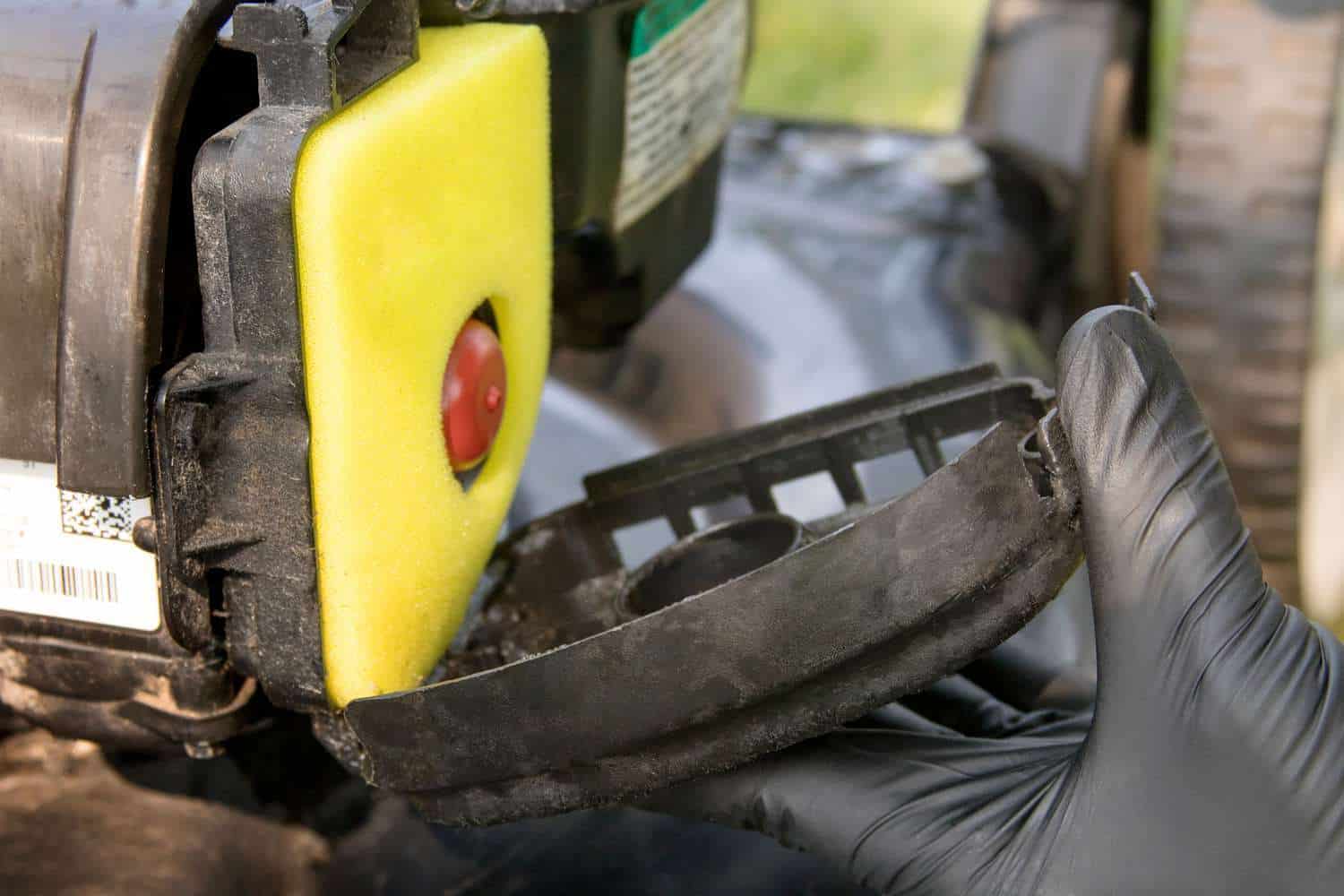
If you have done all of the above and the engine still refuses, there are three remaining likely causes. The first is a blocked fuel line. The plastic line from the tank to the carburettor can become brittle and partially blocked with debris from the tank. A new fuel line costs around £5/$6 and takes ten minutes to fit. The second is a fouled air filter that is so heavily clogged with grass and dust that the engine cannot draw enough air. A new foam filter is around £6/$8 and slides into the housing. The third is an ignition coil that has failed during storage, which is rarer but does happen, and is the point at which most home users hand the mower to a dealer.
A dealer service for a non-starting petrol mower typically costs between £80 and £150 in the United Kingdom and $120 to $250 in the United States, depending on the parts needed. If you have already paid for new plugs and cleaner, going to the dealer at this point usually only adds the labour cost of a coil test and replacement on top.
The October routine that prevents this every May
None of this needs to happen again. Five minutes of work on the last mow of the autumn eliminates almost every May no-start problem. On your final cut of the year, run the mower until the fuel level is low, then idle it on a flat patch of concrete until it splutters and stops. This empties the carburettor float bowl and removes the layer of fuel that becomes varnish over the winter. Tip the mower onto its side with the air filter up, drain whatever fuel remains in the tank into a sealed container, and store the mower dry. In spring, refill with fresh petrol and the engine will usually start on the first or second pull.
If you prefer to keep fuel in the tank over winter for any reason, add a fuel stabiliser at the dose on the bottle, top the tank fully so there is less air space for moisture to enter, and run the engine for two minutes after dosing to draw stabilised fuel into the carburettor. This is the second-best approach but works well enough to eliminate the May no-start problem for most owners.
The single biggest mistake is doing nothing at all. A tank left half full of E10 petrol from October through May is almost guaranteed to produce a non-starting mower the next spring. A tank left empty, or full and stabilised, is almost guaranteed to start on the second pull. Five minutes in October saves an hour in May.