When a self-propelled mower stops pulling itself along and you find yourself shoving it like an ordinary push mower, the fault is almost never the engine. The blade still spins, the engine still runs, so the problem sits in the separate drive system that powers the wheels. In the great majority of cases it comes down to one of three things: a stretched or broken drive belt, a seized or slack traction control cable, or worn drive gears in the wheels. All three are checkable in your own shed in under half an hour, and two of the three are cheap to put right yourself.
Why the Drive System Fails Separately From the Engine
A self-propelled mower has two jobs going on at once. The engine or motor spins the blade, and a completely separate chain of parts takes some of that power and sends it to the wheels: a drive belt, a transmission or gearbox, a control cable from the handle, and a set of gears or a pinion at the wheels. Because this drive chain is mechanical and under constant load, it wears out long before the engine does. That is why a mower can sound perfectly healthy, cut grass perfectly well, and yet refuse to move under its own power. Understanding that split is what stops people wasting money on engine servicing when the real fault is a part lower down.
The load on the drive system also explains why failure often creeps in rather than happening all at once. A belt stretches gradually, so the mower pulls strongly when new, then feels weaker on slopes, then only crawls, then stops driving altogether. A cable that is drying out stiffens slowly until one day the lever no longer engages the drive. Catching these early signs, a mower that has lost its pull on hills or only drives when you squeeze the lever hard, lets you fix a five pound part before it strands you mid-lawn.
Check the Cable and the Belt First
Before you touch anything, disconnect the spark plug lead on a petrol mower or remove the battery and safety key on a cordless one. The blade must never be able to turn while your hands are near the deck. With the machine safe, start with the cheapest and most common culprit: the traction control cable that runs from the drive lever on the handle down to the transmission. Squeeze the lever and watch the cable. It should move freely and pull the drive into engagement. If it feels gritty, sticky or slack, or if the lever pulls all the way to the handle with no resistance, the cable is the likely fault.
A stiff cable can often be saved rather than replaced. Pull the inner cable partly out of its outer housing, spray in a little cable lubricant or a light penetrating oil, and work the lever back and forth several times to spread it through. This one step fixes a large share of drive failures, because a dry, sticky cable cannot engage the drive fully. If the cable is frayed, snapped, or the outer housing is split, replace it. A new control cable typically costs around £8 to £20 ($10 to $25) and clips into place with a couple of fittings. Many mowers also have a small adjuster where the cable meets the housing; tightening it slightly takes up the slack from a cable that has stretched, restoring full engagement without any new parts at all.
If the cable is sound, tip the mower with the air filter and carburettor facing upwards so no oil or fuel leaks into them, and look at the drive belt. The belt is a V-shaped rubber loop that links the engine pulley to the transmission pulley. Look for cracking, glazing, a shiny worn surface, or a belt that has stretched loose or snapped entirely. A glazed, slipping belt is the classic cause of a mower that drives weakly then not at all, because a stretched belt cannot grip the pulleys hard enough to transfer power. A replacement belt usually costs around £10 to £25 ($13 to $32), and fitting it is within reach of most owners with a socket set, though it is worth photographing the routing before you remove the old one so the new belt goes back the same way.
When It Is the Gears or the Gearbox
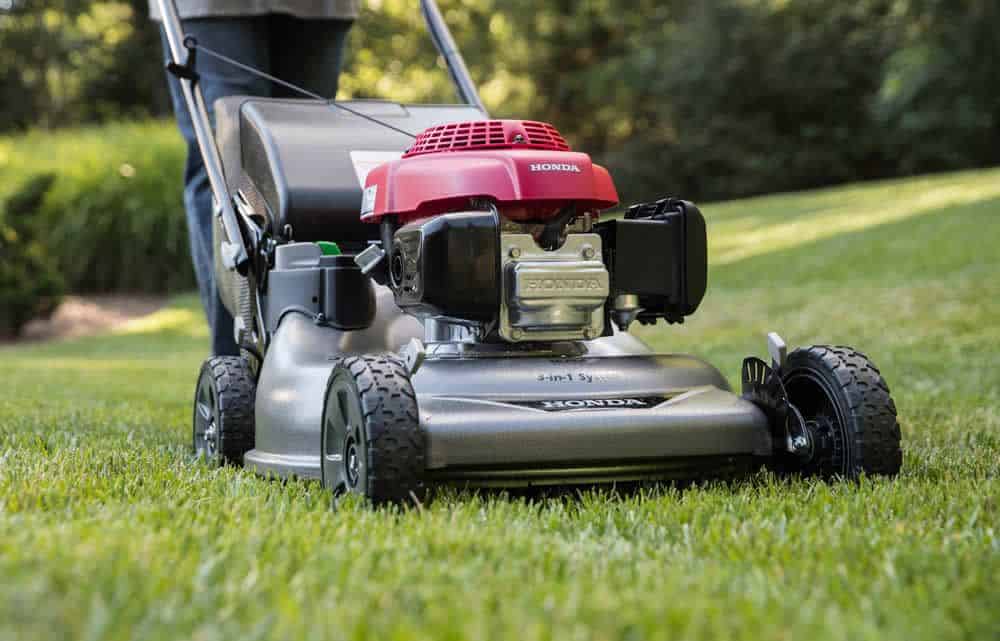
If the cable moves freely and the belt looks healthy and tight, the next suspects are the drive gears in the wheels. On many rear-wheel-drive mowers, each driven wheel has a plastic pinion or gear that meshes with teeth inside the wheel hub. Pop the wheel covers off and inspect those gears. Worn, rounded or stripped teeth are a frequent reason a mower stops pulling, especially if only one side has failed and the mower now veers to one side as it drives. Wheel gears are sold as inexpensive replacement parts, often around £10 to £20 ($13 to $25) per side, and swap out with basic hand tools.
The most serious and least common cause is the transmission or gearbox itself. To test it, run the mower with the drive engaged and watch the transmission pulley. If the pulley is spinning but the wheels still do not turn, and the belt and gears are good, the transmission has failed internally. A replacement transmission is the one repair that often costs more than it is worth on a budget mower, sometimes £80 to £150 ($100 to $190) plus labour, which is the point at which repairing an old machine stops making sense against buying new. On a quality mower from a brand such as Honda, Hayter or Toro, a new transmission can still be the economical choice given the price of the whole machine.
Drive Failures Specific to Cordless and Robot Mowers
Self-propelled petrol mowers are the classic case, but battery and robot machines drive their wheels too, and they fail in their own ways. On a self-propelled cordless mower, many models use a separate, smaller drive motor for the wheels alongside the main blade motor. If the blade still spins but the wheels do not, check the simplest things first: a low battery often disables the drive to save power for cutting, and a speed dial or drive lever knocked to its lowest setting can feel like a failure. Wheel sensors and the drive switch can also gum up with packed grass, so a clean and a full charge solve a surprising number of cordless drive complaints before any part is suspected.
Robot mowers are different again. They have no belt, but they rely on two independently driven wheels to steer and climb. When a robot starts slipping, getting stuck on slopes or spinning one wheel, the usual causes are worn wheel treads, grass and mud packed into the wheel housing, or a drive wheel motor that is failing. Clean the wheels and the underside regularly, because a robot that has lost grip on a damp slope will report errors and leave uncut patches rather than stop dead. On all three types of machine, the principle holds: confirm the blade and the wheels are powered by separate systems, then work through the drive parts in order of cost rather than guessing.
The lesson that saves the most money is preventive. Lubricate the drive cable once a year, keep the underside of the deck clean so packed grass does not load the drive, and never store a mower with a damp belt caked in clippings, because trapped moisture and debris are what stretch belts and seize cables in the first place. A five minute annual service on the drive system prevents the slow decline that ends with you pushing a machine that was built to push itself. Diagnose in the right order, cable, then belt, then gears, then transmission, and you fix the actual fault rather than throwing parts and money at a mower that only needed a squirt of oil.