A robot mower is no longer a novelty for large estates. In 2026 you can buy a capable model for the price of a good petrol mower, and the price you pay buys three things in particular: how it finds its way around your garden, how big and how steep a lawn it can manage, and how little you have to do to set it up. Spend around £500 ($600) and you get a small wire-guided machine for a simple lawn. Spend around £1,500 ($1,800) and you move to wire-free navigation that maps the garden itself. Spend £3,000 ($3,600) or more and you get satellite-guided cutting that handles big, complex, sloping plots with almost no supervision. Here is what each tier actually delivers.
How a Robot Mower Keeps Your Lawn Cut
The principle is the opposite of how you mow. Rather than cutting a third of the blade once a week, a robot trims a millimetre or two off the tips every day or two, returning the fine clippings to the lawn. Because it never removes much at once, the grass is barely stressed, the clippings vanish into the sward and feed it, and the lawn stays at a constant height. This daily light trim is why robot-cut lawns often look thicker and more even than hand-mown ones: the grass is always being tipped, never shocked, and the constant clipping return acts as a slow, steady feed.
Cutting height is set on a dial or in an app, typically between 2cm and 6cm (0.8 to 2.4 inches) depending on the model. The small spinning blades are razor-like discs rather than a heavy steel bar, so they sip power and are far quieter than a petrol engine, usually around 55 to 60 decibels, quiet enough to run while you sit in the garden. Most return to a charging base on their own, top up, and head back out to finish. The trade-off is that a robot is built to maintain a lawn that is already in good shape, not to rescue a knee-high meadow, so you still need a conventional mower for the first cut of the season or after a holiday.
The £500 Tier: Wire-Guided and Simple
At the entry level, around £400 to £700 ($500 to $850), you are buying a boundary-wire mower for a small, simple lawn of up to roughly 500 square metres. The Worx Landroid M500 sits here at about £500 ($600). The catch is the wire: before the machine can work, you lay a thin perimeter cable around the lawn and any flower beds, pegging it to the ground or burying it just under the surface. It takes an afternoon, and the wire defines exactly where the mower may go.
Once it is down, the mower works by following that wire and mowing the enclosed area in a semi-random pattern until the whole lawn is covered. For a square or rectangular lawn with few obstacles this works well and costs little. The downsides are real, though: the wire can be cut by an aerator or a careless spade and is fiddly to repair, the random pattern means a slightly less even finish than wire-free models, and these smaller machines handle only gentle slopes, usually up to about 25 to 35 percent. For a tidy back garden, an entry model is still the cheapest route to a hands-off lawn.
The £1,500 Tier: Wire-Free and Self-Mapping
The biggest change in recent years has been the move away from the boundary wire. In the £1,200 to £2,000 ($1,500 to $2,400) band, mowers map the garden themselves using a mix of satellite positioning, cameras and on-board sensors, so you set the boundaries by walking the perimeter once with the mower or drawing zones on a phone. No cable to lay, no cable to break. The Worx Landroid Vision M600 (around £700 to $1,500 depending on region, for lawns up to 600 square metres) uses an AI camera to tell grass from path, while the Husqvarna Aspire R4 (around £799/$1,050 for lawns up to 400 square metres) is the brand most affordable model and aimed squarely at smaller gardens that still want the polish of the Husqvarna system.
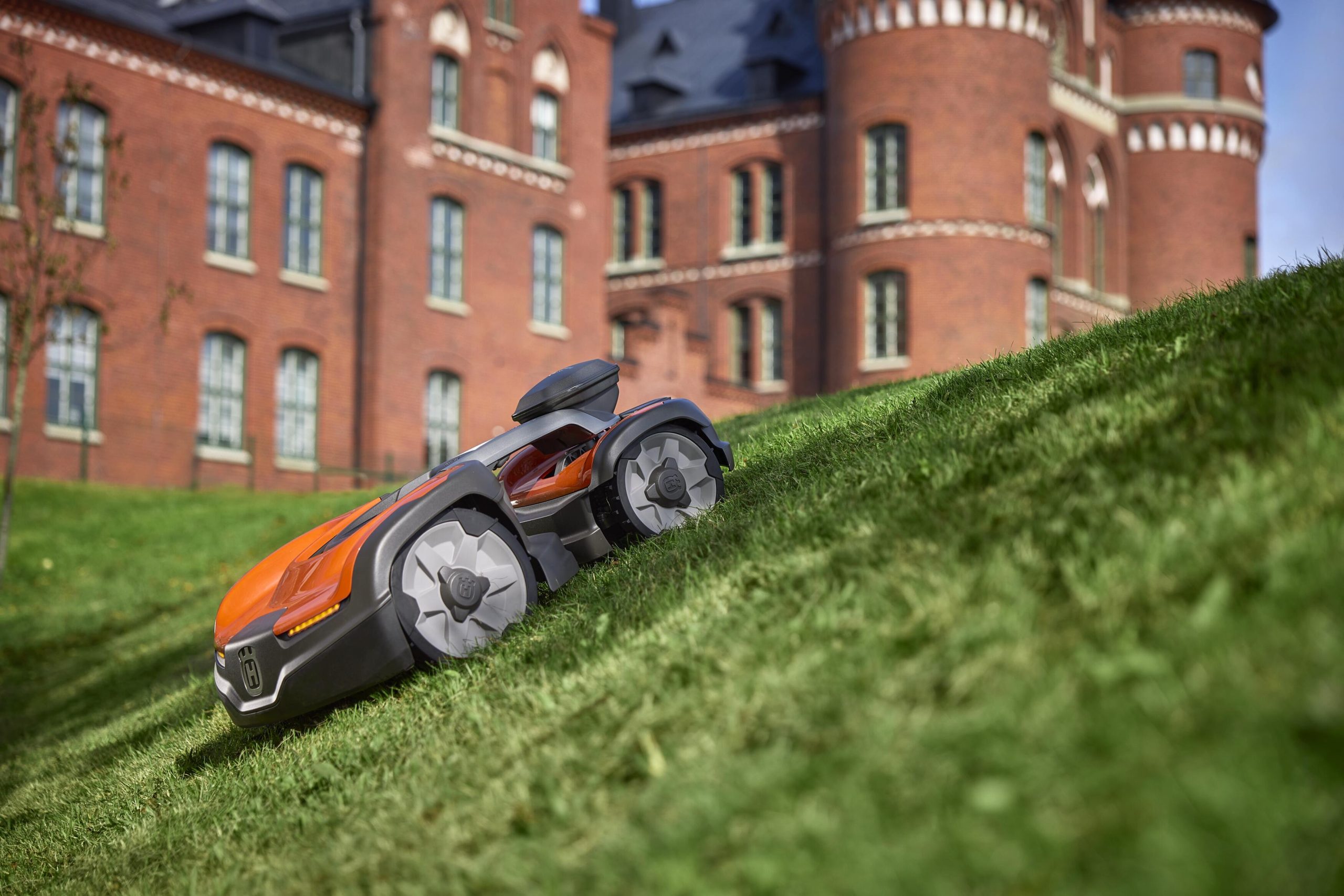
Step up to the Mammotion Luba mini AWD (around $1,599 for the 800 square metre model) and you also get all-wheel drive, which pulls the mower up banks and over rough ground that would beach a two-wheel machine, with some models rated to slopes as steep as 80 percent. This tier is the sweet spot for most medium gardens: the navigation is accurate enough to cut a clean, methodical pattern rather than a random wander, you can split the garden into zones with different schedules, and there is no wire to maintain. The main thing to check before buying is signal: camera and satellite mowers need a reasonably open sky and can struggle under dense tree cover or beside tall buildings that block the view.
The £3,000 Tier and Whether You Need It
At the top, from around £2,500 to £4,500 ($3,000 to $5,400) and beyond, you are paying for area, accuracy and slope. Premium models such as the Husqvarna 450X NERA use a satellite system with a fixed reference station to position the mower to within a few centimetres, cover lawns of an acre or more, and climb steeper banks than any entry machine. The Ecovacs Goat range and Mammotion Luba 3 series add LiDAR and vision to thread between trees and trim tight to borders. If your lawn is large, irregular, split into sections or steeply sloped, this is where the money goes to good use, because cheaper machines simply cannot map or climb the plot.
For an average garden, though, you do not need to spend this much. Be honest about the size and shape of your lawn before buying. Measure the area, note the steepest slope, and look for shade or signal-blocking features near the lawn. A 200 square metre rectangle in open sky is well served by a £500 wire machine or a £1,500 wire-free one, and the extra spend on a flagship model buys capability you will never call on. Match the mower to the lawn rather than to the spec sheet.
Safety, Security and Living With One
Modern robot mowers are far safer than the spinning blades suggest. Lift sensors and tilt sensors stop the blades within a fraction of a second if the machine is picked up or flips, and bump sensors make it reverse and turn away from obstacles such as garden furniture, toys or a sleeping pet. Even so, the sensible habit is to keep small children and animals off the lawn while it runs and to schedule cutting for times the garden is empty, which most apps let you do down to the hour. Pick up stones, hose ends, fallen fruit and dog toys before each run, since a hard object thrown by the blade is the one real hazard and the quickest way to chip a cutting disc.
Theft is the other worry people raise, and manufacturers have answered it. Most machines are PIN-locked, alarm loudly if lifted off their own lawn, and the satellite and app-connected models can be tracked or disabled remotely, making a stolen mower close to useless. Day to day, the only regular jobs are emptying the odd build-up of cuttings from under the deck, wiping the wheels and sensors clean, and checking the blades every few weeks. For most owners that adds up to a few minutes a fortnight in exchange for a lawn that is cut every day without anyone lifting a finger.
Two running costs apply across every tier. Blades are cheap but wear out, costing a few pounds or dollars for a set of replacement discs every couple of months in the cutting season. Batteries last several years and are replaceable, though a replacement pack can cost £80 to £150 ($100 to $185) when the time comes. And every robot needs a winter home: bring it indoors over the cold months, charge it periodically, and it will start the next season ready to go. Treat it as a long-term tool rather than a gadget, and a robot mower will hold a lawn at a steady, even height through the whole growing season with less effort than any other machine in the shed. If you would rather keep cutting yourself, our advice on the best time of day to mow in hot weather still applies.