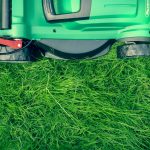
- Grass keeps growing whenever the temperature stays above 7 degrees C (45 degrees F), so a mild winter spell can leave you with a lawn that needs a trim.
- Mow rarely, on a dry day, with the cutting height set above your summer setting.
- Never mow grass that is wet or frosty, or ground that is soft: the mower damages the turf and compacts the soil.
Your Lawn Looks Shaggy on a Mild Winter Morning and the Mower Is Right There
You have heard that the mowing year ends with the first frost. It does not always. If the weather is mild and the grass is still growing, a light cut on a high setting keeps the lawn tidy and healthy. If the ground is wet, soft or frozen, the mower stays where it is. That is the whole rule, and the rest is the reasoning behind it, so you can make the call yourself on any given morning.
The permission runs both ways. You do not need to mow weekly or fortnightly in winter. That rhythm belongs to the growing season. In winter the job is occasional, and skipping it is often the right choice.
What the 7 Degree Line Means for Your Lawn
Winter is not one long pause. It is a run of mild spells and cold snaps, and the grass speeds up and slows down with them. The Royal Horticultural Society puts the line at 7 degrees C (45 degrees F): grass continues to grow above it, which is why mowing in mild weather can be necessary. Milder winters mean lawns sometimes benefit from occasional mowing between late autumn and early spring.
So the question to ask is not what month it is. Ask whether the grass has grown after the last cut, and whether the weather has stayed mild enough to keep it growing. A lawn that stood still through a cold snap picks up again in the first mild week.
Use three quick checks:
- Look at the grass. Has it grown past the height you left it at?
- Check the weather. Has it been mild, above 7 degrees C (45 degrees F), rather than frosty?
- Check the ground. Press a boot into it. Does it stay firm and dry, or does it squelch?
Three yeses mean mow. One no means leave it for another day.
How to Make the Mild Spell Cut Without Hurting the Grass
Raise the deck first. Two rules of thumb point the same way. The first says to keep grass at about 4 cm (1 1/2 in) in spring, autumn and winter, against about 2.5 cm (1 in) in summer. The second, from the monthly lawn jobs list, says to cut about 5 mm (1/4 in) higher than in summer. Applied to a summer setting of 2.5 cm (1 in), that second rule gives 3 cm (1 1/4 in). A setting of 4 cm (1 1/2 in) sits above both, so it is the safe choice if you are unsure. A cut set too low is how lawns end up scalped and weak, a problem we covered in our piece on cutting too short before winter.
Then respect the one-third rule: never remove more than a third of the grass height in one cut. Slow winter growth makes this easy to keep. If you are aiming for 4 cm (1 1/2 in), the grass can stand at 6 cm (2.4 in) before a cut back to 4 cm takes exactly a third. Taller than that, you are taking too much in one go.
If the grass has got long, start on the highest blade setting. That stops the mower choking on clippings. Very long grass can need a strimmer first, then a rake, before the mower tidies up.
Choose your moment. If there was overnight frost, wait until later in the day when the lawn has dried out or defrosted, or postpone to another day. Dry grass lets the blades cut cleanly without clogging, so wait for it to dry before you start.
Mow at a steady pace. A mower pushed too fast tears grass instead of cutting it, and torn grass gives an uneven finish. Go at a steady walk.
Empty the clippings box or rake up the clippings as you go. Clumps dropped on the lawn spoil the finish, and removing clippings can help prevent some fungal problems.
The Days the Mower Stays in the Shed
Three conditions rule out a cut: ground that is very soft, wet or frozen, and spells of cold, drying winds. The first two have a concrete cost.
Wet ground comes first. Mowing when the soil is very wet can cause compaction and muddy areas along the wheel ruts. Wet grass also clogs the blades. Soft ground adds a second problem: the wheels sink in, and the deck scalps the surface, leaving bare patches. Our look at mowing a wet lawn goes through the damage in more detail.
Frost is the other big one. Grass blades go brittle in the cold, and walking on a frosty lawn can damage them. The result is brown footprints that can take many weeks to disappear. Mowing frosty grass can also damage the turf and compact the soil. Do not mow or walk on frosty grass, and wait until the lawn has defrosted.
Cold, drying winds are the third condition. Treat a bitter, blustery day as a day off for the mower.
A lawn that sits wet is a separate problem with its own fix. For a lawn that only turns muddy where you walk, set stepping stones level with the soil surface, so they do not get in the way of the mower later.
Quick Checks Before the First Winter Cut
If the mower went into the shed after its last cut, give it a few checks before you start.
Check the blades. Clean, sharp blades give the best cut. Blunt blades rip and tear the grass, which harms the lawn and looks scruffy. A full clean and check before storage keeps repairs down, so if the mower went away dirty, clean it first.
Clear the lawn. Rake fallen leaves off the grass, as they smother it by blocking light and moisture. Pick up any stones, as they can damage the blades.
Check the power. For a petrol mower, store spare petrol safely and take great care when refuelling. For a mains electric mower, fit a residual current device to the plug, so the mower stops if the cable is cut. For a cordless mower, take the battery out and store it somewhere dry and frost free after use. Batteries need to cool down before they begin to charge, so let a warm battery cool before it goes on the charger.
Test the safety handle. Check that the dead man’s handle cuts the engine instantly when you let go.
Wear sturdy shoes, and eye protection if there is a chance of gravel or debris in the grass.
How to Stop Winter Mowing Damaging the Lawn
Change direction. Do it at least every month so you catch stray blades and do not cut wheel ruts. With so few cuts in winter, swap direction every time you mow. Ruts form when a mower runs over the same tracks again and again, and ruts are one of the ways a lawn gets scalped.
Leave the height alone. Do not drop the deck lower to catch up on a long grass spell. Excessively close mowing weakens the grass plants and encourages shallow rooting, which makes the lawn more open to drought damage, weeds and moss. Lawns left too long carry their own problem, loose and weak growth that does not stand up well to foot traffic. The middle path is a high cut on the right days.
Keep off the lawn when it is frosty. A brown footprint from a frosty morning can take many weeks to fade. Our piece on brown footprints after the first frosts explains how to avoid them with no work at all.
Watch for patches. In wet autumn and winter weather, yellow or brown patches can be a fungal disease, and overfed lawns left a bit too long are more at risk. Small patches should recover. Larger areas can need reseeding.
If winter mowing does leave bare patches, repair them with turf cut from elsewhere in the garden if you have it. Otherwise, wait until spring to sow seed. Either way, a few bare patches are a repair job and not a ruined lawn.
Look at the thermometer, the soil and the sky. Mild, dry and growing: a high, light cut. Wet, soft, frozen or blustery: the mower stays in the shed, and the lawn will not mind.