- The dark green tufts with silky white hairs along the leaf edges are field wood-rush, a grass-like plant that lawn weedkillers cannot touch.
- It creeps through lawns that are damp, thin, thatchy and acid, so the lasting fix is better ground, not stronger chemicals.
- Fork out each plant with its runners and rake before the first spring mow, and far fewer sooty flower heads appear.
Why Weedkiller Does Nothing to the Dark Green Tufts Spreading Through Your Lawn
You sprayed it, and it carried on. That is no surprise. Field wood-rush is resistant to lawn weedkillers, so the bottle on the shelf is the wrong tool. Lifting the plants by hand works, and it costs nothing but an afternoon.
The fix has three parts. Fork out each tuft along with its creeping runners. Repair the damp, thin ground that let it in. Then rake and mow early in spring so that the runners and flower heads never get a second chance. The first two jobs can start on a mild day this month, as long as the soil is not waterlogged or frosted.
Leave it alone and it widens. A single plant can work its way slowly through a lawn if allowed to, and by March or April the patches throw up round clusters of dark brown flowers that make the grass look dusted with soot. They are most noticeable before the first mow of the year.
What the Tufts Are and How to Be Sure
Field wood-rush looks like a grass but is not one. It is a tufted perennial with broad, dark green leaves, and each leaf is fringed with long, silky white hairs. Run a leaf between your finger and thumb. If the edge carries that fringe, you have found it.
It grows to around 15cm (6in) high and often dies back by mid-summer. The flowers show in March and April: dark brown clusters with conspicuous yellow anthers on upright green stems. The shape and sooty colour of the flowers gave it names such as chimney sweeps and sweep’s broom. It is also called black head grass, and Good Friday grass, a name that comes from its March and April flowers.
Below ground it has fibrous roots and sometimes short rhizomes, which are creeping stems that grow underground. Above ground it travels by stolons, which are horizontal stems that run along the surface. That second detail drives the whole removal plan. A rooted stolon left in the soil carries on growing.
It is a native wildflower of short pasture, downland and grassy banks, and the caterpillars of several moths eat its leaves. It counts as a weed only when it spoils the look of a fine, formal lawn. If you can live with it, you can leave it alone.
Why It Thrives in Your Lawn
Field wood-rush favours moist, acid soil and tolerates full shade and foot traffic. A mower does not trouble it, and neither does a path worn across the grass. So it turns up in shaded, trodden, damp corners.
The deeper reason is weak grass. It thrives in lawns where poor drainage and thatch build-up have weakened the grass. Thatch is the mat of old clippings, moss and debris at the soil surface. It blocks water from reaching the soil and cuts the air moving between the grass plants. Fine grasses weaken in those conditions, and wood-rush moves into the gaps. Lawn weeds in general are tough, low-growing perennials that colonise ground where the grass is patchy, so every thin spot is an open invitation.
Ants help it along. The seed carries a fleshy, fat-rich appendage called an elaiosome. Ants haul ripe seed into their nests, feed the appendage to their larvae, then dump the seed in the rich soil of their waste piles, where it germinates. So a seedling can appear some distance from the parent plant, and the wind moves seed too. In a lawn that is mown regularly, most flowers are cut off before they can set seed, so the main spread is the stolons creeping across the surface.
If water pools on your lawn, treat that first. This post on fixing rainwater that pools on a lawn shows how.
How to Fork Out the Plants Without Leaving Runners Behind
Choose a day when the soil is soft but not waterlogged and not frosted. In a mild November spell that is fine. In a wet, snowy or frosty one, wait.
1. Push a hand fork in beside the tuft and lever the plant up. Work carefully, taking the whole plant or small clump.
2. Look for stolons running away from it. Lift and remove every rooted stolon, following each one back to where it roots down. A piece left behind keeps growing.
3. Put the plants, stolons and any seedheads in your council green waste bin, or take them to your local recycling site. Do not add them to the home compost bin. A home heap might stay too cool to kill them, so you would be replanting them next year.
4. Fill the hole with fresh soil, firm it down, and re-seed the bare patch. Early November is not too late to sow lawn seed. In cold weather or colder areas, wait until March or April. Use the seed rate on the packet.
For a very weedy patch, cut out and lift the turf with a sharp spade. Remove the weed roots, lightly fork over the soil, rake it level, tread it down and lay fresh turf. Turf can be laid in a mild spell if the soil is not waterlogged and the weather is not very wet, snowy or frosty.
Come spring, add one more step. Rake the lawn before you mow, so that the creeping stolons are lifted off the surface and the mower blades catch them. Mow regularly in early spring, weather permitting, to take the flower heads off before they set seed.
Fix the Ground and the Tufts Lose Their Advantage
Pulling plants without changing the conditions only clears ground for the next one. Three jobs weaken the wood-rush by strengthening the grass.
**Scarify to clear the thatch.** Rake the lawn vigorously with a spring-tined rake, aiming to reduce loose debris without uprooting the grass. Work in one direction, then the other. Raking can pull up loose stolons, so treat the debris from a patch that has wood-rush like the plants themselves: green waste, not the compost bin. As a guide, if you cannot see the soil between the blades of grass, the lawn needs it. Removing thatch lets water reach the soil and lets air move among the grass plants. The moss post on getting rid of lawn moss deals with the same damp, thatchy ground.
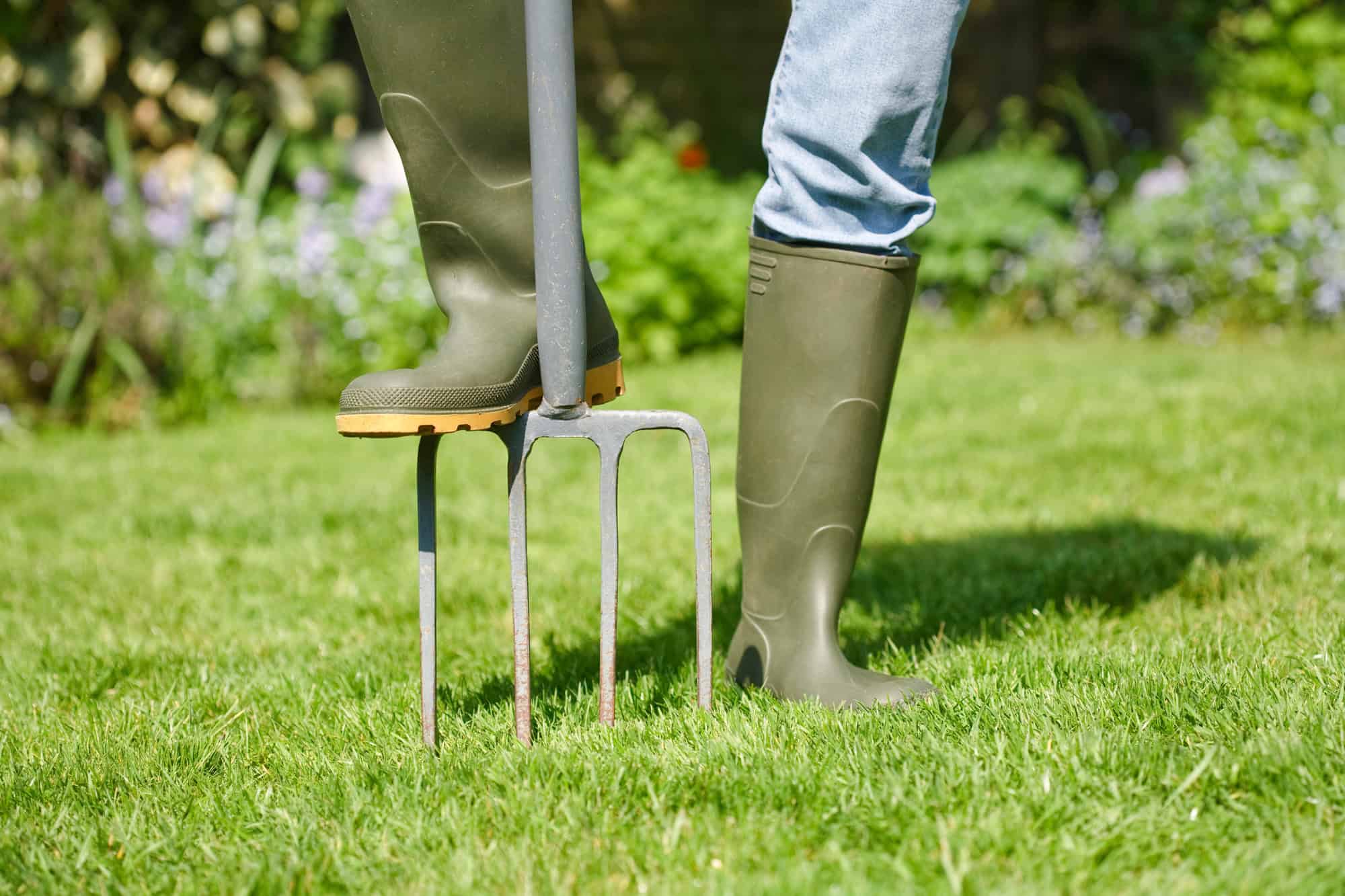
**Spike the lawn to open up drainage.** Push a garden fork in as deep as it will go, with each set of holes 10 to 15cm (4 to 6in) apart, and work the fork to and fro to widen each hole. That lets air and water in among the roots, which helps the lawn cope with waterlogging. For most lawns, aerating every two to three years is enough. On clay or waterlogged soil, a hollow-tined aerator makes wider holes and pulls out plugs of soil. Sweep the plugs up and rake a top dressing into the holes, every three to four years. A top dressing is three parts sandy loam, six parts sharp sand and one part well-rotted compost, spread at 2 to 3kg per sq m (4 to 7lb per 10 sq ft). It improves the texture and drainage of heavy soil and encourages denser grass.
September and October suit both jobs best. November still works, as long as the soil is not waterlogged and the weather is not very wet, snowy or frosty. Otherwise wait for spring.
**Lime the soil, but test first.** Field wood-rush thrives on acid soil, and liming reduces acidity by raising the pH. Liming discourages the plant and helps to limit its spread. Do not guess. A pH test tells you whether your lawn needs it at all, and the testing your soil pH at home walks you through it. A reading of 7.0 or higher means the soil is alkaline and liming is not necessary. The best all-round pH is 6.5. Test before you add lime, fertiliser or organic matter. A test taken within three months after any of them can give a misleading result.
Garden lime is ground limestone, and its active ingredient is calcium carbonate. Use a finely ground one. Avoid any product with lumps. Lumps take years to have any effect. Hydrated lime, the builder’s kind, is a fine, quick-acting powder with a neutralising value of 70 against 50 to 55 for ground limestone, so you need much less of it. It also irritates skin and eyes, so wear gloves and think about safety goggles. Clay resists changes in pH, so clay soil needs much more lime than sandy soil.
Lime applied to the surface around established plants can take years to have any effect, and a lawn is exactly that. The RHS rates for lime are worked out for digging into the top 20cm (8in) of soil, and the RHS gives no rate for an established lawn. So follow the rate on the packet, spread it thinly and evenly, and retest in a few seasons. The RHS timing for liming is winter, or before planting or sowing. It is the slow part of the plan.
How to Stop the Tufts Coming Back by Spring
Once the plants are out and the ground is mending, a short routine keeps them out.
- **Watch March and April.** That is when the dark flower heads show. Mow early in the season when the weather allows, and rake first. A lawn mown before the seed sets spreads mainly by stolons, and stolons are the part you have already lifted.
- **Check the feed.** Be cautious of high-nitrogen fertilisers. Some can lower soil pH and so encourage field wood-rush. Feed only where the lawn needs it, and read the label.
- **Keep the maintenance rhythm.** A programme of lawn care in spring and summer and again in autumn keeps the grass dense, and dense grass leaves no thin patch for a creeping stem to colonise. Scarify and spike when the lawn calls for it.
- **Keep the bin rule.** Seedheads, rhizomes and stolons go to green waste, never the compost bin.
There is one honest exit. If your lawn is mostly shade, damp and trodden, fine grass will keep struggling there, and field wood-rush tolerates all three. In those corners it makes a useful lawn alternative alongside other species. You can fork it out of the lawn you care about and let it have the places where nothing else wants to grow.