
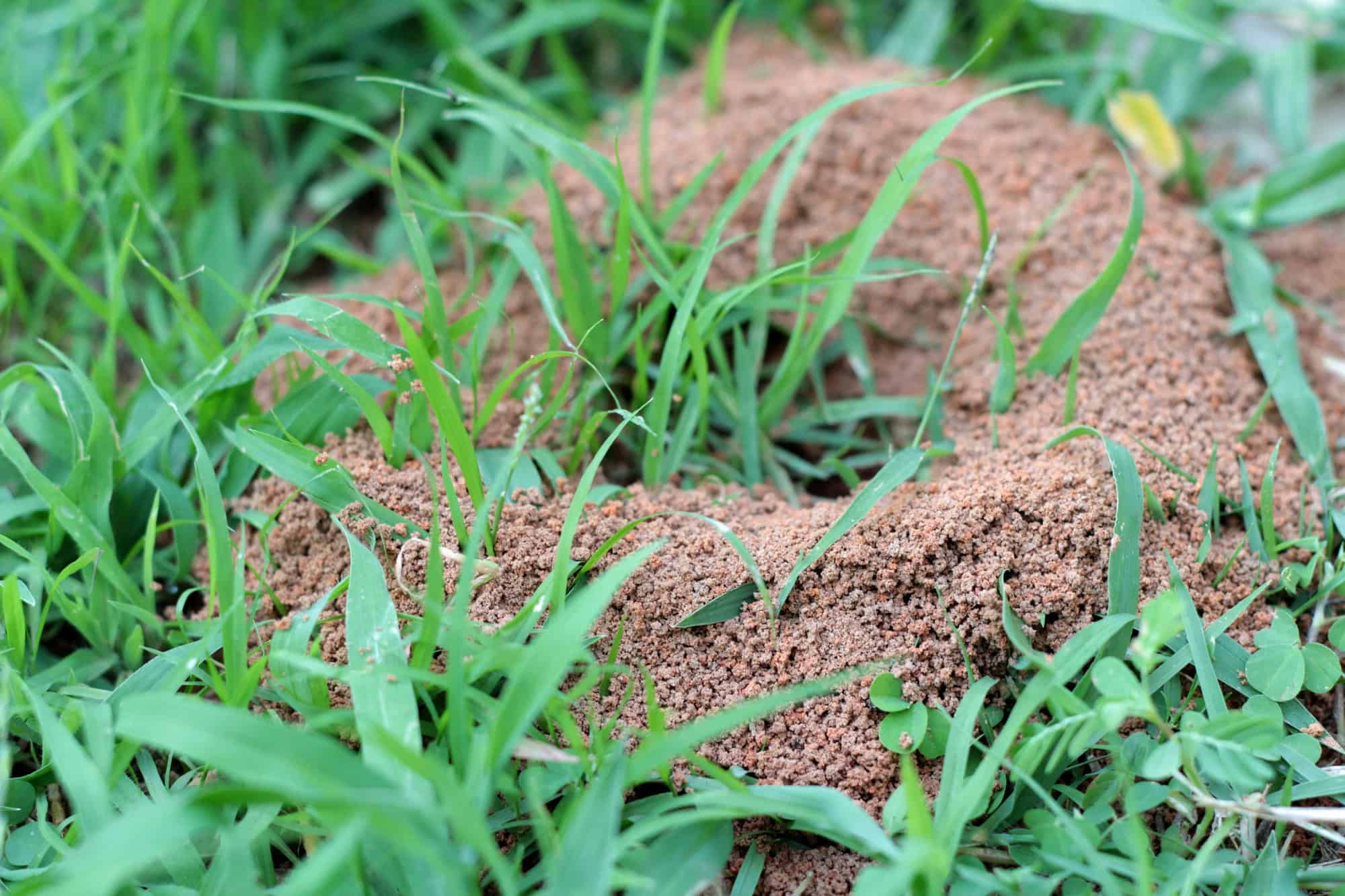
If small mounds of fine, dry soil have started appearing across your lawn this month, you are seeing the work of ants, and June is when they are at their busiest. The good news is that ants do not eat grass and rarely kill it. The damage is mechanical: the loose soil they push up smothers the blades beneath it, dulls your mower, and dries out the surface. The fix is a mix of gentle leveling, a healthy sward, and, if the colonies are large, a biological treatment that moves the nest on without poisoning the lawn. Reach for the watering can and a stiff brush before you reach for insecticide.
Why Ant Hills Appear and What They Actually Do
The mounds are spoil heaps. As ants excavate chambers and tunnels below ground, they carry the fine, dry soil to the surface and pile it around the nest entrance. They favour warm, dry, well-drained ground, which is why sandy lawns and the sunny edges of borders suffer worst, and why the problem peaks in the warm, dry weeks of early summer when colonies expand and produce winged ants ahead of the mating flights later in the season.
The grass under a fresh mound is the casualty. A pile of soil 5cm to 10cm (2 to 4 inches) across blocks light from the blades beneath it, and within a week those blades yellow and die, leaving a bare patch once the mound is cleared. The loose soil also blunts mower blades and, worse, lifts the lawn into uneven bumps that the mower then scalps, tearing the grass off at the high points. On a fine lawn the ridges and hollows ruin the finish. The ants themselves are doing the garden a favour elsewhere, aerating soil and eating other pests, but a lawn full of mounds is a genuine nuisance.
One thing to rule out first: if the disturbance comes with birds tearing at the turf or spongy patches that lift like a rug, you may be dealing with grubs rather than ants. The signs are different, and our guide on birds pecking at your lawn covers how to tell them apart.
The Simple Fixes That Work Most of the Time
For most lawns, you do not need to kill the ants at all. You need to keep knocking the mounds down so the grass beneath is never smothered for long, and let a thick sward do the rest. Start with the brush. On a dry day, before you mow, sweep the mounds flat with a stiff yard broom or the back of a rake, spreading the fine soil thinly across the surrounding grass where it will wash in and disappear. Brushing while the soil is dry is the trick; wet soil smears and mats the grass instead of scattering.
Do this little and often through June and July rather than waiting for one big clear-up. A mound brushed flat every few days never gets the chance to kill the grass under it, and the colony often relocates on its own once its careful spoil heaps keep being disturbed. A forceful jet from the garden hose works the same way, washing the loose soil down between the blades. Knocking mounds flat before mowing also protects your blade and stops the mower scalping the bumps.
Keep the lawn growing thick and you give ants less reason to settle. A dense sward cut on the high side, around 5cm to 7cm (2 to 2.75 inches), shades the soil and makes it harder for ants to find the warm, exposed ground they prefer for a nest. Bare, dry, short-cut patches are an open invitation, so the same height-and-feed routine that beats summer drought also discourages ant colonies from establishing.
When the Colonies Are Too Big to Ignore
If brushing is not keeping up and mounds keep returning across a large area, the best lawn-safe option is a nematode treatment. The species used for ants is Steinernema feltiae, sold as Nemasys No Ants (around £12.99/$16 for a pack treating roughly 16 nests, available from Amazon, garden centres and specialist nematode suppliers). These microscopic organisms are mixed with water and applied through a watering can over the nest sites. They do not kill the colony outright; they make the nest an uncomfortable place to be, and the ants pick up and move elsewhere, usually out of the lawn entirely.
Nematodes are living organisms, so timing and aftercare decide whether they work. Apply when the soil is warm, above about 10 degrees C (50 degrees F), which from June onward is reliable, and water the area first if the ground is dry. Keep the soil moist for at least two weeks after treating so the nematodes stay active, watering every few days if no rain falls. Do not use any chemical insecticide alongside them, because it kills the nematodes and wastes the treatment. Buy them fresh and use them quickly; they have a short shelf life and are usually kept refrigerated in the shop.
Boiling water is sometimes suggested as a quick kill, and a kettle poured straight into a nest entrance will scald the ants near the surface, but it also scorches the grass around the hole and rarely reaches the queen deep below, so the colony rebuilds within days. If you do use it, accept that you are trading a small dead patch for short-lived relief. Chemical ant powders and granules based on ingredients such as bifenthrin will knock back surface ants, but they treat the symptom rather than the nest and are best kept for paths and patios rather than the open lawn.
Repairing the Bare Patches Left Behind
Once the ants have moved on, you will often find small bare or yellowed patches where mounds sat longest. Level any remaining bumps by working the loose soil flat, then firm it gently with the back of a rake. If the patch is bigger than a coffee cup, scatter a hard-wearing grass seed mix over it at around 35g per square metre, rake it lightly into the surface, and keep it damp until it germinates, which in warm June soil takes one to two weeks. Avoid sowing seed in the middle of a heatwave unless you can water daily, or the seedlings will dry out before they root.
Know Which Ant You Are Dealing With
Two ants cause most lawn mounds, and telling them apart helps you judge how hard to push. The black garden ant is the familiar dark ant seen on patios and indoors; it nests in lawns but moves readily and responds well to repeated brushing and nematodes. The yellow meadow ant is smaller, pale orange-brown, and rarely comes to the surface, but it builds the larger, more permanent grassy mounds you see in old lawns and meadows. Yellow meadow ant nests can persist for years and are best managed by leveling and overseeding rather than trying to eradicate them, since the colony sits deep and the ants almost never bite or forage indoors.
Whichever you have, resist the urge to dig out a nest. Excavating a colony tears a large hole in the turf, scatters soil across the surrounding grass, and usually leaves enough of the nest behind that it simply rebuilds, now with a bare crater to repair as well. The same goes for repeatedly drenching one spot with strong chemicals: you damage the soil life that keeps the lawn healthy and still leave the queen untouched a foot down. Patience with a brush and a thick sward beats brute force every time, and it keeps the wider garden friendly to the ants where they do useful work in the borders.
The mistake most people make with ant hills is treating them as an emergency and reaching straight for the strongest chemical they can find. That kills useful insects, risks the grass, and does nothing about the nest. A stiff brush used regularly, a thick lawn kept on the high side, and a nematode treatment held in reserve for the worst colonies will deal with almost any ant problem a garden lawn throws up, and it leaves the soil and the grass in better shape than a bottle of insecticide ever would.