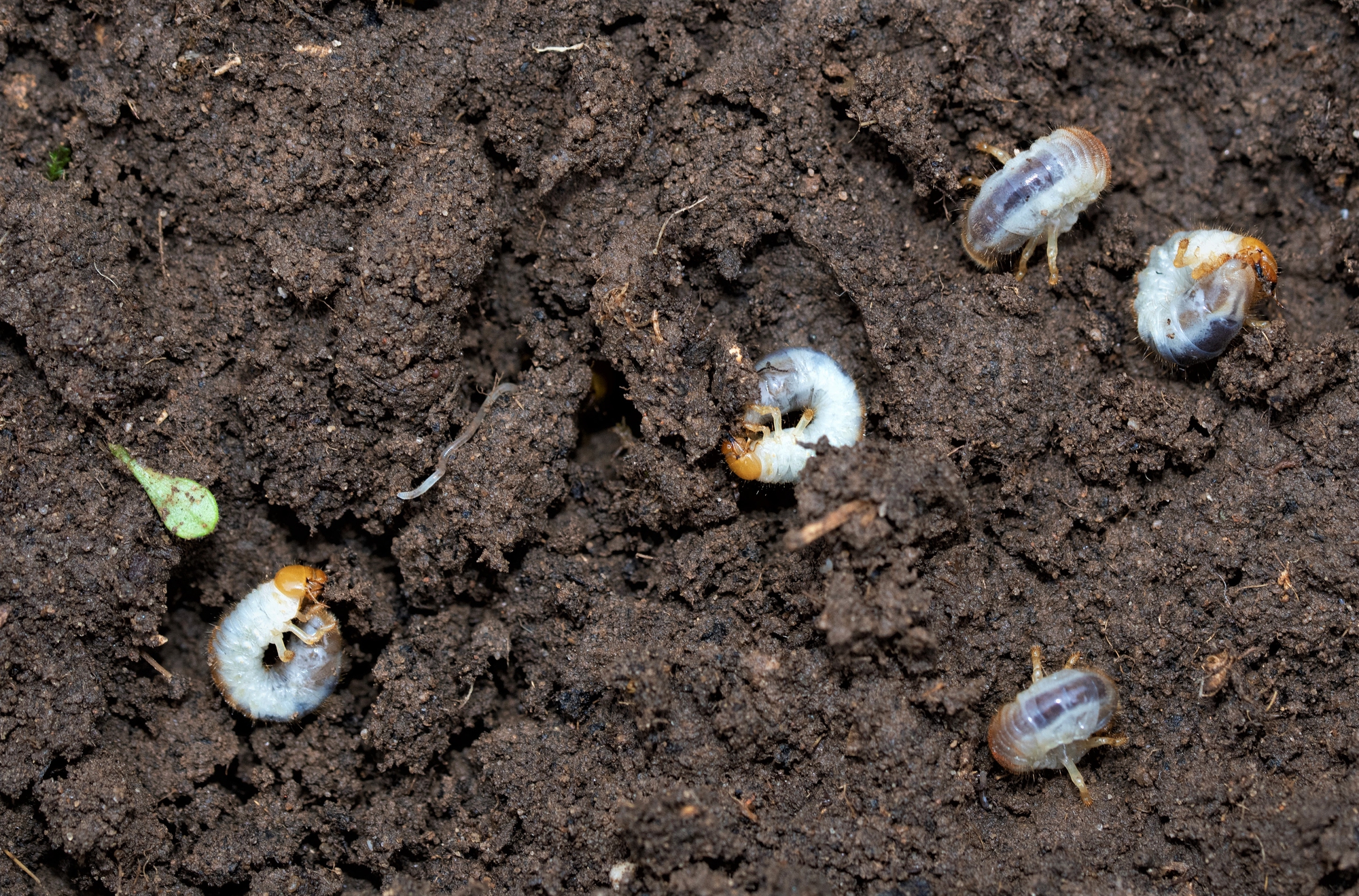
A lawn that looked healthy on Friday and skeletal by Monday has almost always met one thing in late summer: armyworm caterpillars feeding in numbers. They move across turf in a loose front, stripping the green from grass blades as they go, and a heavy infestation can brown a lawn that was thick and healthy a few days earlier. The reassuring part is that armyworms eat the leaf, not the crown, so a lawn caught early usually recovers.
Catching them early is what saves the lawn. Below is how to tell armyworm damage apart from drought and disease, how to confirm the caterpillars with a simple soap test, and how to clear them with treatments that stay safe around children and pets.
How to Tell Armyworms Apart From Drought or Disease
Get down on your knees at the edge of a browning patch and look for the caterpillars themselves. A full grown armyworm reaches about 35 mm (1.5 inches), coloured anywhere from green through brown to nearly black, with three thin pale stripes running the length of the body and a pale upside down Y marked on a darker head capsule. Handle one and it curls up. They feed at dusk, through the night and in the early morning, then shelter in the thatch and soil cracks through the heat of the day, which is why you rarely catch them out in the open in mid afternoon.
The damage has a signature. Blade edges look chewed and notched, and from a distance the lawn reads as scorched or drought hit. Up close the blades are ragged and see through where the caterpillars have grazed one side and left the thin skin of the other, a pattern turf managers call windowpaning. Patches brown and widen by the day, and the leading edge of the damage can advance across a lawn overnight. Flocks of starlings, crows and other birds working one area hard is a strong clue, as they gather to feed on the larvae just below the surface.
Rule out the lookalikes. Drought browns a lawn fairly evenly and the blades stay whole, and a tug on dormant grass meets a firm crown. Disease shows as defined rings, spots or coloured threads rather than chewed tissue. Two other caterpillars muddy the diagnosis: sod webworms cut grass at the base and leave small green pellets of frass in the thatch, working in scattered patches rather than an advancing front, while cutworms are fatter and smoother and curl into a tight C when handled. Armyworms give themselves away by the pale Y on the head and by the way the damage sweeps across a lawn in a moving line, heaviest where the brood is marching from.
Timing narrows it further. Armyworm outbreaks peak from midsummer into early autumn, when warm nights push the caterpillars through their stages quickly, and the moths often favour well watered, well fed lawns for egg laying, so a green, cared for lawn is no protection. Newly laid turf and freshly overseeded areas draw them in too, as the soft young growth makes easy feeding. When a lawn browns fast in that late season window rather than in the peak of a dry spell, chewing rather than thirst is the more likely culprit.
The quickest way to be sure is a soap flush. Mix two tablespoons of lemon scented washing up liquid into a watering can holding around 4.5 litres (one gallon) of water and pour it slowly over a square metre at the edge of a damaged patch, where healthy green meets brown. The soap irritates the caterpillars and drives them to the surface within about ten minutes. If more than two or three crawl up per square metre, treat the lawn. A dozen surfacing at once points to a heavy infestation that needs action the same day.
Why the Damage Happens So Fast
Armyworm damage seems to explode overnight for a reason rooted in how the caterpillars grow. A single moth lays her eggs in masses of a hundred or more, often on fences, walls, the underside of leaves or garden furniture near a lawn, and a warm run of weather can bring several overlapping generations in one season. The eggs hatch in a few days and the tiny caterpillars start grazing the soft surface of the grass blade, doing little visible harm at first.
Each caterpillar then passes through six growth stages across two to three weeks. The detail that catches gardeners out is that the last stages eat far more than the early ones. A young armyworm scrapes the leaf surface; a full grown one chews whole blades down to the base. Entomologists put roughly 80 percent of the total lifetime feeding in the final few days before the caterpillar pupates. So a lawn can carry a hidden population for a fortnight with almost no sign, then lose its colour in two or three days as the whole brood hits its hungriest stage together. Warm weather shortens every stage and stacks the damage faster still.
The saving grace is where they feed. Armyworms strip leaf tissue but leave the crown and roots intact, so grass that still holds a living growing point regrows once the caterpillars are gone. A lawn hit by a single generation and treated quickly often greens up within two to three weeks with watering and a light autumn feed. The real danger is a second or third generation arriving before the grass recovers, which drains the crown reserves and turns thinning into bare soil that weeds move into.
How to Treat and Prevent Armyworm Damage
Reach for a biological control first. Bacillus thuringiensis subspecies kurstaki, sold as Bt, is a naturally occurring soil bacterium that the caterpillars eat along with the treated grass. It ruptures the gut lining and they stop feeding within hours, dying over the following day or two. Bt is selective, sparing bees, ladybirds, pets and people, which makes it the safest choice for a family lawn. It works best on young caterpillars, so treat as soon as the soap flush confirms them. Ultraviolet light breaks Bt down quickly, so spray in late afternoon or early evening onto a freshly mown, lightly moist lawn, and repeat after a week if the flush still turns up larvae. A concentrate costs around £10 to £15 (about $13 to $19).
Beneficial nematodes are the other natural route. These microscopic worms, sold chilled as Steinernema species, hunt the caterpillars through the thatch, enter the body and release bacteria that finish the pest within a couple of days. Water them into a moist lawn in the evening and keep the surface damp for two weeks so they can travel and survive. A pack treating around 100 square metres runs about £13 to £20 ($17 to $25) from Nemasys and similar brands at garden centres or online. For a severe, fast moving attack that threatens the whole lawn, a synthetic pyrethroid such as a lambda cyhalothrin lawn insecticide acts within hours, though it kills beneficial insects too, so hold it in reserve.
Whichever product you pick, mow the lawn first to expose the caterpillars, water it lightly beforehand to bring them nearer the surface, and treat late in the day when they start to feed. Then help the grass back: water deeply, raise the mowing height so what leaf remains can rebuild the plant, hold off heavy nitrogen until the heat eases, and overseed any bare patches in early autumn while the soil stays warm. To stay ahead next year, watch closely from midsummer, wipe egg masses off nearby walls and furniture when you spot them, and keep the turf dense and healthy, as a thick sward hides less bare soil and shrugs off a light attack that would scalp a thin, stressed lawn.