The honest answer to whether you should buy a battery or a petrol mower comes down to two things: how big your lawn is and how often you cut it. For most small and medium gardens, a modern battery mower now does everything a petrol machine does with far less noise, mess and maintenance. For large or rough ground that takes more than about an hour to cut, petrol still earns its place. Get that match right and the mower disappears into the background of your weekend. Get it wrong and you either run out of charge halfway across the lawn or lug a heavy, fume belching engine around a garden that never needed it.
How Long Each Type Runs and What That Means for Your Lawn
Runtime is the headline difference. A typical cordless walk behind mower gives 45 minutes to an hour of cutting on a single charge, which comfortably covers a lawn up to around 500 to 600 square metres on flat ground. Many current models take two batteries, either running them in sequence or letting you swap a spare in seconds, which roughly doubles that working window. Battery output also drops as grass gets longer and wetter, because the motor draws more power to cut through it, so the quoted runtime assumes dry grass at a sensible height rather than a damp, overgrown lawn.
A petrol mower runs for as long as there is fuel in the tank, and refuelling takes a minute, so in practice the runtime is unlimited. That is the one area where petrol still wins outright. If your lawn really takes more than an hour of continuous cutting, or you maintain several lawns, the ability to keep going without waiting for a charge is worth a great deal. For the majority of gardens, though, the cut is finished long before a single battery runs flat, and the unlimited runtime of petrol is capacity you pay for but never use.
The Real Cost Over Time
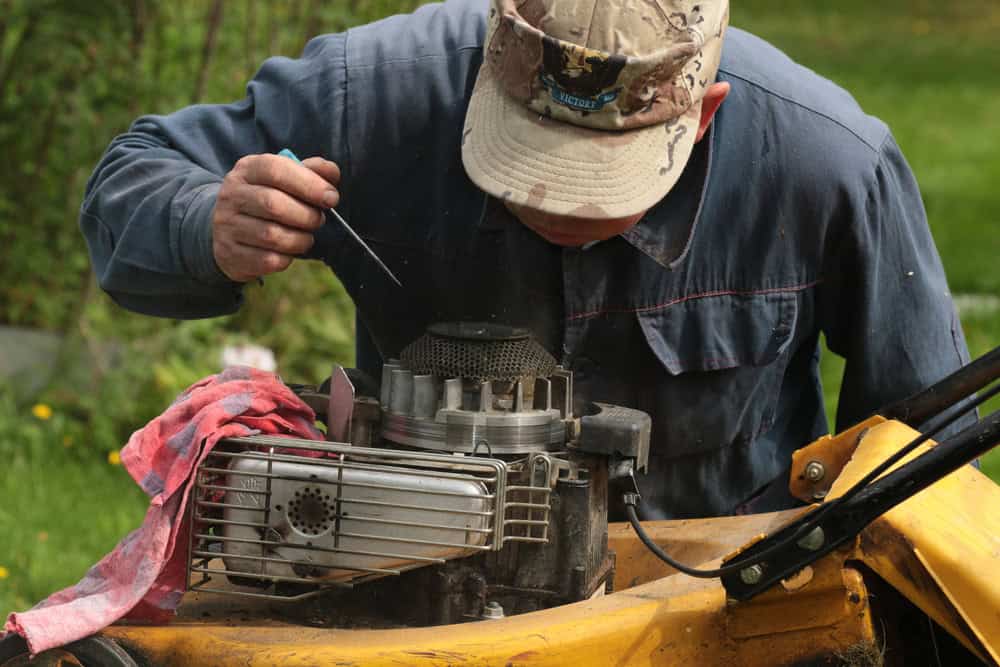
The purchase price tells only part of the story. A petrol mower carries running costs that a battery machine does not: fuel, fresh oil each season, a spark plug now and then, an air filter, and fuel stabiliser if it sits over winter. It also needs an annual service to stay reliable, whether you do it yourself or pay a dealer. Over a decade those costs add up, and they fall due whether or not the engine starts first pull on a cold morning.
A battery mower costs a few pence of electricity per charge and asks for almost nothing beyond keeping the blade sharp and the deck clean. The honest counterweight is the battery itself. Lithium battery packs gradually lose capacity and typically need replacing after several years of regular use, and a replacement pack is not cheap, often a significant fraction of the mower’s original price. The sensible way to read this is that battery wins on running cost and convenience, petrol wins only if you mow so much that you would wear out batteries quickly, and the more often you cut, the more the low per use cost of battery tells in its favour over the years.
It helps to put rough numbers on it. A mid range petrol mower might cost you a tank of fuel every few cuts, a bottle of oil and a service each year, and a spark plug and air filter now and then, which together can run to a meaningful sum annually once you add the dealer’s labour. A battery mower of similar capability draws only pennies of electricity per charge across a season, but you should budget for a replacement battery pack at some point in its life. The crossover point is usage. Cut a small lawn fortnightly and the battery machine is cheaper to own from the first year and stays cheaper. Cut a large lawn twice a week through a long season and you mow enough hours that battery wear and the occasional pack replacement narrow the gap, which is part of why heavy users and professionals still lean toward petrol or invest in several spare packs.
Picking by Garden Size and Models Worth Considering
For a small garden up to roughly 200 square metres, a compact cordless mower is the easy choice. It is light, quiet enough to use early in the morning or in the evening without troubling the neighbours, needs no fuel and starts at the push of a button. The Worx WG737E is a strong value pick here at around £260/$330, supplied with two 4.0Ah batteries and a charger, and its brushless motor handles gardens up to about 550 square metres. Brushless motors are worth seeking out because they run cooler, last longer and squeeze more cutting from each charge than older brushed designs.
For a medium garden, the Bosch AdvancedRotak 36V range sits in the sweet spot for most people, with a single lever height adjustment and a comfortable cut for lawns in the few hundred square metre range (around £300/$380). Step up to a medium to large lawn and the EGO LM1903E is a frequent recommendation, its 56V system delivering performance close to a petrol mower without the fumes or servicing (around £450/$560). Stihl’s cordless mowers such as the RMA 248 are well regarded too, though the brand is sold through dealerships rather than online, which brings setup help and service but means a trip to a dealer. If your lawn is large, sloped or rough, a petrol self propelled mower from a maker like Honda or Hayter still makes sense, and the wider cutting decks and stronger engines get the job done faster on demanding ground.
One detail that saves money over time is battery compatibility within a brand or alliance. Bosch’s Power For All 18V system, for example, shares the same battery across Bosch, Flymo and Gardena tools, so a battery bought with the mower also powers a trimmer or hedge cutter. If you expect to add cordless tools later, buying into a single battery platform means you are not paying for a new charger and pack every time.
The Trade-offs People Regret Later
Two practical factors decide a lot of buying decisions once people have lived with a mower. The first is noise. A petrol mower is loud enough that you instinctively check the time before starting, and on many streets there is an unwritten rule about not running one early on a Sunday. A battery mower is quiet enough to use at breakfast or after work without a second thought, which for people with young children or close neighbours often turns out to be the feature they value most. The second is weight. Petrol mowers carry an engine, a fuel tank and a heavier deck, so they are harder to push up a slope, lift over a step or manoeuvre around tight borders, while a battery mower is usually several kilograms lighter and easier on the wrists and back. Neither factor shows up in a showroom test, but both shape how often the mower actually gets used.
The most common regret with battery mowers is buying one that is underpowered for the lawn, then fighting it through long or damp grass while the battery drains in twenty minutes. Match the cutting width and battery capacity to your lawn carefully, and if you are between sizes, go up rather than down. Cutting little and often also helps any battery mower enormously, because short grass needs far less power than a fortnight’s growth, so a battery machine rewards a regular routine.
The most common regret with petrol is the maintenance most owners forget about. A petrol mower that is put away with stale fuel in the tank often refuses to start the following spring, and the carburettor may need cleaning before it will run. Petrol mowers are also heavy, loud enough that you need to think about when you cut, and they exhaust fumes you stand in while you work. None of that makes petrol the wrong choice for a big or rough lawn, but it is the reality that the showroom rarely mentions. For most gardens the quiet, low maintenance battery mower is the one people are happiest with a year later, while petrol remains the tool of choice where runtime and brute pulling power really matter. Decide which of those describes your garden before you decide anything else, and the right mower follows from there.