
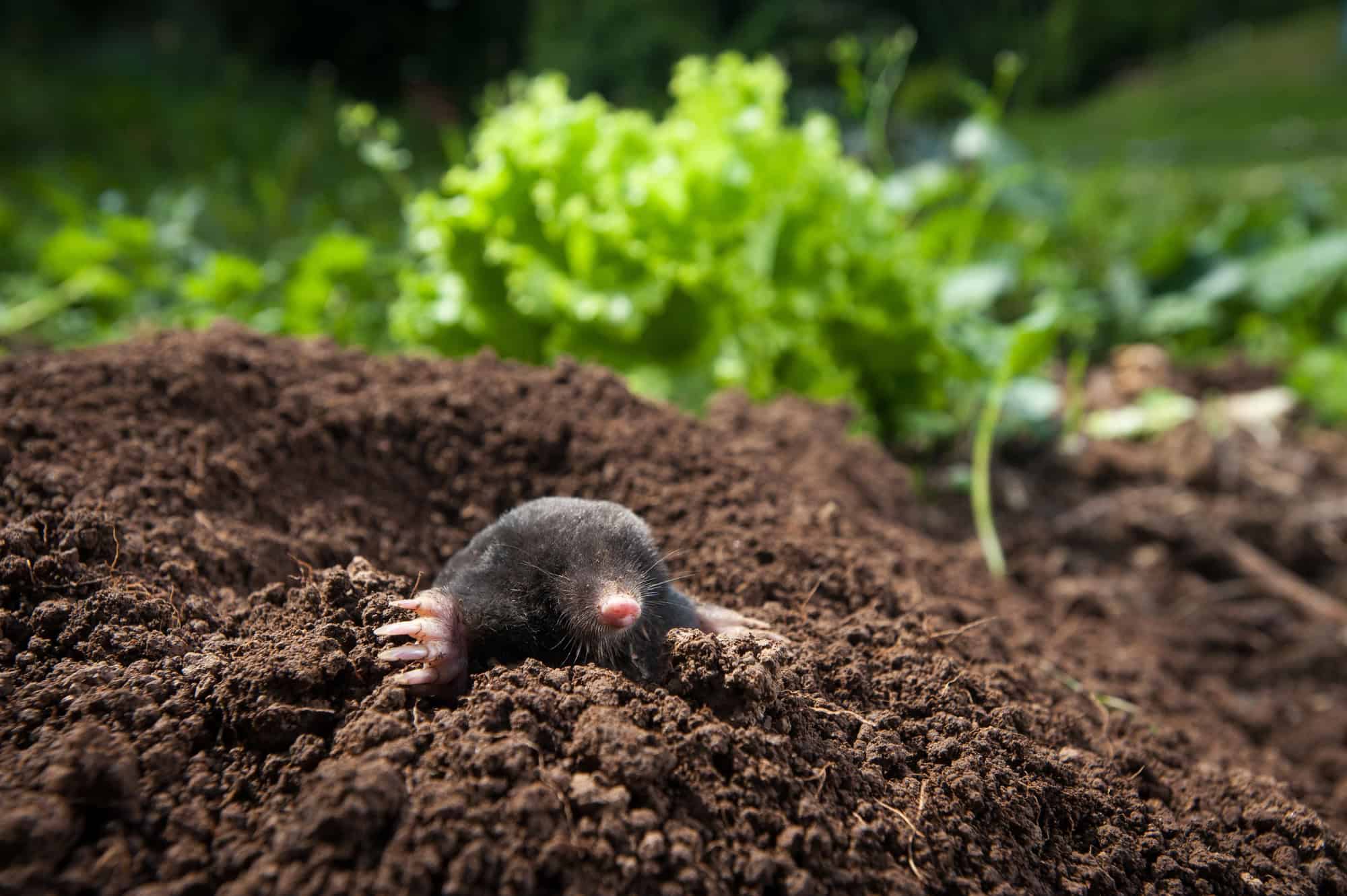
You wake up to find three or four neat conical hills of soil on your front lawn, with more arriving every morning, and the standard advice is either to call pest control or set lethal traps. There is a third option that works better than most people expect, costs less than £25/$30 for a season of treatment, and leaves the moles unharmed. This article walks through exactly why moles arrive in May, the castor oil method that has the strongest research behind it, the supporting changes to lawn management that make the moles leave and stay gone, and the few situations where humane methods will not work and you need to escalate.
Why moles dig in May and what they are actually eating
Moles are not chewing your grass. The Royal Horticultural Society and several universities confirm that moles are obligate carnivores: they feed on earthworms, leatherjackets, chafer grubs and other soil invertebrates. The molehills on your lawn are spoil heaps thrown up as the animal excavates a permanent feeding network just below the surface. A single mole can eat its own body weight in invertebrates every day, which adds up to around 20 to 25kg (44 to 55lbs) of worms and grubs per year per animal.
May is peak mole season for two reasons. First, soil moisture from spring rain pushes earthworms toward the upper few inches of soil, which is exactly the depth the mole prefers to tunnel. Second, female moles give birth in April and early May, and lactating adults dig more aggressively to feed pups for the first month of life. By late May a single breeding female and a litter of three to four young can be active across a quarter-acre territory, even though only one or two molehills appear above ground on any given day.
The most common surface signs:
- Conical molehills: symmetrical mounds of fine, loose soil with no opening at the top, between 8 and 30cm (3 to 12 inches) tall and 15 to 60cm (6 to 24 inches) across at the base.
- Raised ridges: snaking lines across the lawn surface where shallow feeding tunnels have lifted the turf. These sit 5 to 10cm (2 to 4 inches) below the surface and are often abandoned after a single use.
- Soft spots: areas of lawn that feel spongy underfoot, indicating tunnels just below.
The castor oil method and why it works
Castor oil is the most evidence-backed humane mole repellent. Research from Nebraska Extension confirms that castor oil disrupts the mole’s digestive system and irritates the mucous membranes in the tunnel walls, encouraging the animal to move to untreated soil rather than tolerate the chemical signal in its existing runs. One controlled study found that a castor oil product called Mole Med reduced mole activity in treated areas for over 30 days.
The recipe used by most extension services and lawn care professionals:
- Half a cup of 100% unrefined castor oil
- Half a cup of dish soap (the soap emulsifies the oil so it mixes with water)
- Diluted into one gallon (3.8 litres) of water as a concentrate
- For application, dilute the concentrate further at a rate of 2 tablespoons per gallon (30ml per 3.8 litres) of water in a hose-end sprayer or watering can
The application method is as important as the recipe. Water the lawn first with about 12mm (half an inch) of water using a sprinkler, then apply the diluted castor oil mixture across the affected area, and follow up with another 25mm (1 inch) of water over the next 24 hours. The two waterings are essential. The first one opens the soil structure so the castor oil can penetrate, and the second drives the oil down into the tunnel network at the depth the moles are actually using.
A bottle of unrefined castor oil from Boots, Amazon or any health food shop costs around £8/$10 for 500ml, which is enough concentrate to treat a 100m² lawn three times. Ready-mixed alternatives include Mole Repellent Granules by Pest-Stop (around £15/$18 for 750g, treats 270m²) and Tomcat Mole Repellent Granules (around £14/$17). The RHS specifically mentions Pest-Stop Biofume Mole Smoke, a smouldering cartridge that releases castor oil fumes inside the tunnel system and is dropped into an active run.
Why some methods do not work
The internet is full of mole remedies that have no scientific basis. Coffee grounds, chewing gum, mothballs, broken glass and bleach are all variously claimed to work but none have any controlled evidence behind them. Ultrasonic spike repellents have mixed reviews, and the few academic studies on them suggest moles habituate to the vibration within two to three weeks. The reason these remedies fail is that they target sensory channels moles barely use. Moles are nearly blind, but their sense of smell and touch is exceptional. Anything that does not disrupt those two senses in the tunnel itself is essentially invisible to the animal.
Castor oil works because it acts on smell, taste, and digestive tract chemistry. Reducing food sources works because moles relocate to richer hunting grounds when prey density drops below their daily calorie requirement. Everything else is folklore.
Reduce the food source and the moles leave on their own
The most overlooked tactic is removing the reason the moles came in the first place. If your lawn has a large earthworm or grub population, no repellent will hold the line indefinitely because the food reward is too strong. Treating the underlying invertebrate population alongside the repellent is what makes the change permanent.
For chafer grubs and leatherjackets, a nematode treatment is the most effective biological control. Nemasys Chafer Grub Killer (around £25/$30, treats 100m²) or BASF Nemasys Leatherjacket Killer applied between March and September drops grub populations by 70 to 90% within four weeks. Order from Amazon or a garden centre, store in the fridge, and apply with a watering can on a warm overcast day after the lawn has been wetted.
Limit watering to one deep soak per week (25mm or 1 inch) instead of light daily sprinkles. The reason this works is that constantly damp surface soil draws earthworms upward, and the worms in turn attract moles. A deep weekly water trains the worm population to live deeper in the soil profile, beyond the mole’s preferred tunnelling depth, and the moles move on within two to three weeks of the change.
Physical barriers for small areas
For raised beds, vegetable plots and high-value flower beds, the most reliable answer is a buried barrier. Galvanised hardware cloth with a mesh size of 6mm (a quarter inch) buried 60cm (24 inches) deep around the perimeter of the bed, with the top edge folded outward 15cm (6 inches) to prevent surface entry, blocks moles entirely. A 10m roll of hardware cloth costs around £28/$35 from Wickes, Home Depot or Amazon. This is overkill for a whole lawn but is the gold standard for protecting individual planting areas.
When humane methods will not be enough
If you have a large territory invaded by multiple moles, a working garden growing food crops, or a sports surface where uneven turf is a safety issue, repellents alone may not deliver fast enough results. In those situations, the next step is professional lethal control using approved spring or scissor traps, which must be sited inside an active tunnel and checked daily. This is regulated work and is best done by a licensed pest controller, with costs typically £80 to £150/$100 to $190 per visit. Poison baiting is generally a last resort and is prohibited or heavily restricted in many countries.
For a typical domestic lawn with one or two moles and a handful of molehills per week, the combination of castor oil treatment, nematode application against grubs and a switch to deep weekly watering will clear the problem within four to six weeks, at a total cost of about £55/$65 including the nematodes. Within a year, the same combination keeps moles away because the food source has been reduced and the soil signature of the lawn no longer matches their preferred hunting territory. Flatten the molehills with a roller or the back of a rake once the soil dries, overseed any thinned patches with a 500g bag of fast-establishing seed (Johnsons Quick Lawn, around £9/$11), and within a month the lawn looks as if the moles were never there.