- A carpet of tiny round green leaves that pops up in new patches after every mow is mind-your-own-business, and the mower is the thing spreading it.
- Lifting it by hand, raking the stems up before you mow and binning every scrap stops the mower planting more.
- Weedkiller is the wrong tool, so thicker grass and a higher cut do the work of keeping it out.
Why the Mower You Trust Keeps Planting More of It
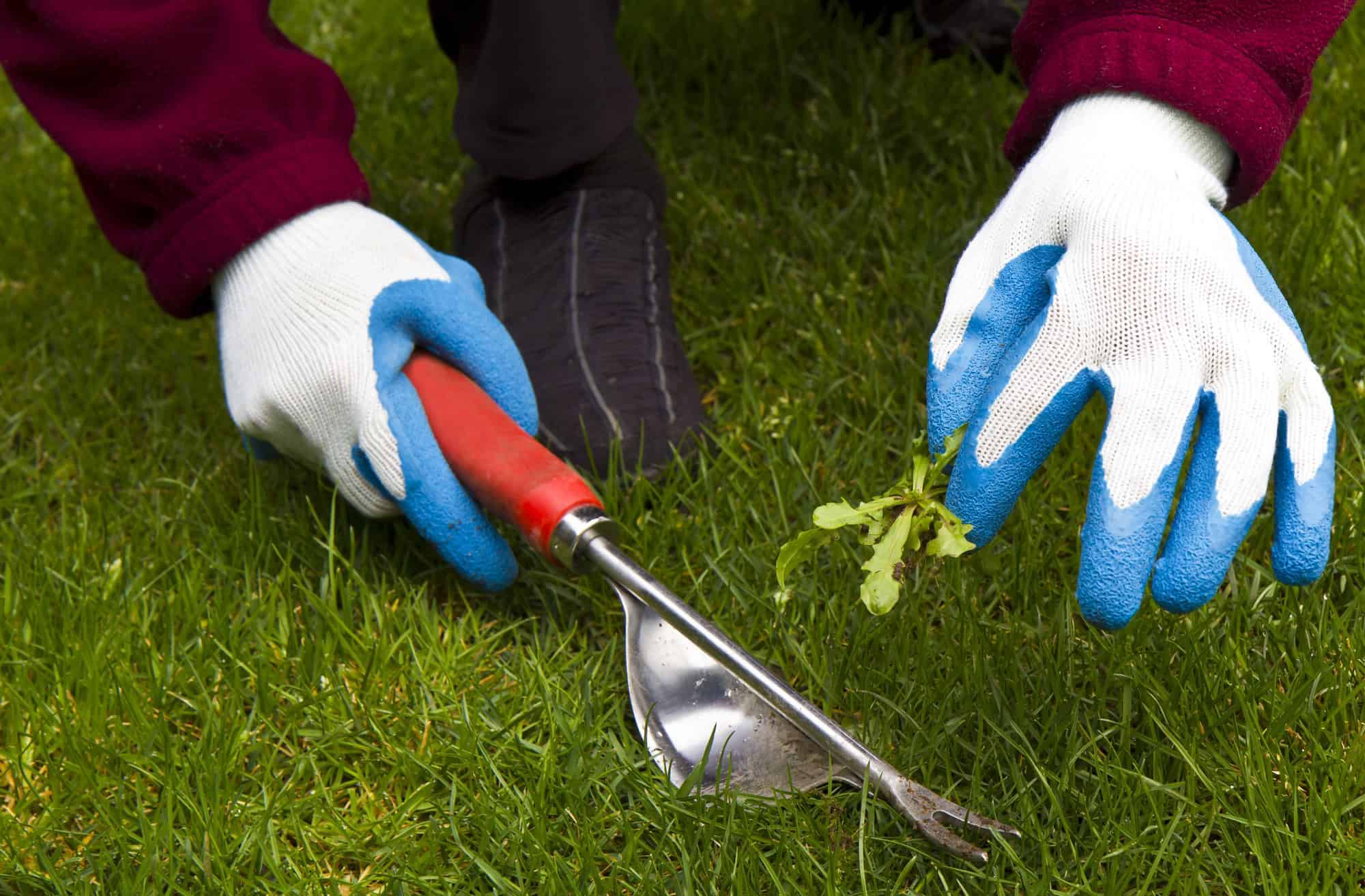
The fix is three jobs in a fixed order. Lift the carpet out with a hand fork or trowel. Rake whatever is left so the stems stand up above the blades before each cut. Then put every scrap, and every clipping that touches it, in the council green waste bin rather than on the compost heap. You need no new kit and no spray.
The order is the whole point. Mow first and you chop the plant into pieces and throw them across the lawn. Compost the clippings and you plant them again in the garden. One big session will not beat this weed: anything left behind starts over.
The reason is in how the plant is built. Its thin stems root along their length, and the plant can regrow from the tiniest piece of stem. A mower blade turns one plant into a pile of cuttings, and every cutting is a new plant waiting for damp ground. Every pass of the blade chops the stems and flings the pieces across the turf.
What You Are Looking At and Why It Likes Your Lawn
Mind-your-own-business is a creeping evergreen perennial. The stems are thin, highly branched and pale green or pink. Tiny, rounded green leaves cover them in a dense, tactile carpet. It stands only 5cm (2in) tall, but a single plant can grow over 1m (3ft) wide, so a small patch can spread a long way.
In summer it carries minute pinkish-white flowers that you have to look closely to see. The female flowers turn into a shiny oval fruit holding a single seed. The stems do the damage.
It prefers damp shade, but it grows and spreads in most conditions, so do not assume your sunny lawn is safe. Check the damp, shaded and thin parts of the lawn first, where it has a head start. Lawn weeds tend to be tough, low-growing perennials that shrug off regular mowing and foot traffic. Many have creeping, rooting stems, and they are quick to colonise bare ground where the grass is patchy. Thin turf is the open door.
The good news is that it is not deep-rooting. It prises out of the soil easily, so this is a job for a hand fork, not a spade and a sore back.
Why Every Pass of the Mower Makes It Worse
A single stem section left on the lawn is enough. Stems detach easily, and tiny sections overlooked when weeding turn one plant into several. A mower is the fastest way to create overlooked sections. The blade cuts the stems into short lengths and spreads them across the lawn. Any piece that lands on damp, thin or shaded turf is exactly where it wants to be.
Four habits make it worse:
- Mowing before raking. The stems lie flat, the blade skims over some and shreds others, and the pieces scatter.
- Leaving the clippings on the lawn. Rake them up and remove them afterwards, or the stem sections re-root.
- Tipping the clippings on the compost heap. The rooting stems can survive the home-composting process, so the heap sends them back to the garden alive.
- Cutting the grass very short. Mowing very short weakens the grass and leads to bare patches that allow weeds to establish. Bare soil next to a creeping stem is a gift.
Hoeing and digging cause the same harm. RHS advises against both in beds and borders, as they chop up and spread the rooting stems. The tool changes, but the mistake is the same.
There is also a trap in reaching for the spray. Mind-your-own-business shows resistance to selective weedkillers for lawns, so you pay for a product that does not finish the job. Non-chemical methods are your best option.
How to Lift It and Bin It
Lift first, while the plant is a small, shallow mat.
1. Push a hand fork or trowel under the edge of the carpet and prise it out of the soil. Single plants and small clumps come out whole.
2. Be thorough. Pick up every loose piece of stem you can see, even the ones the size of a thumbnail.
3. Put everything straight into a bag or bucket. Do not drop it on the grass to deal with later.
4. Repair any bare patch that is left. The best times are April or September, the best times to sow grass seed and lay turf.
5. Clean your tools and your boots before you walk on to the rest of the lawn or the garden.
6. Put the bag in the council green waste recycling bin.
If the carpet is large or has grown into the grass, cut out and lift the turf with a sharp spade. Remove the weed roots, lightly fork over the soil, rake it level and tread it down, then lay fresh turf. It suits creeping weeds that grow through grass and are hard to remove by hand. Turf can be laid from autumn to early spring in suitable weather, so a mild spell in November sits inside that window. Seed waits for April, or next September.
Then comes the scarifying. A spring-tined rake pulls the bulk of the stems out of the grass in autumn and encourages denser growth. Rake the lawn vigorously, aiming to reduce loose debris without uprooting the grass. Work in one direction, then across it, and take away everything you raked out. Your lawn will look patchy and rough afterwards, but it will soon recover. The same raking also helps with clearing moss from a lawn, which likes the same damp, shaded corners. The best months for this job are September and October. In November, stick to light raking over the affected patches and book the full scarify for next autumn.
How to Rake Before You Mow Without Spreading It
Raking before you mow raises the stems up so the blades can cut them. The aim is to cut, collect and remove the low-lying stems in one go, instead of chopping them where they lie. The same advice applies to other creeping weeds, such as creeping buttercup and speedwell, and it works for the same reason: low stems that hug the turf are the ones a blade misses or shreds.
Run a rake over the affected patch first, then mow. Afterwards, rake up and remove every clipping, and bin the lot. If you leave clippings behind, the stem sections can re-root.
Late autumn changes the routine a little. Mow only in mild weather, as grass continues to grow in temperatures above 7°C (45°F). Raise the cutting height to about 5mm (¼in) higher than in summer. A higher cut also avoids the weak grass and bare patches that follow a very short mow. If you can dig out unwanted lawn weeds by hand on a mild day, do that too, a few minutes at a time.
How to Stop It Coming Back (and When to Give Up)
The lasting answer is a lawn thick enough to leave no room. A maintenance routine in spring and summer and again in autumn keeps the grass dense and healthy, so it outcompetes the creeper. Thin turf is what lets it in. A weed-covered lawn needs the bigger rebuild covered in a lawn overrun by weeds.
Here is the year in order:
- Now: hand lift, rake before each mow, higher cut, everything in the green waste bin.
- Spring: repair bare patches with seed or turf in April, so the grass fills the gap before the creeper does.
- Summer: do not scalp the lawn. A short cut thins the grass and the bare patches that follow are where weeds establish.
- Next September or October: scarify to clear the loose stems and thatch. A good test is whether you can see soil between the blades. If you cannot, the lawn needs it.
A newly sown patch is the most at risk, as mind-your-own-business can smother seedlings and newly sown lawn grasses. Lift any new stem you spot there before it spreads.
When should you give up fighting it by hand? When it covers most of the lawn, cut out and re-turf the worst areas with a sharp spade, as described above. A spray is not the answer, as selective lawn weedkillers do not beat it.
In paving gaps, along walls and as ground cover in mature, shady beds it is welcome, and its damp ground favours springtails and ground beetles. Let it grow there, away from the lawn edge, and keep it out of the mown grass with a quick fork-lift each time it creeps over the line.