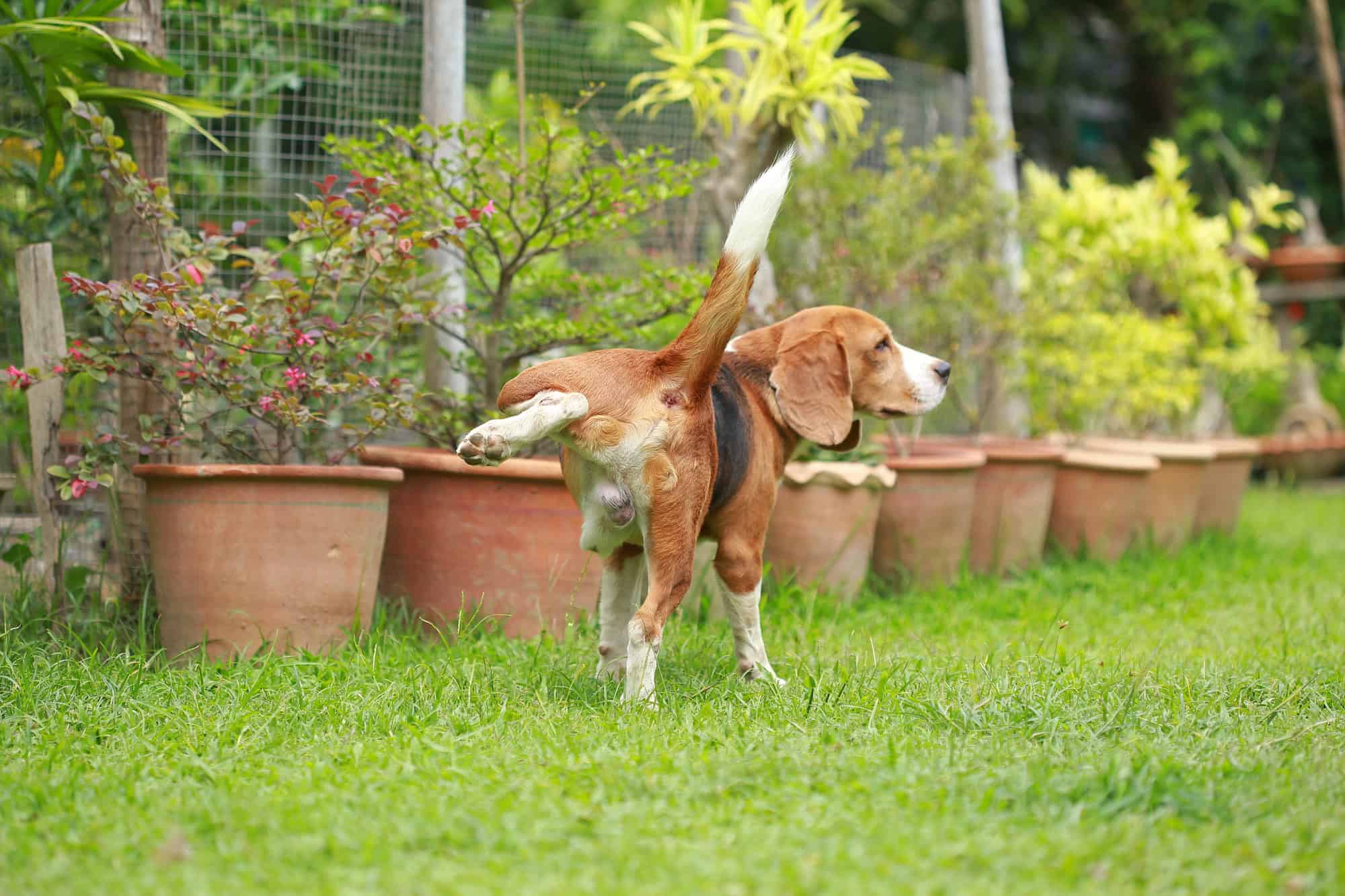
There are two kinds of dog owners with lawns. The first kind has accepted that their grass is a write-off and stopped caring. The second kind keeps trying to figure out why the same patches keep turning yellow despite watering, reseeding, picking up after the dog and buying every gadget on the shelf at the garden centre. If you are in the second camp, the good news is that a healthy lawn and a happy dog are entirely compatible. The bad news is that almost nothing on the gadget shelf actually works the way the marketing suggests.
Keeping a lawn green when a dog uses it daily comes down to four practical adjustments: choosing the right grass species, changing how and when the dog drinks, watering smartly the moment urine hits the lawn, and accepting a slightly higher mowing height than you might otherwise prefer. Get those four right and the patches you have been fighting for years usually shrink to manageable spots within a single season.
Why dog urine actually kills grass
Almost every gardener with a dog has heard that the urine is too acidic. This is wrong. Dog urine is roughly neutral on the pH scale, with most readings between 6.0 and 7.5. The real culprit is nitrogen. A typical Labrador-sized dog urinates around 750ml to 1,500ml a day, often in two or three bursts on the same patch of grass. Each burst delivers a concentrated dose of urea, which the soil bacteria break down into ammonia and then nitrate. That single dose can deliver the equivalent of around 200kg of nitrogen per hectare to a 30cm patch, which is roughly four times the rate of a single feed of summer fertiliser delivered all at once.
The result is the same brown centre with the bright green ring around it that every dog owner recognises. The brown centre is grass killed by ammonia toxicity. The green ring is grass that received a survivable dose of nitrogen as the urine diluted outwards, and is now growing faster than the surrounding lawn. Female dogs and small dogs of either sex tend to cause more damage than large male dogs for the simple reason that they squat and deliver the entire dose in one place, while a leg-lifting male spreads the same volume across several smaller spots.
Diet plays a role but a smaller one than the marketing suggests. A dog eating a high-protein commercial food will produce more nitrogen in its urine than a dog on a lower-protein diet, but switching food drastically to reduce lawn damage usually causes other health issues and is not a sensible trade-off. Hydration, by contrast, is a useful lever. A well-hydrated dog produces more urine in volume but lower in nitrogen concentration per millilitre, and the lawn damage scales with concentration, not volume.
The grass species that actually cope with dog traffic
The single biggest improvement most dog owners can make is to overseed with the right species. Perennial ryegrass and strong creeping red fescue are the two best choices for cooler climates and the United Kingdom. Ryegrass germinates in seven to ten days, tolerates heavy traffic and recovers quickly from urine damage because it sends out new shoots from the base of each plant. Creeping red fescue spreads sideways through rhizomes, which means it can heal small damaged patches without your help.
For dog-heavy lawns in temperate regions, a seed mix containing around 70 percent perennial ryegrass and 30 percent strong creeping red fescue, sown at 35g per square metre, gives the best balance of traffic resistance and self-repair. Brands worth comparing in this category include Good Grow Dog Friendly Grass Seed (around £15/$19 for a 500g pack covering 14 square metres), Johnsons Tuffgrass (around £20/$25 for 1kg) and the Scotts EZ Seed Patch and Repair Dog Spot Repair version in the United States (around $20 for a 1kg jug). For warmer southern climates, bermuda grass and zoysia are the equivalent recommendations and recover even faster, although they go dormant and brown in winter regardless of how kind the dog is.
Whatever mix you use, May is the right month to overseed for dog damage because the soil is warm enough for germination in five to seven days and you have several months of growing season ahead for the new grass to establish before winter. Spread the seed onto the bare patch, rake lightly to mix with the top centimetre of soil, water gently twice a day for the first two weeks, and keep the dog off the patch with a few canes and a piece of garden netting for at least a fortnight after the seed has emerged.
The watering trick that does more than any product on the shelf
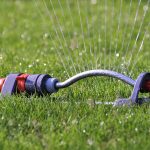
If you take only one action from this article, take this one. The moment your dog finishes urinating on the lawn, water the spot with about three litres of plain tap water from a watering can or a hose set to a gentle shower. Done within five minutes, this dilutes the nitrogen concentration to a level the grass can absorb as feed rather than damage, and you end up with a slightly greener patch instead of a brown one.
This sounds tedious and most owners assume they will not be able to keep it up. In practice, dogs are predictable. Most dogs urinate in the same two or three favourite spots in a garden, and most owners are already standing outside watching when it happens. A watering can with two or three litres left by the back door, refilled once a day, takes care of the morning and evening routine without much extra effort. For owners with a tap close to the lawn, an inexpensive watering wand fitted to the hose with a thumb valve (around £15/$19 from any garden centre) is faster still.
The branded urine neutraliser products like Yellow Spot Green (around $20 for a 32 ounce jug in the United States) and Dog Rocks (around £8/$10 for a 200g pack added to the water bowl) have a small effect at best, and several independent gardening tests have found the difference between treated and untreated dogs to be marginal. The water-on-the-spot method works on physics rather than chemistry, and it works on every dog regardless of breed, diet or age.
Mowing height and feeding for a dog-traffic lawn
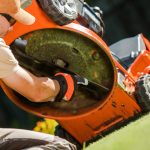
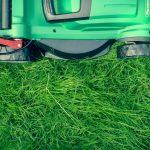
A lawn used by dogs benefits from being mowed slightly higher than the textbook recommendation. Set the mower to 4cm or even 5cm (about 1.6 to 2 inches) through the growing season rather than the 2.5cm to 3.5cm range for ornamental lawns. The longer leaf blade shades the soil, slows the rate at which urine concentrates as it dries, and gives the plant more reserves to recover from damage. A Hayter Harrier 41 set to its third notch from the bottom, a Bosch Rotak 36-650 set to setting 6 of 7, or a Honda IZY HRG416 set to position 5 will all sit in this range.
Feeding should be lighter and more frequent than on a lawn without dogs. The reason is that dog urine is already delivering huge spikes of nitrogen across the lawn, and adding a heavy granular feed on top can push parts of the lawn into the same ammonia damage zone you are trying to avoid. A liquid feed at half strength every four to six weeks, using something like Westland Liquid Lawn Feed (around £10/$13 for a one litre concentrate) or Scotts Lawn Builder (around $20 for the equivalent), spreads the nitrogen more evenly and reduces the risk of compounding urine damage.
The patch-repair routine that actually fixes spots
For existing damaged spots, the repair sequence in May is the same regardless of which seed mix you use. Rake out the dead grass from the brown patch using a spring-tine rake, going down to clean soil. Loosen the top 2cm with a hand fork. Sprinkle a handful of fresh seed mix at the rate above, scatter a thin layer of topdressing soil or sieved compost on top, water gently and cover with a square of horticultural fleece to keep birds off until germination. Most patches under 15cm across will be visibly green again within three weeks, and fully blended into the surrounding lawn within six.
If you have done all of this and the same patch keeps recurring, the issue is almost always that the dog has a favourite spot and the watering routine is not being followed in time. The fix is to retrain the dog to a designated gravel or mulch toilet area at the edge of the garden, which takes about two weeks of consistent rewards and is far less work than continuously repairing the lawn.
What to accept and what to fix
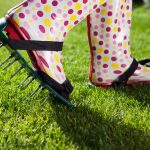
A lawn shared with a dog will never look like a show garden in May. You will always have some thinner sections along the dog’s favourite running line, and the area near the back door will compact faster than the rest of the lawn. Both of these can be addressed by aerating once a year with a hollow-tine aerator in September, oversowing in the same month with a hardwearing seed mix, and topdressing with a sandy loam to improve drainage.
The patches and the brown spots, on the other hand, can usually be eliminated within a single growing season by combining a ryegrass-fescue overseed in May, the immediate watering routine after each urination, a slightly higher mowing height, and a lighter feed schedule. Most dog owners who follow this routine for one summer find that by autumn they can stop watering every spot and the lawn keeps up with the dog on its own.