The air filter is the cheapest part on a petrol mower and the one most likely to kill the engine if you ignore it. A clean filter costs a few pounds and takes minutes to change, yet a neglected one slowly chokes the engine, wastes fuel and, in the worst case, lets grit into the cylinder and wears the engine out years early. If your mower has become hard to start, runs roughly or blows black smoke, the filter is the first thing to check, and understanding what it actually does explains why skipping it is such an expensive habit.
What a Clogged Filter Does to the Engine
A petrol engine runs on a precise mix of air and fuel. The air filter sits between the outside world and the carburettor, trapping the dust, grass and grit thrown up while you mow so that only clean air reaches the engine. As the filter loads up with debris, it restricts the airflow, and the engine ends up drawing a mixture that is too rich in fuel and too short on air. The symptoms follow directly from that: loss of power, higher fuel consumption, hard starting, rough running and black smoke from the exhaust, which is unburnt fuel the engine cannot fully combust.
The far more serious damage happens when an owner removes a filthy filter and simply runs the mower without it, or leaves a torn filter in place. With nothing to stop it, abrasive dust and grit are pulled straight into the combustion chamber, where they act like grinding paste on the cylinder walls and piston rings. That wear is permanent and cumulative: it lowers compression, burns oil and shortens the life of the engine, turning a machine that should last fifteen or twenty years into one that is worn out in a handful of seasons. The filter is, in effect, the engine’s only defence against the gritty environment it works in.
The Three Filter Types and How to Tell Them Apart
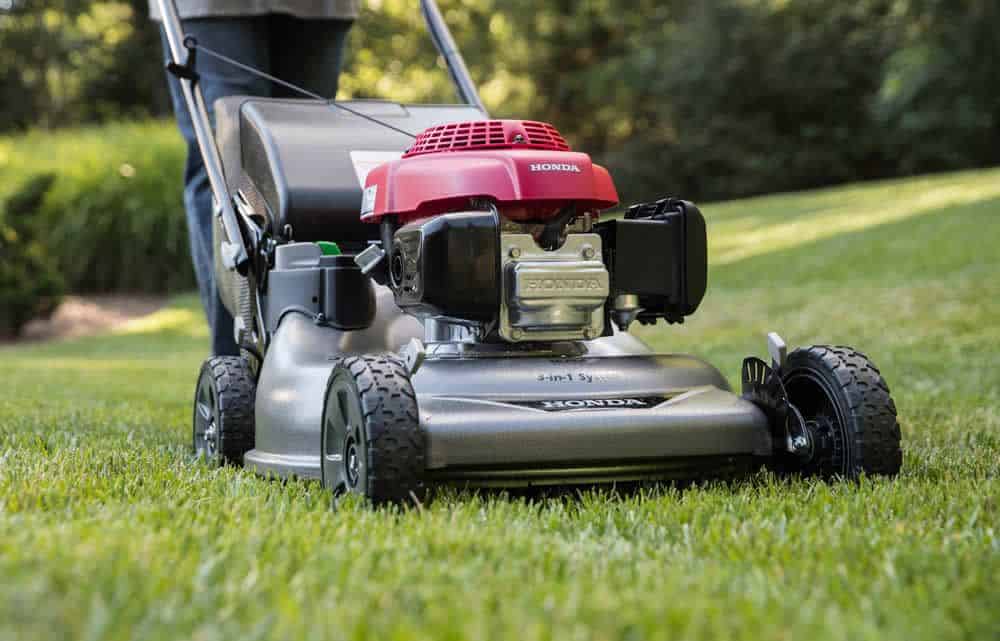
Mower engines, including the Briggs & Stratton and Honda units fitted to most machines, use one of three filter types, and the right care depends on which you have. A paper (pleated) filter is a folded cartridge of treated paper that traps dirt on its surface through microscopic pores. A foam filter is a block of sponge that catches debris through a film of oil held in the foam. A dual-element filter combines the two, with a foam pre-cleaner wrapped around a paper cartridge so the foam catches the coarse material and extends the life of the more expensive paper element.
The distinction is important because paper and foam are serviced in opposite ways, and treating one like the other does real harm. A paper filter must never be washed or cleaned with compressed air, because forcing air or water through it tears the paper fibres and ruins its ability to filter, after which it either blocks completely or lets grit straight through. Once a paper filter is dirty, you replace it. A foam filter, on the other hand, is designed to be washed and re-oiled, and a foam filter run dry without oil traps only the largest particles and lets the fine, damaging dust through.
How Often to Service It, and How
As a rule, check the filter at the start of each season and inspect it every few uses, then service or replace it every 25 hours of running or every three months, whichever comes first. In dry, dusty conditions, or if you mow a large area, do it more often, because the filter loads up far faster than the calendar suggests. On a dual-element filter, clean or replace the foam pre-cleaner every 25 hours or once a season and change the paper cartridge roughly every 100 hours. These intervals come straight from the engine makers, and they are deliberately conservative because a fresh filter is so much cheaper than the damage a clogged one causes.
To service a foam filter, lift it out, wash it in warm water with a little washing-up liquid until the water runs clear, squeeze it gently (never wring or twist it, which tears the foam) and let it dry fully. Then work a small amount of clean engine oil through it and squeeze out the excess so it is lightly coated but not dripping, because the oil is what actually traps the fine dust. To replace a paper filter, simply lift out the old cartridge, wipe out the housing with a dry cloth so no debris falls into the intake, and drop the new one in. Always stop the engine and, on most mowers, disconnect the spark plug lead before opening the filter housing.
Replacement filters are remarkably cheap. A foam element typically costs around £5 to £8/$6 to $10, and a paper cartridge around £8 to £15/$10 to $18, with genuine Briggs & Stratton and Honda parts at the upper end and pattern parts cheaper. You will find them at Screwfix, B&Q, Home Depot, Amazon and any mower dealer; take the old filter or your engine’s model number with you, since the part is specific to the engine rather than the mower brand.
There is a knock-on effect that catches a lot of owners by surprise. When a clogged filter forces the engine to run rich, the excess fuel washes oil off the cylinder walls and can leave deposits in the carburettor, so a problem that started as a couple of pounds’ worth of dirty filter turns into a carburettor strip-down or a callout to a mower service. Dry summer weather makes it worse, because the fine dust thrown up from a parched lawn loads a filter far faster than the damp grass of spring, which is exactly why early summer is the moment to check it. If your mower started the season fine but has lost its edge as the weather dried out, the filter is the prime suspect.
The Mistakes That Cost the Most
A few common errors do more harm than simply leaving a dirty filter alone. Blowing out a paper filter with an airline or tapping it on the bench feels productive but ruptures the paper and destroys its filtering, so it should be replaced instead. Running a foam filter dry, or after a wash without re-oiling it, lets fine grit through to the engine. Over-oiling a foam filter is the opposite mistake and chokes the airflow, producing the same rich-running and black-smoke symptoms as a clogged filter. And running with no filter at all, even for one quick cut, is the single most damaging thing you can do, because that is when the most grit reaches the cylinder.
None of this is difficult or expensive, which is what makes filter neglect such a waste. Spend the few minutes and few pounds each season, match the cleaning method to the filter type, and the engine breathes clean air, starts on the first or second pull, burns fuel efficiently and lasts for years. Skip it, and you trade a couple of pounds now for a tired, smoky, hard-starting engine later, and eventually for a replacement that costs many times what a lifetime of filters ever would.
The easiest way to stay on top of it is to fold the filter into a single start-of-season service. When you change the oil and check or replace the spark plug each spring, inspect the air filter at the same time and keep a spare on the shelf so you are never tempted to run a dirty one for just one more cut. A foam filter washed and re-oiled, a paper cartridge swapped when it darkens, and a quick wipe of the housing take only a few minutes but keep clean air flowing all season. Treat the filter as the small, regular job it is meant to be, rather than the part you only think about when the engine is already struggling, and it quietly does its job of protecting everything downstream of it.