Crabgrass is the single most frustrating weed in a summer lawn because by the time you see it, you have already missed your best chance to stop it. The plant only becomes visible in July or August, when its long, ground-hugging shoots crawl out from low rosettes and start choking finer grasses. By then it has been growing quietly since spring, and the only realistic option left is to spot-treat or pull it. The smart move happens months earlier, when crabgrass seeds are still dormant in the top few centimetres of soil and a single well-timed treatment can stop almost the entire generation before it gets off the starting line.
The window for pre-emergent control is short and depends on soil temperature, not the calendar. Get the timing right and you cut the population by 80 per cent or more. Miss the window by a week and the treatment may as well be water. Understanding when soil is warming through the germination range is what separates a clean June lawn from one that loses its battle by August.
Why Crabgrass Wins the Summer if You Let It
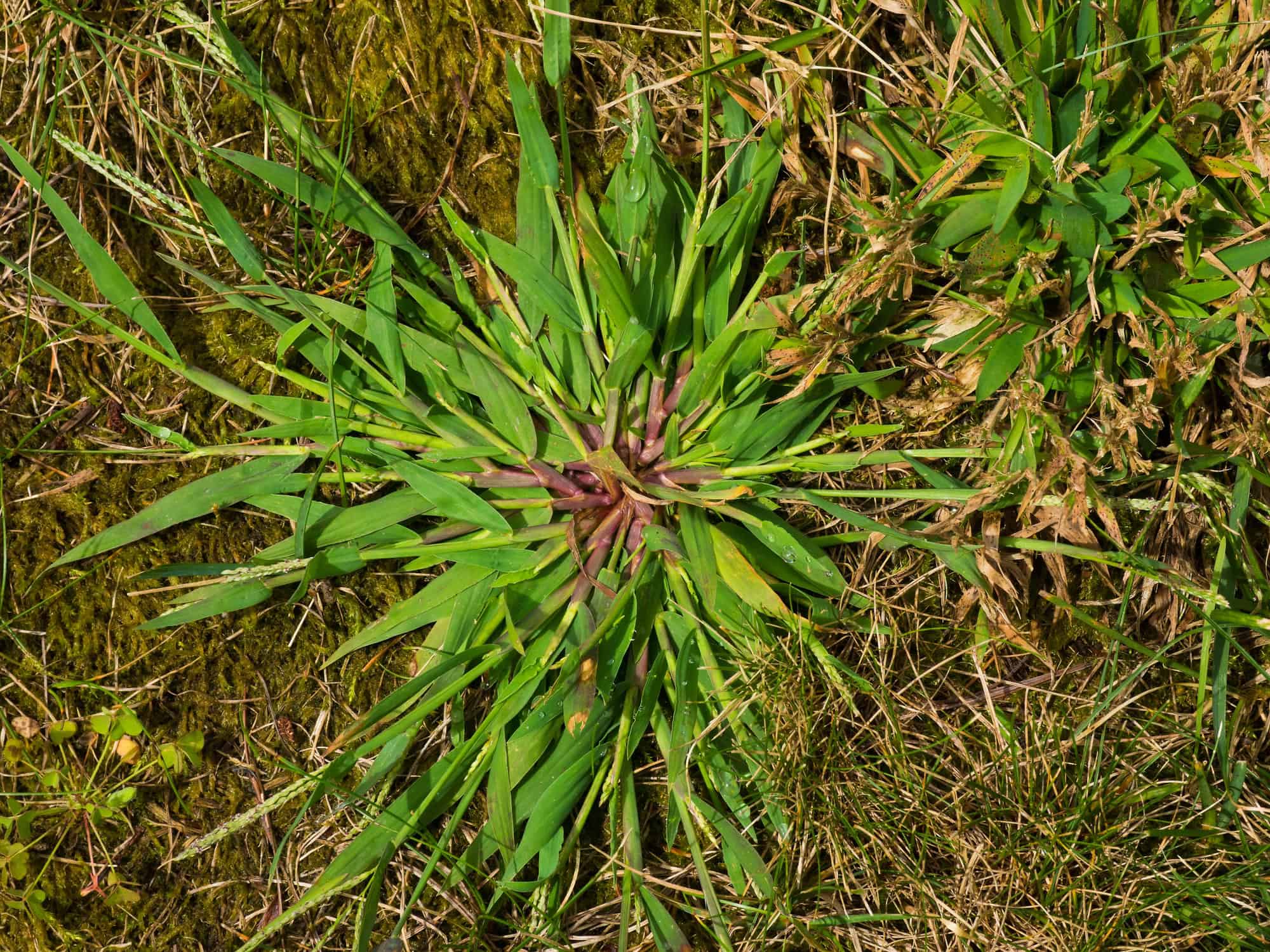
Crabgrass (Digitaria sanguinalis and Digitaria ischaemum) is an annual grass weed that completes its entire life cycle in one season. Each plant produces 150,000 seeds over a summer, and those seeds remain viable in the soil for three to five years. That means a single ignored plant becomes a multi-year problem. The seedlings germinate when soil temperatures at a 5cm (2 inch) depth hold steady between 13 and 18 degrees C (55 and 65 degrees F) for several days, which in temperate gardens means anywhere from early April in mild southern regions to mid-May in cooler northern ones.
The Michigan State University turf extension service has tracked crabgrass germination closely for years and reports that the first flush of germination begins when soil temperatures hit 13 degrees C (55 degrees F) and peaks between 16 and 21 degrees C (60 and 70 degrees F). This is exactly the same window in which most lawn grasses are putting out their first strong spring growth, which is why crabgrass is so destructive: it competes for the same soil resources at the same time, but it does so from a low, sprawling habit that creeps under the canopy of taller grasses and snuffs them out from below.
Once a crabgrass plant gets going, every node where the stem touches the soil produces new roots. A single plant can cover 30cm (about 12 inches) of ground in six weeks. By August, the centre of the rosette is dead, the outer ring is seeding, and the bare patch left behind becomes the perfect site for next year’s seed to land. Generic articles tell you to pull the plant. Effective gardeners know that pulling alone, without preventing the next generation, just rotates the problem season after season.
The Soil Temperature Trigger You Need to Track
The single most useful number for crabgrass control is the soil temperature at a 5cm (2 inch) depth, taken at the same time each morning over three consecutive days. Apply pre-emergent herbicide when that reading sits consistently between 10 and 13 degrees C (50 and 55 degrees F) for three to five days in a row. That is the window where seeds are starting to shift dormancy but have not yet germinated. The herbicide forms a barrier in the top centimetre or two of soil and intercepts the seedling root as it emerges.
A soil thermometer costs around £8/$10 at most garden centres and is the only tool that gives you an honest answer. Air temperature is misleading because air warms several days faster than soil, and weather apps almost never show soil temperature. Take the reading in an unshaded part of the lawn at 9am, push the probe 5cm (2 inches) into the soil, and wait two minutes for the reading to settle. Repeat for three mornings. If you see three readings between 10 and 13 degrees C (50 and 55 degrees F), you are in the window and you should treat that day or the next.
A useful visual cue from extension services is the bloom timing of forsythia, lilac, and redbud trees. Ohio State University research suggests that lilac and redbud bloom correlates more closely with crabgrass germination than forsythia. When you see lilac flowers opening, your window is already closing. Treatment should be on the ground before then.
Which Pre-Emergent to Use and How to Apply It
The two most widely available active ingredients for home pre-emergent crabgrass control are pendimethalin and prodiamine. Pendimethalin is the active in Scotts Turf Builder Halts (around £24/$22 for 5,000 sq ft / about 465 square metres at Home Depot or Amazon US, with similar dimethanamid-based products at B&Q under the Resolva and Doff brands). Prodiamine is sold in Barricade-branded products from suppliers like Sunday and Yard Mastery (around £30/$35) and lasts a fortnight longer in the soil than pendimethalin.
Granular formulas are the easiest to apply correctly on a home lawn. Use a Scotts Easy Hand-Held Broadcast Spreader (around £25/$30) for small gardens up to 100 square metres, or a rotary push spreader like the Wickes 25kg model (around £45/$55) for anything larger. Walk at a steady pace in parallel strips with about 20 per cent overlap so you do not leave untreated gaps. Apply when the lawn is dry, then water in within 24 hours with around 5mm of water (roughly fifteen minutes from a typical oscillating sprinkler). The water activates the herbicide and washes it into the top centimetre of soil where it forms the barrier.
Pre-emergents only work on seeds that have not yet germinated. They have no effect on existing crabgrass plants. If you have last year’s crabgrass already coming up, the pre-emergent will not touch it. Pull the existing plants out by hand first, taking care to lift the entire crown, and then apply the pre-emergent to prevent next year’s generation.
The Mowing Trick That Doubles Your Defence
Pre-emergent herbicide is half the battle. The other half is mowing high. Crabgrass needs sunlight to reach the soil surface to trigger germination. Researchers at the University of Maryland turf programme found that lawns mown at 75mm (3 inches) have roughly a third the crabgrass pressure of lawns mown at 38mm (1.5 inches). The longer grass canopy blocks light from the surface and changes the temperature regime in the top centimetre of soil so it never quite hits the germination window.
Set a rotary mower to its second-highest setting from late April onwards. For a cool-season mix of fescues and ryegrass, 60 to 75mm (2.5 to 3 inches) is ideal. A sharp blade matters more than mower brand: a torn blade tip from a dull blade gives crabgrass a tiny extra advantage by letting more light through to the soil. Sharpen blades every 20 hours of mowing time, or twice a season, which on a Husqvarna LC141i or Bosch UniversalRotak 36-560 takes about fifteen minutes with a flat file.
The same lawn that gets a well-timed pre-emergent and a high cut in spring will need almost no spot-treatment in summer. The plants that do break through can be pulled by hand or spot-sprayed with a selective post-emergent like Tenacity (mesotrione) or a non-selective like Roundup Path & Drive (glyphosate) used surgically with a wick applicator.
What Happens If You Skip the Pre-Emergent
The cost of doing nothing about crabgrass compounds every year. Year one looks tolerable: a few sprawling patches in July, easy to pull, manageable. Year two has three times as many patches and they appear earlier. By year three, the lawn has so many dormant seeds in the top 5cm (2 inches) of soil that every bare patch from any cause turns into crabgrass within a fortnight. The seed bank is the real enemy, not the visible plants.
Post-emergent control is the expensive route. Selective herbicides for crabgrass in cool-season turf cost around £35/$40 per litre, treat a few hundred square metres each, and have to be applied multiple times to take down a mature infestation. Most importantly, they leave dead crabgrass patches that need overseeding before autumn or the cycle begins again. One properly timed pre-emergent treatment in spring costs less than a single bottle of post-emergent and prevents months of follow-up work.
The decision is the same every spring: spend twenty minutes with a soil thermometer in April or May, half an hour applying a granular pre-emergent in the right window, and then enjoy a summer lawn that stays in finer grass. The alternative is to spend the rest of the year chasing the consequences.