- A repair quote that is more than half the price of a comparable new mower is the point to replace it.
- Old petrol, a fouled spark plug, a clogged air filter, a dull blade and a slipping belt are minor faults, and each costs very little to put right.
- A bent shaft, a cracked body and a failed engine are the faults that can end a mower, so rule out the cheap ones first.
Before You Bin It, Find Out What the Fault Actually Costs
A mower that will not start, or that tears the grass instead of cutting it, looks finished. It rarely is. The fix is a two-step test. First, rule out the cheap faults: stale petrol, a dirty spark plug, a clogged air filter, a blunt blade, a tired belt. Second, if the fault is real, put the repair quote next to half the price of a comparable new mower. If the quote is higher, buy new. If it is lower, repair.
Too many fixable mowers go to the scrap heap. Family Handyman says most repairs a broken mower needs are minor, easy to do yourself and far cheaper than a new machine. The rule on the other side comes from Consumer Reports: replace any machine if the repair will cost more than 50 percent of the cost of a comparable new model.
November suits the job. The mower is not needed for months and autumn stock clearance brings deals as the days shorten. You have time to diagnose properly instead of panic-buying in the first warm weekend of spring.
The Faults That Look Fatal and Cost Almost Nothing
Start with the fuel. Petrol that has sat in the tank all season goes stale, and a mower with stale fuel either will not start or starts and then dies. The cause is the ethanol in ordinary petrol. Ethanol absorbs moisture from the air, so water condenses inside the tank, and as that fuel is pulled through the system, parts deteriorate and the engine gums up. Left over winter, the fuel degrades and deposits sink to the bottom. The repair is to drain the old petrol and fill with fresh. The full routine is in fix for a stalling mower. Add a fuel stabiliser to the new fuel, which slows the evaporation of water and keeps the petrol fresh. Certain additives might also help keep ethanol from harming internal parts.
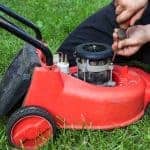
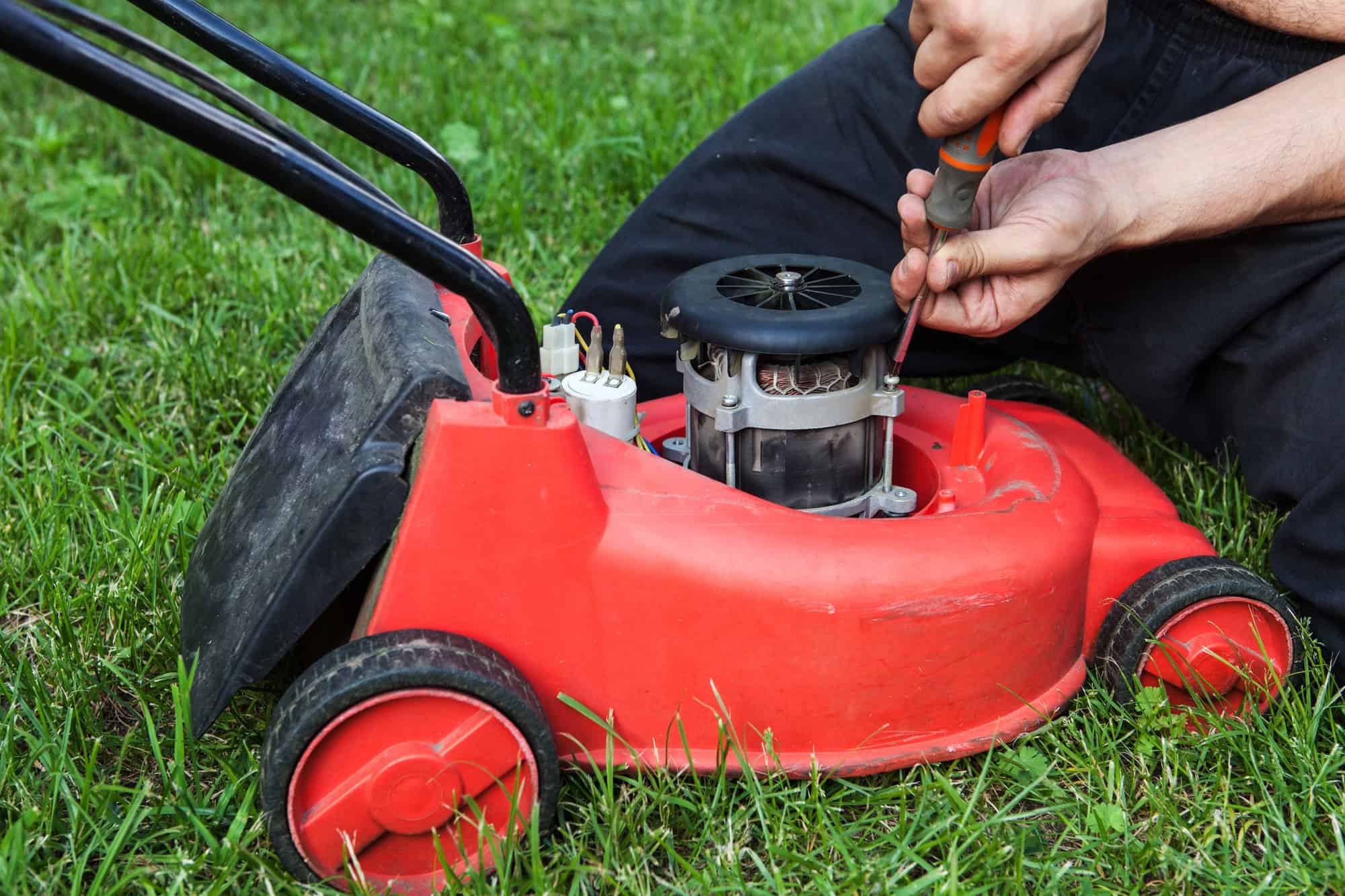
Next, the spark plug. Carbon builds up on a plug until it can no longer light the fuel and air mixture cleanly, and the engine sputters, stalls or refuses to start. A new plug costs about $5 (£3.73). With the mower switched off, look at the plug. One that is only dirty can be cleaned and its gap reset with a gap tool, while one that is damaged, corroded or caked in deposits should be replaced. Replace it every year either way.
The air filter is the third cheap fix. A clean filter keeps the fuel and air mix right, so the mower burns less petrol, and a filthy one is cheap to swap. If your mower is also guzzling fuel, the hard-to-start and thirsty mower fixes walk through the air filter check step by step.
Then look at the cut itself. Signs of a dull blade are an uneven cut, a straggly lawn and a longer time to mow. A blunt blade tears the grass instead of slicing it, leaving ragged, patchy edges. Sharpening cost about $10 (£7.46) a time when Consumer Reports priced it in 2014, and it suggests three sharpenings a year. If you sharpen the blade yourself, remove any power source and wear thick gloves. Clumps of grass left behind, a hard push and heavy vibration point to a clogged deck instead. Grass and debris packed under the deck choke the airflow, so scrape or spray the underside clean after each mow, or monthly at the least. Never turn a hose on an electric mower, as water can reach the electrics.
Finally, the belt on a self-propelled mower. If the drive feels weak, the blade slows or you hear a squeak, check the belt with the engine off. A loose belt might only need tightening. A cracked or worn belt needs replacing, and fitting one is a complex job, so call a professional if you are unsure. Check also that the drive system is adjusted to engage fully.
Not one of these touches the expensive core of the machine, the engine or motor.
The Half-Price Rule, Worked in Pounds and Dollars
Once the cheap faults are ruled out, run the numbers. Take the price of a comparable new mower, halve it and compare it with the quote.
The current price floor is £75 ($100.50) for a corded electric mower and £130 ($174.20) for a cordless one. Natalie Brown, Which? lawn mower expert, says:
“Our testing reveals you can buy great corded electric mowers from as little as £75 and cordless models that perform as well as the high-end models from £130, plus they’re all lightweight, which makes them easy to use, carry and store. Look for our Best Buy and Great Value recommendations.”
Run the rule on those. Half of £75 is £37.50 ($50.25), so a quote above that on a basic corded mower tips it into replacement. Half of £130 is £65 ($87.10), the line for a basic cordless. A similar line shows up in dollars: if you bought a used mower cheaply or a budget pick under $200 (£149.25), a new model can be the better buy for any repair bill above $75 (£56).
The rule bends as the price climbs. Riding mowers have a much higher price, with reliable budget picks starting around $1,500 (£1,119), so repairs costing several hundred dollars (hundreds of pounds) are often worth it. Natalie Brown, Which? lawn mower expert, describes the build gap between cheap and dear mowers:
“Cheaper mowers often have plastic decks and components with less powerful engines, while more expensive models come with aluminium or steel decks and commercial-grade engines.”
A cheap mower has less to save. A better-built one has a deck and engine worth keeping, so the same repair quote means something different.
Age is the second test. A survey of 30,000 Consumer Reports subscribers suggests ditching most broken mowers after six years, based on typical prices and repair costs. The more you spend on a mower, the longer it usually pays to repair it, especially a pricier zero-turn-radius rider. That survey dates from 2014, so treat six years as a rule of thumb and not a deadline. Family Handyman puts the point at more than a decade, as mowers have improved over the years.
The Faults That Really Do End a Mower
Three faults change the sum. A bent shaft, caused by hitting a rock or other debris, is the first. A cracked body, from the mower being dropped, is the second. Internal engine problems that could need a replacement engine are the third. Family Handyman says these might be prohibitively expensive to fix, if they can be fixed at all. On a riding mower, a replacement engine is the point where it can pay to buy a new ride-on instead of sinking more money into the old one.
A cordless mower has its own cost trap, the battery. A battery left to deplete and sit at 0 percent might fail to hold any charge when you need it again. If it dies for good, a replacement gets the mower going, but the price can surprise you. Check the price of a replacement battery before you decide, and run it through the half-price rule like any other part. Never buy a cordless mower with a battery that cannot be removed or replaced.
A much shorter run time, or a battery that takes longer to charge, signals a tiring battery. Clean the connections and store the mower somewhere clean and dry before you give up on it. Extreme temperatures shorten battery life, so keep the battery indoors, away from a hot greenhouse or shed.
What to Ask a Repair Shop Before You Say Yes
The quote is the number the half-price rule needs, so get it in writing before any work starts. Ask for three figures: the diagnosis fee, the price of the parts and the labour. Then ask which part has failed and whether the fault is one of the cheap ones above. If it is a belt, a plug or a blade, you can compare the quote with the part prices above. Ask too what else on the machine is worn.
If the quote is above half the price of a comparable new mower, say no and buy new. If you replace the mower, buy at the right time. Spring and autumn are the best seasons to buy. Retailers often have deals in February and March, before demand peaks, and again in autumn as stores clear space for other seasonal equipment.
How to Stop It Happening Again
A 2023 Which? survey of 5,387 mower owners found that more than one in ten mowers did not make it past seven years without some fault. With proper maintenance and care a mower should last at least a decade. Most of that care costs almost nothing.
At the end of the season, siphon out the remaining petrol or add a stabiliser, and change the oil once a season. The winter storage routine for a mower covers each step. A good rule of thumb for oil: change it at the start of each mowing season or after 50 hours of use, whichever comes first. Check the air filter and spark plug at the same time and replace both once a year.
On a cordless mower, charge the battery a few times in the off season, while the mower sits idle. Store it indoors, away from extremes of temperature.
Walk the lawn before each mow for stones and sticks. They dull a sharp blade at best and do serious damage at worst.
When to give up and call someone: if the belt needs replacing and you are unsure, if the shaft is bent, if the body is cracked or if the engine has failed. Get the written quote, run the half-price rule and decide with the figures in front of you.