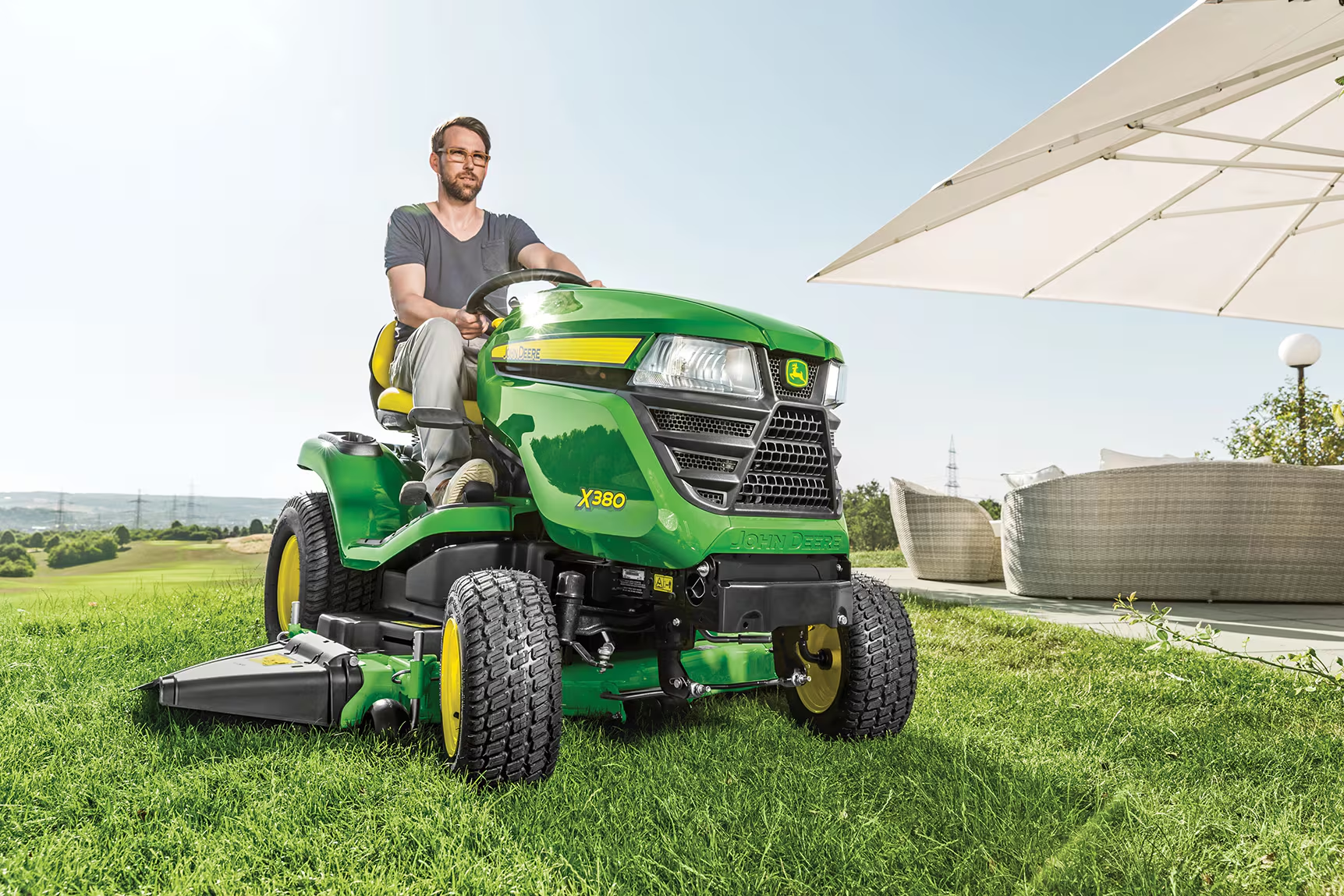
For a home garden, the John Deere machine you actually want is a ride-on from the 100 Series or the X300 Select Series, not the commercial walk-behind mowers that share the same green and yellow badge. Those walk-behinds, with their 36 to 61 inch (91 to 155cm) decks and price tags that climb past £8,000/$10,000, are built for grounds crews mowing sports fields all day. The home buyer is choosing between two tiers of lawn tractor, and the right one depends almost entirely on how big your lawn is, how flat it is, and whether you plan to tow or collect clippings.
Where John Deere Actually Fits in a Home Garden
The first question is whether you need a ride-on at all. A push or self-propelled walk-behind mower cuts a strip roughly 40 to 53cm (16 to 21 inches) wide and clears around one square metre with each forward pass. A 42 inch (107cm) ride-on deck clears more than double that area per pass, and you are sitting down while it happens. The practical dividing line sits at around 1,000 square metres, about a quarter of an acre. Below that, a quality self-propelled walk-behind often does the job in less time than it takes to wheel a tractor out of the shed. Above it, a walk-behind turns mowing into an hour-long chore, and that is where a John Deere lawn tractor earns its price.
John Deere splits its residential ride-ons into the 100 Series at the entry end and the X300 Select Series in the middle, with the heavier X500 and X700 ranges sitting above them for estates and rough ground. For most home gardens the decision stops at those first two. The 100 Series spans roughly £1,400 to £3,400/$1,590 to $3,900 depending on engine and deck, with the popular S100 (a 17.5 horsepower single-cylinder machine on a 42 inch deck) landing at about £2,200/$2,599. The X300 Select Series runs from around £3,300 to £6,400/$3,799 to $7,499. That gap is not just marketing. It buys a stronger deck, a longer warranty, and components rated for far more hours of work.
The 100 Series: The Sensible Entry Point
The 100 Series is where most first-time ride-on buyers should start. The line runs from the S100 up through the S130, S160 and S180, with engines from 17.5 to around 25 horsepower and decks from 42 to 54 inches (107 to 137cm). Every model uses a hydrostatic transmission with the TwinTouch foot pedal system, so there is no clutch and no gear lever. You press one pedal to go forward, the other to reverse, and the machine matches its speed to your foot. For anyone moving up from a walk-behind, that alone removes most of the learning curve.
The number that decides how well a 100 Series machine cuts is engine type, not just horsepower. The S100 runs a single-cylinder engine, which is fine on a flat, dry, smaller lawn. Step up to the S160 or S180 and you get a V-twin in the 22 to 25 horsepower range. The reason this is worth the extra outlay on a thicker or damper lawn comes down to blade tip speed. When a blade meets dense, wet grass it loads up and slows, and a slowing blade tears rather than shears. Torn grass loses more moisture through its ragged ends and browns at the tips within a day or two. A V-twin holds its speed under that load, so the blade keeps shearing cleanly and the cut stays green. The 100 Series uses the stamped Accel Deep deck, pressed from a single sheet of steel into a deeper dome that keeps clippings airborne longer for a more even discharge or a finer mulch.
The trade-off is the warranty. The 100 Series carries a two-year or 120-hour bumper-to-bumper cover. For a home garden mown 25 to 30 times a year at half an hour a cut, that 120 hours covers roughly eight seasons, so it is rarely a limit in practice. But it does tell you what Deere expects of the machine: steady domestic use, not daily grind.
The X300 Select Series: When It Pays to Step Up
The X300 Select Series looks similar from a distance but is built for owners who ask more of a mower. The headline difference is the warranty: four years or 300 hours, more than double the hours of the 100 Series. That extra rating reflects heavier internals, including a cast-iron front axle in place of the lighter component lower down the range, full-pressure lubrication on some engines, and a thicker, more durable Accel Deep deck in 42 to 54 inch sizes. The X300 machines also handle slopes and towing far better, because the stronger axle and transmission cope with the side loads and weight that flatten a lighter tractor over time.
You step up to an X300 for one of three reasons: your lawn is large enough that you will rack up real hours, your ground slopes enough to stress a lighter machine, or you want to tow a roller, spreader or trailer through the season. If none of those apply, the extra £1,500 to £3,000/$1,800 to $3,600 over a 100 Series buys durability you may never call on. If even one applies, it is money that keeps the machine working long after a lighter tractor would be loose and worn.
Matching the Machine to Your Garden
Use lawn size as your first filter. For a flat lawn under about 800 square metres, a good self-propelled walk-behind will often serve you better than any ride-on, and if you are set on the brand the S100 is the floor. From 800 to 2,000 square metres, an S130 or S160 on a 42 to 48 inch deck hits the sweet spot of speed and price. Above 2,000 square metres, or on slopes, or if you tow, move to the X350 or X380 in the X300 range. As a rough guide to the time saved, a 42 inch deck mowing a 2,000 square metre lawn at a steady walking pace clears it in about 25 to 30 minutes, against the better part of an hour with a 19 inch (48cm) walk-behind.
Before you buy, measure the narrowest gate or gap the machine must pass through. A 48 inch deck needs roughly 52 inches (132cm) of clearance, and buyers are caught out every season by a tractor that will not fit down the side return to the back garden. The second common mistake is fitting a single-cylinder engine to a big, damp lawn. It bogs down in thick growth, tears the grass, and leaves uncut stringers that you have to go back over, which wastes the time the ride-on was meant to save. The third is skipping the service intervals: change the engine oil at the first five hours and then every 50 hours, sharpen the blades at least twice a season, and check the tyre pressures before each mow. A soft tyre on one side tilts the deck a few degrees, and that tilt scalps a brown stripe across the lawn that takes weeks to recover. Skipped servicing also voids the warranty that you paid a premium to get.
Get the match right and a John Deere lawn tractor is one of the few garden machines that holds strong resale value years down the line. Get it wrong and you end up with a machine too big to store, too small in the engine to cut cleanly, or worn out early because the servicing slipped. Size the lawn, measure the gate, pick the engine for your grass, and the rest of the decision falls into place.
Attachments and Running Costs Worth Knowing
Part of the appeal of a lawn tractor is what you can hang off it, and this is where the running costs creep in. A rear collector or power-flow bagging system, which lifts clippings up and into a hopper, typically adds £350 to £600/$420 to $720 and is worth it if you want a clean, collected finish or if you are clearing leaves in autumn. A tow-behind spreader for feed and seed runs around £120 to £200/$140 to $240 and turns a fiddly hand job into a ten-minute pass. If you mostly want to leave the clippings on the lawn to feed it, a mulching kit that blocks the discharge and recirculates the cut grass costs around £40 to £80/$50 to $100 and saves you emptying a hopper at all.
On running costs, a petrol lawn tractor uses very little fuel for the work it does, but it does need seasonal care: fresh oil and filter once a year, a clean or replaced air filter, a new spark plug every other season, and a battery that will need a trickle charge over winter or it will be flat by spring. Budget a modest amount each year for these consumables and a set of replacement blades, and a well-kept 100 Series or X300 will run reliably for well over a decade. That long, dependable life is the real reason the green and yellow machines hold their value, and it is why buying the right size and engine the first time saves far more than the price difference between models.