Most lawn owners reach for the cheapest box of fertiliser at the garden centre, scatter it on, and wonder why their grass surges green for a fortnight and then fades back to yellow. That boom-and-bust cycle is the hallmark of a quick-release synthetic feed, and it is one of the most common reasons lawns look inconsistent through the season. Organic slow-release fertiliser works differently. It feeds the soil alongside the grass, delivers nutrients at a pace the plant can actually use, and builds long-term health rather than short-term colour. The result is a lawn that stays green for weeks rather than days, grows at a steady rate, and gets stronger with every application rather than more dependent on the next one.
This guide covers how organic slow-release fertiliser works, which products are worth buying, how to apply them, and why switching from synthetic to organic could be the single best change you make to your lawn care routine this year.
What Makes a Fertiliser “Organic” and “Slow Release”
An organic fertiliser is one derived from natural plant, animal, or mineral sources rather than synthesised in a factory. Common organic fertiliser ingredients include bone meal, blood meal, fish meal, seaweed extract, poultry manure, feather meal, and composted plant material. Each of these contains nitrogen, phosphorus, potassium, and various micronutrients in naturally occurring ratios.
The “slow release” part refers to how the nutrients become available to the grass. In a synthetic fertiliser, the nitrogen is in a water-soluble chemical form such as ammonium nitrate or urea that dissolves immediately when watered and is available to the roots within hours. In an organic fertiliser, the nitrogen is locked up in complex organic molecules, proteins, amino acids, and other compounds that must be broken down by soil microorganisms before the grass can absorb them. This breakdown happens gradually over weeks to months, depending on soil temperature, moisture, and microbial activity.
The practical effect is that organic slow release fertiliser feeds the lawn at a lower, steadier rate over a much longer period. Instead of a spike of nitrogen followed by a crash, you get a gentle, sustained supply that the grass uses as fast as the microbes release it. This produces more even growth, less mowing, fewer clippings, and a more consistent colour through the season.
Organic Slow Release Fertiliser vs Synthetic: The Real Differences
The debate between organic and synthetic fertiliser is not as black-and-white as some websites suggest. Both types deliver the same nutrients to the grass. The nitrogen atom in bone meal is chemically identical to the nitrogen atom in ammonium sulphate. The grass does not know or care where it came from. The differences lie in how the nutrients are delivered, what else comes with them, and what happens to the soil over time.
Feeding Pattern
Synthetic quick-release fertilisers deliver a large dose of nitrogen in a short period, typically 7 to 14 days. This produces rapid greening and a visible growth spurt, but the effect fades quickly and the lawn can look worse than before the application once the nitrogen runs out. Organic slow release fertiliser delivers nitrogen over 6 to 12 weeks, producing a gentler but much longer-lasting response. You feed less often and the results are more consistent.
Soil Health
This is where organic fertilisers have their biggest advantage. The organic matter in the product feeds soil microorganisms, earthworms, and beneficial fungi in addition to the grass. Over time, this builds a healthier, more biologically active soil that is better at retaining moisture, cycling nutrients, and resisting disease. Synthetic fertilisers provide no organic matter and, if overused, can reduce microbial populations and increase the lawn’s dependence on artificial inputs. Our guide on soil health explains why this is so important for long-term lawn quality.
Burn Risk
Synthetic fertilisers, particularly those high in ammonium or urea, can scorch the grass if over-applied or if they sit on wet leaves in warm weather. The concentrated salts draw moisture out of the plant cells and cause brown, burnt patches. Organic slow release fertiliser has a very low burn risk because the nutrients are released gradually and the concentration at any given moment is much lower. This makes organic products more forgiving of imprecise application, which is a genuine advantage for anyone spreading by hand rather than with a calibrated spreader.
Environmental Impact
Synthetic nitrogen that is not absorbed by the grass can leach through the soil into groundwater or run off into watercourses, contributing to algal blooms and water pollution. Organic nitrogen is released more slowly and is more likely to be absorbed before it has a chance to leach. Organic fertilisers also improve soil structure, which increases water infiltration and reduces surface runoff. For lawn owners pursuing an eco-friendly lawn care approach, organic fertiliser is the obvious choice.
Cost
Organic fertilisers are more expensive per kilogram than synthetic equivalents. A bag of organic lawn feed typically costs two to three times as much as a similar-sized bag of synthetic feed covering the same area. However, you need fewer applications per season because the slow release lasts longer, and the soil health improvements reduce the need for other inputs such as top-dressing, disease treatment, and supplementary watering over time. The total annual cost difference is smaller than the per-bag price suggests.
The Best Organic Slow Release Fertiliser Ingredients
Not all organic fertilisers are created equal. The ingredient list on the back of the bag tells you a lot about what you are getting. Here are the most common organic ingredients and what each brings to the lawn.
Blood, Fish, and Bone Meal
This is the classic all-rounder in UK organic lawn care. Blood meal provides fast-acting nitrogen (around 12 to 14 percent), fish meal adds phosphorus and slower-release nitrogen, and bone meal contributes phosphorus and calcium. A combined BFB product typically has an NPK ratio of around 5-5-6, which is well balanced for general lawn feeding. It is widely available, reasonably priced, and has been used by professional gardeners for generations.
Poultry Manure Pellets
Pelleted chicken manure is one of the most popular organic lawn feeds in the UK. It contains around 4 to 5 percent nitrogen, 3 percent phosphorus, and 2 percent potassium, along with a range of micronutrients. The pellet form makes it easy to spread evenly and the processing removes pathogens. The nitrogen is released over 6 to 8 weeks. The downside is the smell, which can be noticeable for a day or two after application, particularly in warm, damp conditions.
Seaweed Extract
Seaweed is lower in NPK than most other organic fertiliser ingredients, typically around 1-0-1, but it is rich in micronutrients, amino acids, and natural growth hormones that promote root development and stress tolerance. It is best used as a supplement alongside a higher-NPK organic feed rather than as a standalone fertiliser. Liquid seaweed applied as a foliar spray is particularly effective for giving the lawn a boost at the start of the growing season.
Feather Meal
A byproduct of the poultry industry, feather meal is very high in nitrogen (around 12 to 15 percent) and breaks down slowly over 8 to 12 weeks. It is a superb nitrogen source for lawns that need a sustained green-up without the burn risk of synthetic urea. It is less commonly available at retail level but is used in many professional organic fertiliser blends.
Composted Green Waste
Composted garden and food waste is lower in nutrients than animal-based products, typically around 1-1-1, but it provides a large amount of organic matter that improves soil structure, water retention, and microbial activity. It is best applied as a compost top-dressing rather than as a granular fertiliser, and it works well in combination with a more concentrated organic feed.
When to Apply Organic Slow Release Fertiliser
The timing is slightly different from synthetic fertiliser because the nutrients need microbial activity in the soil to become available. Microbes are most active when soil temperatures are above 10 degrees Celsius, so there is no point applying organic fertiliser to a cold winter soil. The nutrients will sit there unused until the soil warms up.
For most UK lawns, the best schedule is three applications per year. The first in mid to late March, when soil temperatures are rising through 8 to 10 degrees and the grass is beginning to grow. The second in early June, to sustain the lawn through its main growing period. The third in early September, using a formulation with a higher potassium-to-nitrogen ratio to prepare the grass for winter.
This is a simpler schedule than many synthetic feeding programmes, which often call for four or five applications. Because the organic product feeds the lawn for 6 to 12 weeks per application, three feeds cover the entire growing season with overlap rather than gaps. Our article on fertilising fundamentals explains how to adjust the timing based on your soil type and local climate.
How to Apply Organic Slow Release Fertiliser
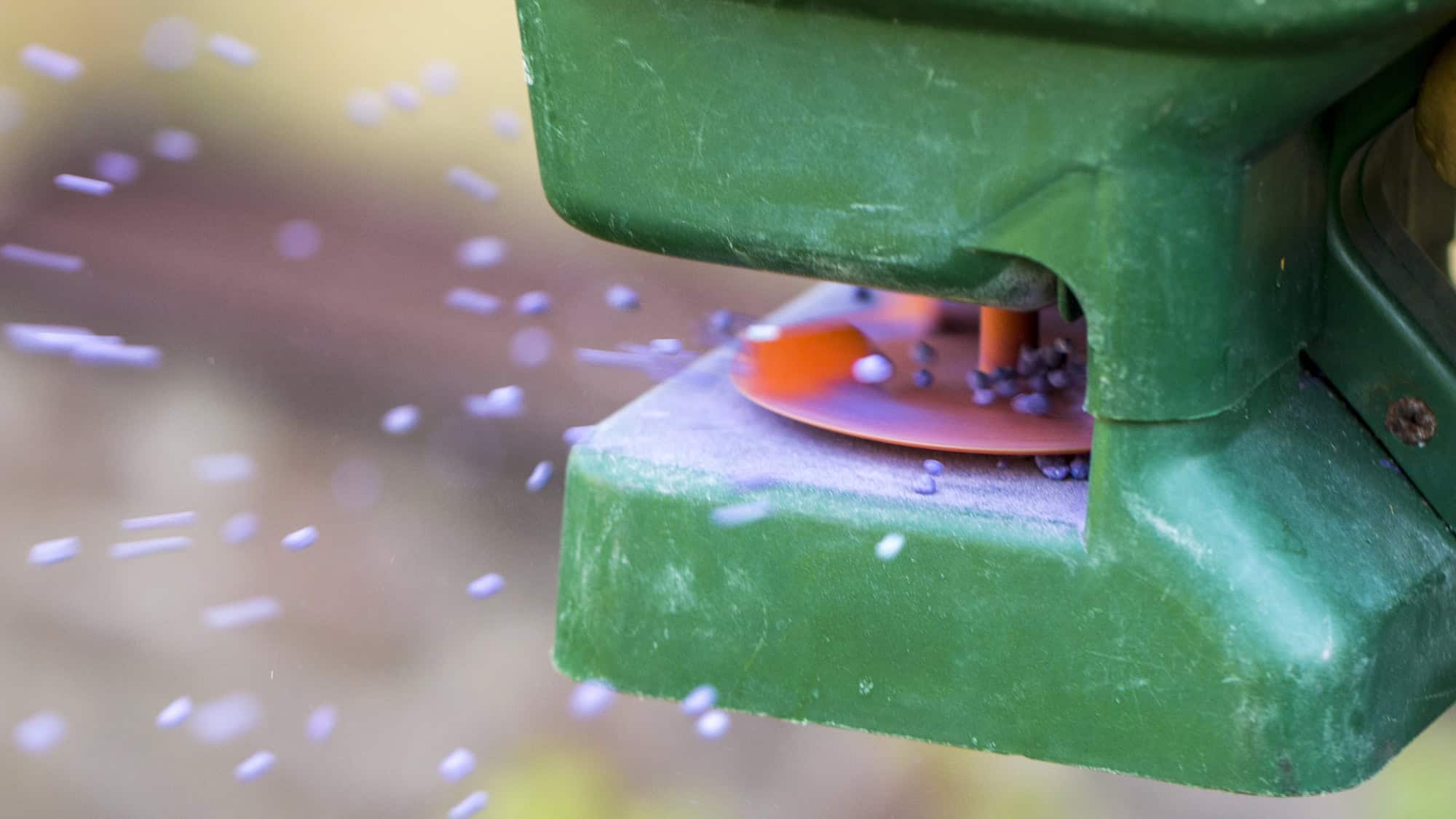
The application method is the same as for any granular lawn feed. Use a rotary or drop spreader for areas larger than about 30 square metres, or spread by hand for smaller lawns and patch repairs. Follow the rate recommended on the product label, which is typically between 35 and 70 grams per square metre depending on the product strength.
For an even spread, make two passes at right angles to each other, each at half the recommended rate. This cross-hatching technique prevents stripes and ensures every part of the lawn receives a consistent dose. If spreading by hand, wear gloves, as some organic ingredients, particularly blood and fish meal, have a strong odour that clings to skin.
Water the lawn lightly after application to wash the granules off the grass blades and into the soil surface. Organic products are less likely to cause burn than synthetic ones, but granules sitting on damp grass in direct sun can still leave marks. A light watering also kickstarts the microbial breakdown process that releases the nutrients.
Do not mow for at least two days after application. This gives the granules time to settle into the soil and begin dissolving. Mowing too soon can scatter undissolved granules into the collection box or blow them off the lawn entirely.
Building an Organic Lawn Care Programme
Switching to organic slow release fertiliser works best as part of a broader shift towards building soil health rather than just feeding the grass. The fertiliser is the centrepiece, but the supporting practices make it far more effective.
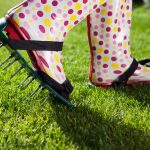
Aerate the lawn annually, ideally in autumn, to reduce compaction and allow air, water, and organic matter to penetrate the root zone. Healthy soil biology needs oxygen, and compacted soil starves the microbes that break down organic fertiliser. Our guide on what aerating does covers the technique and the tools.
Top-dress with compost once per year, either in spring or autumn, at a rate of about 3 to 5 litres per square metre. This adds organic matter directly to the soil surface and feeds the earthworm and microbial populations that make organic fertiliser work. Over two or three seasons of annual top-dressing, you will notice the soil becoming darker, more crumbly, and better at holding moisture.
Return grass clippings to the lawn by mulching rather than collecting. Clippings decompose quickly and return around 25 percent of the nitrogen the grass absorbed from its last feed. This free recycling of nutrients reduces the amount of fertiliser you need to buy. More detail is in our article on mulching vs bagging clippings.
Test your soil every two to three years using a basic pH and nutrient test kit. This tells you what the soil already has plenty of and what it needs more of, so you can choose an organic fertiliser product that addresses the actual deficiency rather than applying a generic feed and hoping for the best. Our guide on testing your soil explains how to take samples and interpret the results.
What Organic Slow Release Fertiliser Will Not Do
It is worth setting realistic expectations. Organic fertiliser will not produce the instant green-up that a synthetic quick-release product delivers in 7 to 14 days. The colour change from an organic feed is more gradual, typically becoming noticeable after two to three weeks and building over the following month. If you want an instant visual impact for a garden party or an event, a synthetic feed will get you there faster.
Organic fertiliser will not fix a lawn that has deeper structural problems. Compaction, poor drainage, heavy shade, and thatch build-up all need to be addressed through mechanical and cultural methods. Feeding a lawn that cannot use the nutrients because its roots are suffocated by compacted soil is a waste of money regardless of whether the fertiliser is organic or synthetic.
Organic fertiliser will not kill weeds or moss. Some combination “weed and feed” products are available in organic formulations, but the weed-killing component is usually iron sulphate for moss or a limited-spectrum herbicide rather than the broader chemical controls available in synthetic products. For serious weed problems, a targeted selective herbicide applied separately is more effective. Our guide on spring weed control covers the options.
Making the Switch from Synthetic to Organic
If your lawn has been fed with synthetic fertiliser for years, switching to organic cold turkey can produce a disappointing first season. The grass is accustomed to the instant nitrogen hit of a synthetic feed, and the slower release of an organic product can leave it looking underwhelming by comparison. The soil microbe population, which has had less organic matter to feed on, is also smaller and less active, so the breakdown of organic fertiliser is slower at first.
The best approach is to transition over two seasons. In the first year, use an organic feed for the spring and autumn applications but keep a synthetic feed for the summer application when the grass is growing fastest and the visual difference would be most noticeable. In the second year, switch all three applications to organic. By this point the soil biology will have built up enough to process the organic nutrients at a rate that keeps the lawn looking consistently green.
Most lawn owners who complete the transition report that by the third year on a fully organic programme, their lawn looks as good as or better than it did on synthetic feeds, with the bonus of less mowing, fewer disease problems, and better drought tolerance. The soil itself is in better condition, which means every product you apply going forward works more effectively.
Lawn Fertiliser Frequently Asked Questions
How often should I apply organic slow-release fertiliser?
Three times per year for most UK lawns: mid to late March, early June, and early September. Each application feeds the lawn for 6 to 12 weeks, covering the full growing season without gaps. Adjust the timing by a week or two based on your local conditions and soil temperature.
Can organic fertiliser burn my lawn?
The risk is very low. Organic fertilisers release nutrients gradually, so the concentration at any given moment is much lower than a synthetic product. Over-application can still cause problems, but you have a much wider margin for error than with synthetic feeds.
Is organic fertiliser better for the environment?
Yes. Organic fertilisers are less likely to leach into groundwater or run off into watercourses because the nutrients are released slowly and absorbed more completely. They also improve soil structure, which reduces surface runoff and increases water infiltration.
Will organic fertiliser make my lawn smell?
Some products, particularly those containing blood meal, fish meal, or poultry manure, have a noticeable odour for a day or two after application. Watering the product in immediately helps, and the smell fades quickly once the granules dissolve into the soil. Seaweed-based and composted products are much less pungent.
Can I use organic fertiliser on a new lawn?
Yes, but wait at least six weeks after seeding or turfing before applying. Use a product with a moderate nitrogen content at half the recommended rate for the first application. The young grass needs nutrients but its root system is too shallow to handle a full-strength feed.
What NPK ratio should I look for in an organic lawn fertiliser?
For spring and summer feeds, look for a ratio with nitrogen as the highest number, such as 5-3-3 or 8-2-5. For autumn feeds, choose a ratio with higher potassium, such as 3-2-8 or 4-3-8. The exact numbers are less important than the balance between the three nutrients.
Do I still need to aerate and top-dress if I use organic fertiliser?
Yes. Organic fertiliser works best as part of a complete soil health programme that includes annual aeration, compost top-dressing, and correct mowing. These practices build the soil biology that breaks down the organic fertiliser and makes its nutrients available to the grass.
Is organic fertiliser suitable for all soil types?
Yes. Organic fertiliser benefits all soil types, but the improvement is most noticeable on poor soils that lack organic matter, particularly sandy soils and heavy clays. On these soil types, the organic matter in the fertiliser improves structure, drainage, and water retention on top of providing nutrients.
Sources
- Royal Horticultural Society. “Feeding Lawns.” RHS Gardening Advice. https://www.rhs.org.uk/lawns/feeding
- The Lawn Association. “Organic Fertiliser Use in Domestic Lawns.” Technical Guidance Notes.
- Garden Organic. “Organic Lawn Care.” Henry Doubleday Research Association. https://www.gardenorganic.org.uk/
- Soil Association. “Soil Health and Organic Matter.” Research Publications. https://www.soilassociation.org/
- Sports Turf Research Institute (STRI). “Organic Nutrition Programmes for Amenity Turf.” Applied Research. https://strigroup.com/