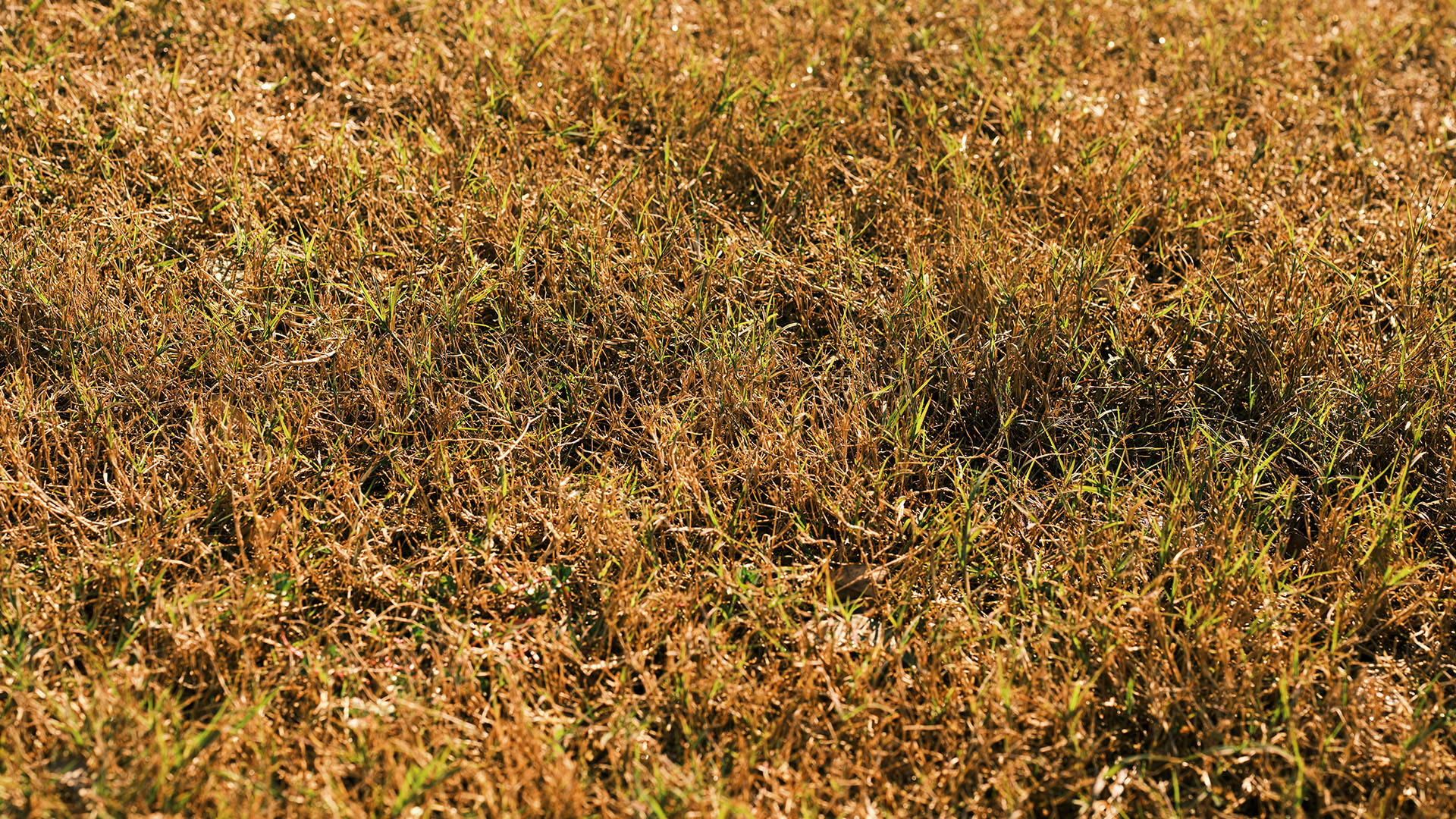
If patches of your lawn have turned a bleached, pinkish-tan colour and you can see fine red or coral threads woven through the grass when you look closely, your lawn has red thread. It is one of the most common lawn diseases of warm, damp weather, and the reassuring news is that it almost never kills the grass. Red thread feeds on the leaf, not the root, so an affected lawn recovers fully once you correct the cause. And the cause is usually simple: the grass is short of nitrogen. A light feed clears most outbreaks within a few weeks, with no fungicide needed.
How to Recognise Red Thread
The disease announces itself as irregular patches of bleached, straw-pink grass, usually 5cm to 25cm (2 to 10 inches) across, that can merge into larger areas. Step in close and the giveaway is the threads themselves: tiny, branching strands of pinkish-red or coral fungus, technically called stromata, that grow out from the tips of the affected blades and bind them together. Early in the morning, when there is dew on the lawn, you may also see a faint pink, cotton-wool-like fungal growth on the leaves. These red threads are how the fungus, Laetisaria fuciformis, survives and spreads, and they are the feature that tells red thread apart from drought stress or a fertiliser scorch.
The pattern of damage is the other clue. Drought browns a lawn evenly, worst on the sunniest, driest spots, while red thread appears in scattered, rounded patches that often show up first on the areas with the poorest soil or the least feed. The grass within a patch is discoloured but not slimy or rotten, and if you tug it, the roots hold firm. That is the key difference from more serious diseases: red thread bleaches the leaf and leaves the crown and roots alive underneath, which is why the lawn greens back up rather than dying out in bare patches.
Red thread favours fine fescues and perennial ryegrass, the grasses in most family lawns, and thrives in warm, humid spells when the leaf stays wet for long stretches. It is most active from late spring through to autumn, which is why early summer outbreaks are so common after a run of warm, showery days.
Why It Happens: The Nitrogen Connection
Red thread is, more than anything, a sign of a hungry lawn. The fungus gains the upper hand on turf that is low in nitrogen, because slow-growing, under-fed grass cannot outgrow and shed the infected leaf tips the way a vigorous lawn does. The Royal Horticultural Society points to nitrogen deficiency as the underlying cause and notes that applying nitrogen to the affected area is often enough on its own to control an outbreak. In effect, the disease is telling you the lawn needs feeding.
Two other conditions tip a hungry lawn over into infection: poor aeration and a leaf that stays wet. Compacted soil with a thick thatch layer holds moisture around the base of the grass and starves the roots of air, weakening the plant and keeping the leaf damp enough for the fungus to grow. Long periods of dew, light rain or evening watering that leaves the grass wet overnight do the same. So while the feed is the cure, the deeper fix is a lawn that is fed, aerated and allowed to dry between waterings. Stressed turf is vulnerable turf, the same principle behind heat scorch and the cracking seen on clay soil lawns in summer.
How to Treat and Clear an Outbreak
The first and most effective step is to feed. A nitrogen feed restarts leaf growth so the grass grows past the infection, and within two to three weeks the bleached patches green over. The RHS recommendation is sulphate of ammonia at 15g per square metre (about half an ounce per square yard), a fast-acting nitrogen source costing around £10 to £15 ($12 to $19) for a bag from Amazon, B&Q or a garden centre. Weigh or measure it rather than guessing, because too much sulphate of ammonia will scorch the grass, and water it in if no rain is due within a day. A balanced spring or summer lawn feed such as Miracle-Gro EverGreen or Westland SafeLawn works just as well for most gardens and is gentler to apply.
One important limit on timing: do not apply a high-nitrogen feed after the end of August. A late nitrogen boost forces soft autumn growth that is prone to other diseases such as snow mould going into winter. For a late-season outbreak, it is better to live with the cosmetic damage and feed properly the following spring than to push growth at the wrong time of year.
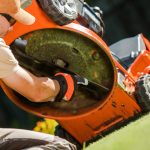
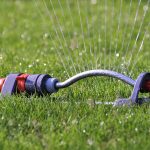
When you mow an affected lawn, collect the clippings rather than letting them fall, because the threads can spread the fungus to clean areas, and clean the mower deck afterward. Keep the blade sharp, since a clean cut heals faster than a torn one. Avoid watering in the evening while the disease is active; water early in the day so the grass dries by nightfall and the fungus loses the damp leaf it depends on.
What Happens If You Leave It Alone
Red thread will not destroy a lawn, but ignoring it has a cost. Left unfed, the bleached patches persist and can spread and merge during a long warm, humid spell, and while the grass underneath stays alive, the thinning, discoloured turf looks poor for weeks and gives weeds and moss an opening in the weakened areas. A lawn that suffers red thread year after year is usually one that is chronically under-fed, so repeated outbreaks are a signal to review your feeding routine rather than a sign the grass is failing.
It also helps to know the lookalikes so you treat the right problem. Dollar spot produces smaller, silver-dollar-sized bleached spots and tends to hit lawns short of nitrogen as well, so the feeding response is similar. A nitrogen scorch from over-applied fertiliser browns the grass in streaks or boot-shaped marks that follow where the feed landed, with no threads present. Drought turns the lawn an even straw colour across the open, sunny areas and recovers with rain, not feed. If you can see the fine coral threads binding the blades, you can be confident it is red thread and that a measured nitrogen feed is the answer.
Preventing It From Coming Back
Because red thread is a symptom of an under-fed, poorly aerated lawn, prevention is the same as good lawn care. Feed on a sensible schedule through the growing season so the grass never runs short of nitrogen, with a nitrogen-rich feed in spring and a balanced feed in summer. A lawn that is growing steadily simply outpaces the fungus.
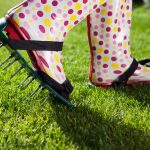
Tackle the soil too. Scarify in spring or early autumn to pull out the thatch and moss that trap moisture at the base of the grass, using a spring-tine rake on a small lawn or an electric scarifier (from around £60/$75) on a larger one. Aerate compacted areas by pushing a garden fork 10cm to 15cm (4 to 6 inches) into the turf every 15cm or so, or use a hollow-tine aerator on heavy soil, to let air and water move through the root zone. Improving drainage and airflow dries the leaf faster and strengthens the roots, which removes the conditions the fungus needs.
There is no need to reach for a fungicide on a home lawn. Garden fungicides for turf disease are limited and largely unnecessary, because feeding and aeration deal with red thread reliably and address the cause rather than masking it. Treat an outbreak as useful feedback: the lawn is telling you it is hungry and the soil needs air. Feed it, aerate it, water it in the morning, and the pink threads disappear, usually for good.