If your lawn turns rock-hard and starts to crack in summer yet sits soggy for days after rain, you are gardening on clay. The fix is not more water in the dry spells or better drainage pipes in the wet ones, it is improving the soil structure so it holds moisture without setting solid. Aerate to open the surface, top-dress with sand and organic matter to build structure, and keep the grass a little longer through summer. Do that over a couple of seasons and a clay lawn stops swinging between brick and bog.
Clay gets a bad name, but it is naturally the most fertile soil type because the same fine particles that cause the trouble also hold nutrients well. The problem is purely physical. Understanding what those particles do explains every step of the fix, and explains why the quick solutions people reach for so often make things worse.
Why clay bakes hard and cracks in summer
Clay is made of extremely fine, flat mineral particles, far smaller than the gritty particles of sand. Those tiny plates pack together tightly with very little space between them, and that lack of pore space is the root of every clay problem. In wet weather the few pores fill with water and cannot drain, so the soil stays saturated and airless, which is why clay lawns sit waterlogged after rain. In dry weather the clay gives up its water, the particles shrink and pull together even more tightly, and the surface sets as hard as fired pottery and cracks open as it contracts.
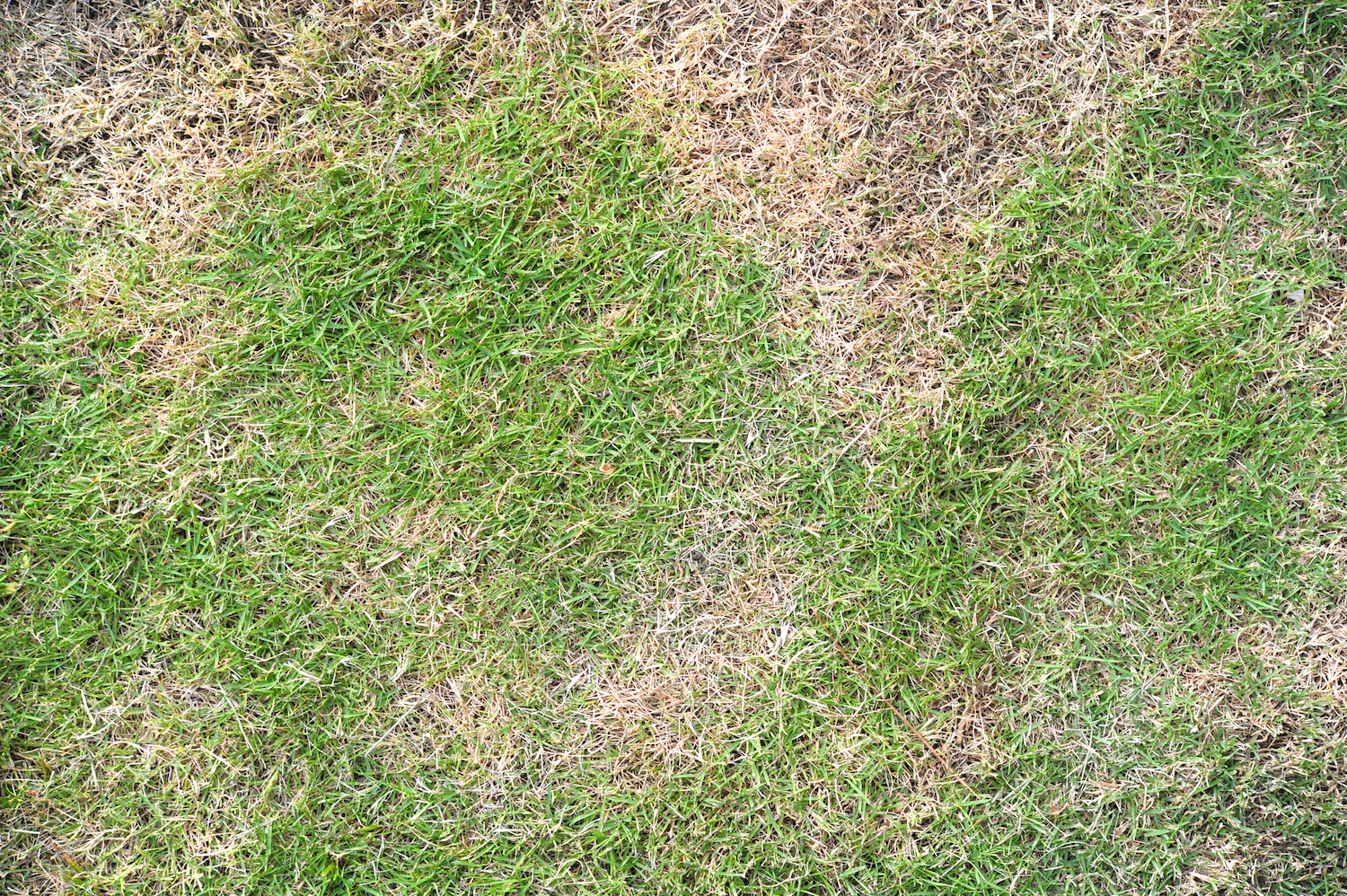
For grass, both extremes are punishing. Roots need air as much as water, and a waterlogged clay drives the air out, suffocating roots and inviting moss and disease. Then when the same soil bakes hard, roots cannot push through it, water runs off the sealed surface instead of soaking in, and the grass browns off fast in a dry spell because its shallow roots have nothing to draw on. The cracks you see in midsummer are the soil physically shrinking, and they are a clear signal that the structure needs opening up.
Walking on or working clay while it is wet makes everything worse, because the pressure smears the wet particles together and destroys what little pore space exists, a process called compaction. A clay lawn that gets heavy foot traffic in winter is often the one that bakes hardest the following summer.
If you are not sure whether you are really on clay, a two-minute test settles it. Take a handful of moist soil from a few centimetres down and roll it between your palms. Sand crumbles and will not hold a shape; clay rolls into a smooth sausage and, if you can bend that sausage into a ring without it cracking, you have a high clay content. For a clearer picture, half-fill a jar with soil, top it up with water, shake hard and leave it to settle overnight: the particles separate into layers, with sand at the bottom, silt in the middle and clay as the topmost, slowest-settling band, and a thick clay layer confirms what your summer cracks already told you.
How to open up and improve a clay lawn
The single most useful job on a clay lawn is aeration, and on clay it should be core aeration rather than simply spiking. A hollow-tine aerator pulls out plugs of soil and leaves open channels, whereas a solid spike just pushes the clay aside and can glaze the walls of the hole, making compaction worse. On a small lawn you can use a hollow-tine hand fork or a corer; on a larger one, hire a powered hollow-tine aerator for the day. Aerate when the soil is moist but not wet, typically in early autumn, working across the lawn so the holes sit roughly 10cm (4 inches) apart.
Top-dressing straight after aeration is what turns a one-off job into lasting improvement. Brush a free-draining top-dressing, a mix of around 70 percent sharp sand and 30 percent compost or loam, into the holes so the open channels fill with material that will not set solid. Over several seasons this gradually builds a layer of better-structured soil through the root zone, raising the proportion of pore space so the lawn drains in the wet and holds moisture in the dry. Apply it thinly, no more than about 1cm (half an inch) at a time, and never bury the grass.
Gypsum is the one soil treatment worth knowing about for clay. It is calcium sulphate, the active ingredient in most products sold as clay improvers or clay breakers, and it works by encouraging the fine clay particles to clump into larger crumbs, a process called flocculation, which creates the pore space the soil lacks. Unlike lime it does this without changing the soil pH, so it is safe on a lawn that is not acidic. Apply a clay-improver gypsum at the rate on the box, usually around 100 to 200g per square metre, and water it in. It is not an overnight fix, but combined with aeration and top-dressing it speeds the structural improvement along.
Adding organic matter through that top-dressing, and by leaving the occasional fine layer of clippings on the lawn through mulch-mowing, feeds the soil life that builds and maintains crumb structure. Earthworms in particular do more long-term aeration on a clay lawn than any tool, so anything that encourages them helps.
Clay lawns also tend to suffer more moss than free-draining ones, and the link is the same poor structure. Moss thrives where grass struggles, and the waterlogged, airless, compacted surface of a neglected clay lawn is exactly where fine grasses thin out and moss moves in. Killing the moss with sulphate of iron treats the symptom, but it returns every year unless you fix the cause, which is the drainage and compaction. This is why aeration and top-dressing do more for a mossy clay lawn in the long run than any moss killer: improve the structure and the grass out-competes the moss on its own.
Keeping a clay lawn alive through summer
While you build structure over the seasons, a few habits protect the grass through the dry months. Mow a clay lawn on the high side, around 5 to 6cm (2 to 2.5 inches) in summer, because longer leaf shades the soil surface, slows the baking and cracking, and supports deeper roots that can find moisture below the hard crust. Resist the urge to scalp it short.
When you water, water deeply and infrequently rather than little and often. A hard clay surface sheds a light sprinkle straight off, so apply slowly enough that the water soaks in rather than runs to the lowest corner, and aim for a thorough soak of around 25mm (1 inch) once or twice a week rather than a daily splash. Watering deeply draws roots downward; watering lightly keeps them at the surface where the clay bakes hardest. The same logic that helps sandy lawns hold water applies in reverse on clay, and our guide to watering so less evaporates covers the technique that gets water into a stubborn surface.
One warning saves a lot of wasted effort: do not dig pure sand into clay on its own. It is a popular idea that backfires, because sand mixed into wet clay without enough organic matter can set into something close to a poor concrete, making the structure worse rather than better. The improvement comes from the combination of opened channels, sharp sand and organic matter applied gradually through top-dressing over the surface, not from burying a load of builder’s sand in one go. Patience and repetition beat any single drastic dig.
The mistake to avoid above all is rolling a clay lawn to flatten it, or working it while wet, both of which compact the soil and undo everything aeration achieves. Clay rewards patience. Open it up, feed it structure with sand and organic matter, keep the grass long enough to shade itself, and within two or three seasons the lawn that used to swing between brick and bog holds its green far longer into a dry summer and drains away the worst of the winter wet.