
If your lawn is the first in the street to fade to straw the moment the rain stops, the soil underneath is almost certainly sandy, and no amount of extra watering alone will fix it. Sandy soil drains so fast that water and the nutrients dissolved in it rush straight past the roots and disappear before the grass can drink. The answer is not just more water but better water-holding, and you build that by adding organic matter, topdressing with compost, using a wetting agent and choosing grasses that cope with thirst. Do those things over a season or two and a sandy lawn stops being the first to brown.
Why Sand Cannot Hold On to Water
Soil is a mixture of mineral particles and the spaces between them, and the size of those particles changes everything. Sand particles are large and rounded, so when they pack together they leave big air gaps. Water poured onto sandy soil drains straight through those gaps under gravity, the same way it pours through a bucket of gravel, and within hours the root zone is dry again. Clay particles, at the other extreme, are tiny and flat and cling to water tightly, which is why clay lawns stay wet and sandy ones dry out. The window during which grass roots can reach the moisture in a sandy soil is short, often a matter of a day or two after rain, and once it closes the grass has nothing left to draw on.
The same large pores cause a second, hidden problem: nutrients wash away. Lawn feed dissolves in water, and in sandy soil that water drains down out of reach so fast that much of the feed leaches away before the grass can use it. This is why a sandy lawn often looks both dry and hungry, pale and thin even when you have fed it, because the food left with the water. Understanding which soil you have is the starting point for everything else, and our guide on what your lawn weeds reveal about the soil underneath can help you read the signs if you are not sure.
Building Water-Holding Power Into the Soil
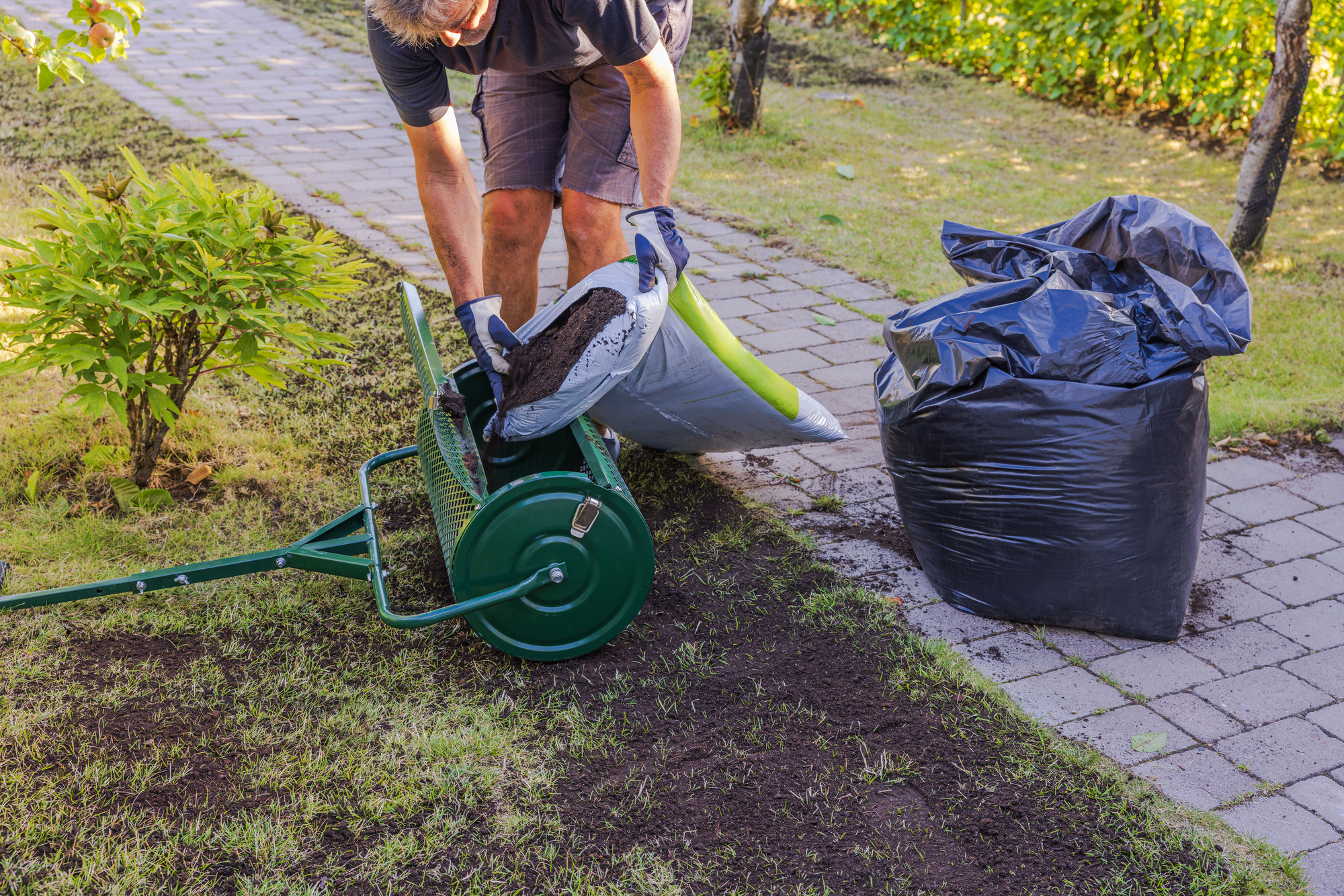
The lasting fix for a sandy lawn is organic matter, because organic matter does the one thing sand cannot: it holds water. Well-rotted compost acts like a sponge sitting among the sand grains, soaking up moisture and releasing it slowly to the roots, which extends the time water stays available after each rain or watering. You cannot dig compost into an existing lawn without tearing it up, so you add it from the top through a practice called topdressing. Spread a thin layer of fine, sieved compost, about 5 to 10mm (a quarter inch) deep, across the lawn and work it down into the surface and into any aeration holes with the back of a rake or a stiff broom. For an average lawn you need roughly one 50-litre bag of compost per 10 square metres (about 108 square feet). Do this once a year, ideally in spring or early autumn, and over several years you steadily rebuild the topsoil into something that holds water rather than letting it drain away.
Aerate the lawn before you topdress so the compost has somewhere to go. Pushing a garden fork 10cm (4 inches) into the turf every 10cm or so, then rocking it slightly to open the holes, gives the compost a route down into the root zone instead of just sitting on the surface. On a sandy lawn, choose compost-based topdressing rather than the sand-heavy mixes sold for clay, because adding more sand to sand is the opposite of what you need. Our guide on why topdressing in late spring is the step most gardeners skip covers the technique in full.
A wetting agent is the fastest-acting tool and the one that gives the quickest result on sandy ground. Sandy soils that have dried out hard can turn water-repellent, so water beads up and runs off or channels straight down without spreading sideways, leaving dry patches even after you water. A wetting agent is a liquid surfactant that breaks that surface tension, so water spreads evenly and soaks in rather than running through. A 1-litre bottle that treats up to 500 square metres (about 5,400 square feet) costs around £16 to £30/$20 to $38, applied through a watering can or a hose-end feeder. Put it down before the height of summer and again during a long dry spell, and you noticeably improve how much of each watering the soil actually retains.
Feeding, Mowing and Seed Choices That Suit Sand
Because nutrients leach out of sandy soil so quickly, the way you feed has to change. Instead of one big dose of fast-release feed that mostly washes away, use a slow-release or controlled-release fertiliser that drip-feeds the grass over two or three months, or feed lightly and more often so less is lost each time. Slow-release granular feeds are designed exactly for this and are the better value on sand despite costing a little more per bag, because far more of the feed reaches the grass. A liquid seaweed tonic every few weeks through summer is a useful top-up too, as it feeds the grass directly through the leaf and helps it cope with drought stress.
Mowing habits make a measurable difference on thirsty soil. Raise the cutting height to 40 to 50mm (1.5 to 2 inches) through summer, because longer grass shades its own roots, slows evaporation from the soil surface and grows deeper roots that reach moisture lower down. Leave the clippings on the lawn when you mow in dry weather rather than collecting them, as they break down and return both moisture and a little feed to the surface. Cutting a sandy lawn short in summer is one of the quickest ways to brown it, because you strip away the shade and the deep-rooting that are keeping it alive.
Finally, if you are overseeding bare patches or starting again, pick the grass for the conditions. Tall fescue and the fine fescues are the most drought-tolerant of the common lawn grasses, sending down deep roots and staying green long after ryegrass has given up, so a seed mix with a high fescue content is the right choice for sand. Combine the right grass with yearly compost topdressing, a wetting agent before summer, slow-release feed and a higher cut, and a sandy lawn that once browned at the first dry week will hold its colour for far longer, even though the sand beneath it has not changed at all.
A Two-Minute Test to Confirm You Have Sandy Soil
Before you spend money on compost and wetting agents, take two minutes to confirm what you are dealing with, because the fixes for sand are the opposite of the fixes for clay. The quickest check is the feel test. Take a small handful of moist soil from a few centimetres down and rub it between your fingers. Sandy soil feels gritty and rough, will not hold together when you try to squeeze it into a ball, and crumbles apart the moment you open your hand. Clay feels smooth and sticky and moulds into a firm ball or even a sausage shape that holds. A soil somewhere in between, which holds loosely but breaks easily, is a loam and needs less help.
For a clearer answer, do the jar test. Half-fill a clear jar with soil, top it up with water, add a drop of washing-up liquid, shake it hard and leave it to settle overnight. The particles drop out by weight, with heavy sand forming the bottom layer within a minute, silt settling above it over a few hours and fine clay forming the top layer. If the sand layer makes up more than about two-thirds of the total, you have a sandy soil and the water-holding plan in this guide is exactly what it needs. The test costs nothing and saves you from treating your lawn for the wrong problem.