The short answer is that granular feed is for the long, steady base of your lawn programme, and liquid feed is for fast results and fine-tuning. Granular fertiliser releases nutrients slowly over weeks or months, so it builds and holds condition with one application. Liquid fertiliser is absorbed within hours, so it greens a tired lawn quickly but runs out fast and needs reapplying often. Most people who care about their grass end up using both: granular as the backbone two or three times a year, liquid for a quick lift or to correct a specific shortfall in between. Knowing which one does what stops you from feeding at the wrong time and scorching the lawn you are trying to help.
How Each One Actually Feeds the Grass
Granular feed comes as small dry prills that you spread across the lawn. They do nothing until water dissolves them, and then the nutrients seep down into the soil where the roots take them up. Because the soil has to break the granule down first, release is gradual, which is why granular products are described as slow or controlled release. Many use a polymer or sulphur coating engineered to let nutrients out over a set period, commonly six to eight weeks, and some last several months. That slow drip is what makes granular feed ideal for steady, long-term condition: one spread in spring keeps working as the grass comes into growth, rather than dumping everything at once.
Liquid feed works the other way. You dilute a concentrate or attach a hose-end bottle and spray it on, and the grass absorbs the nutrients almost immediately, partly through the leaf blade itself and partly through the roots once it reaches the soil. There is no granule to break down, so the response is fast and you often see a deeper green within two or three days. The trade-off is that what goes on quickly washes through quickly. A liquid feed is largely spent within two to four weeks, so it has to be repeated far more often than granular to keep the same effect going.
The Practical Differences That Decide Which to Buy
Cost and effort separate the two as much as the chemistry does. Granular feed is cheaper for the area it covers and you apply it far less often, so for maintaining a whole lawn it is the better value. A granular spring and summer feed such as Miracle-Gro EverGreen Complete, around £19 to £24 ($24 to $30) for roughly 360 square metres (about 3,800 square feet), carries an NPK near 14-2-5 and keeps working for weeks. A gentler granular option, Westland SafeLawn at about £12 to £15 ($15 to $19) for 150 square metres (around 1,600 square feet), runs a 6-1-3 ratio and is mild enough to use around children and pets shortly after watering in. Granular products are normally applied at roughly 35 grams per square metre, so a typical 50 square metre (about 540 square foot) front lawn takes around 1.75kg per feed.
Liquid feed costs more per treatment and demands more of your time across a season, but it gives you control that granular cannot. Because you mix it to a known strength and apply it evenly through a sprayer or hose-end feeder, there are no dry prills to scatter unevenly and no risk of a missed strip turning pale while a double-dosed strip turns dark. That even, fast delivery is why liquid is the tool of choice for a quick colour boost before a weekend, for newly seeded areas where you want gentle feeding without heavy granules, and for correcting a specific deficiency such as a yellowing lawn that needs iron. A bottle of concentrated liquid lawn food or a seaweed-based tonic typically costs £8 to £15 ($10 to $19) and treats several hundred square metres per bottle, available at B&Q, Home Depot, Amazon, and most garden centres.
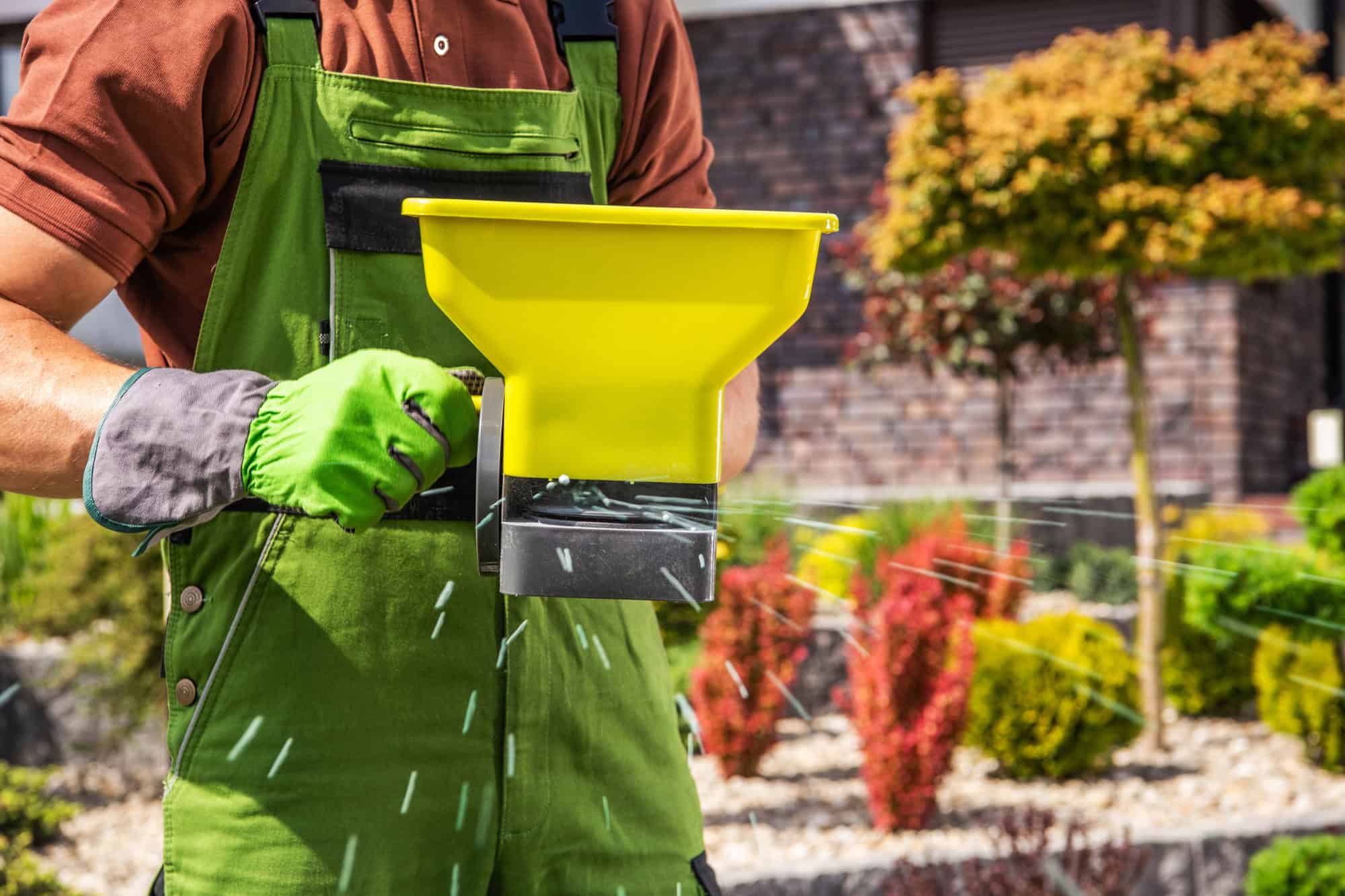
The biggest practical drawback of granular is uneven spreading. Throwing prills by hand almost always produces stripes, because you cannot scatter at a consistent density. A drop spreader or a broadcast spreader fixes this by metering the granules out at a set rate, and walking in slightly overlapping passes gives even coverage. The biggest drawback of liquid is its short life and its sensitivity to heat: a foliar feed applied too strong, or sprayed on grass in the middle of a hot day, can scorch the leaf.
Whichever form you reach for, the three numbers on the box tell you what the feed will actually do, and they apply equally to granular and liquid. The first figure is nitrogen (N), which drives green leaf growth; the second is phosphorus (P), which supports roots and is needed in much smaller amounts on an established lawn; the third is potassium (K), which toughens the plant against drought, cold and disease. A spring feed leans heavily on the first number to push growth, which is why a ratio like 14-2-5 suits the start of the season. An autumn feed drops the nitrogen and raises the potassium, something nearer a 4-0-8, so the grass hardens off instead of producing soft growth that frost would damage. Read those numbers before you buy and you will never apply a high-nitrogen growth feed at the one time of year your lawn needs the opposite.
Which to Use and When Through the Year
Use granular feed as the structure of your lawn care. A high-nitrogen granular feed in spring drives the first flush of leaf and side-shoot growth as the soil warms, and a second granular feed in early summer keeps colour and density through the growing season. In autumn, switch to a granular feed low in nitrogen and higher in potassium to harden the grass for winter rather than push soft growth. Each of these is a single job that keeps working for weeks, which is exactly what granular is built for.
Use liquid feed to fill the gaps and respond to what you see. If the lawn looks tired between granular feeds, a liquid top-up greens it within days. If you want a quick lift before visitors or a garden event, liquid delivers in time when granular would be too slow. And liquid is the safer choice in hot, dry spells, because a granular feed left sitting dry on the surface in warm weather can scorch the grass with concentrated salts. If you do apply granular in summer, water it in within 48 hours so the nutrients move into the soil rather than burning the leaf. Better still, in a heatwave hold off heavy feeding altogether and lean on a dilute liquid or a seaweed tonic, which feeds lightly without forcing growth the roots cannot support.
One free source of feed sits on the lawn already. Returning your clippings instead of bagging them recycles a steady trickle of nitrogen back into the soil, which reduces how much fertiliser you need at all; our guide on why leaving grass clippings on the lawn helps it survive a dry summer explains the mechanism. And whichever feed you choose, watering practice decides how well it works, because nutrients move with moisture; our advice on watering so less evaporates and more soaks in pairs naturally with any feeding plan.
Get the choice wrong and the consequences show quickly. Rely only on liquid and you will be spraying every fortnight all season and still see the colour fade between treatments. Rely only on granular and you lose the ability to react fast when the lawn dips. Spread granular unevenly and you get dark and pale stripes that last for weeks; apply liquid too strong or in fierce heat and you scorch the very grass you fed. Treat granular as the steady base and liquid as the responsive top-up, match the timing to the season, and you feed the lawn the way the professionals do, with the right tool for each job.